
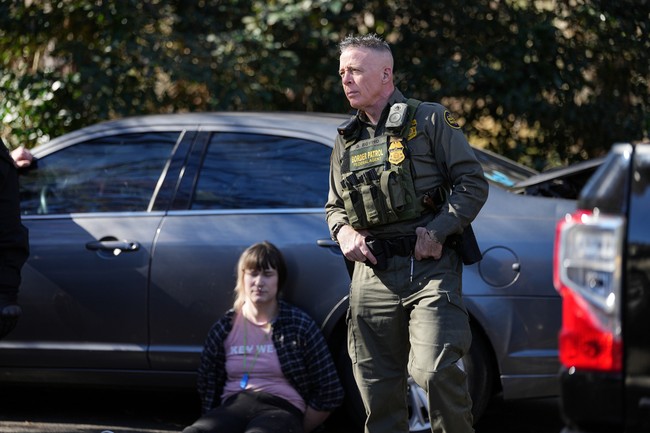
The story describes a viral confrontation at a Minneapolis Speedway where a man claiming to be a cashier allegedly refused service to Border Patrol Chief Greg Bovino and other agents, filmed by independent journalist Cam Higby; the video shows the man telling them, “Don’t come back, neither. Bye!” and sparking conservative backlash over perceived hostility toward federal law enforcement. This account notes unconfirmed employment status for the man in the clip, includes social media reaction and commentary critical of the incident, and touches on related reports of hotels and other businesses in Minneapolis denying service to immigration agents.
The video posted by Cam Higby captured a tense moment outside a Speedway on Portland Avenue in Hennepin County where a man allegedly told Border Patrol agents they were not welcome. According to the footage, the man said, “Don’t come back, neither. Bye!” as the agents walked away, and he later explained his stance with the words, “‘Cause I wanted to. We don’t support ICE, and nobody here does. Neither do I.” The exchange has been widely circulated on X and picked up by conservative figures who framed it as an attack on law enforcement and the rule of law.
Observers and commentators quickly weighed in, asking whether a private business can refuse service to federal agents and whether that refusal reflects company policy or an individual’s opinion. The chain involved, Speedway, is part of a larger retail network, and there was no company confirmation that the person in the clip was an employee at the location. That lack of verification left room for accusations and speculation, but it did nothing to blunt the political heat around the footage.
TPUSA spokesman Andrew Kolvet asked publicly, “Is this an official policy of Speedway to deny service to federal law enforcement officers?” The question amplified concern among conservatives who view such behavior as disrespectful to those enforcing immigration laws. The confrontational line in the clip — “If it is, our president don’t care” — further underscored the growing divide over how companies and individuals treat federal agents, especially those involved with ICE and Border Patrol operations.
The incident was framed by critics as an example of what they call the “woke” culture interfering with basic respect for law enforcement. There have been other reports of hotels and businesses in Minneapolis canceling reservations or claiming to be full in order to avoid hosting federal agents, which conservatives point to as a pattern of obstruction rather than isolated events. That pattern, real or perceived, fuels a political narrative about blue cities unwilling to cooperate with federal immigration enforcement.
Minneapolis has become a testing ground for those tensions, with activists, local officials, and private citizens often at odds over enforcement priorities. For Republicans, the priority remains law and order and the idea that federal agents should be able to do their jobs without being denied basic services. When agents are treated like pariahs for carrying out federal law, it becomes a political issue that rallies conservative voters and commentators alike.
Some defenders of the individuals in the footage argue that private businesses have the right to refuse service under certain circumstances, and others raise concerns about customer safety and liability in volatile situations. Those arguments do not satisfy many conservatives, who see the interaction as a matter of principle and respect for authority. The reaction has pushed calls for clearer policies from companies about how they deal with uniformed or plainly identified federal personnel.
Critics slammed Speedway for the perceived behavior of staff at the location, and the company’s sparse social media presence only inflamed doubts about how seriously the chain monitors such incidents. The last public posts from that corporate account suggested social channels are not closely watched, leaving corporations vulnerable to reputation damage in moments like these. For Republicans, the failure to respond swiftly is another sign of corporate indifference to conservative concerns and to the people who keep communities safe.
The footage also sparked debate about whether this is an isolated clash of opinions or part of a broader campaign to obstruct immigration enforcement in certain cities. Voices on the right worry that denying service to officers is one more tactic in a playbook aimed at protecting undocumented individuals from removal. That concern ties into larger policy debates about federal authority, border security, and how local communities should interact with national enforcement efforts.
While the man’s employment status at the Speedway location remained unconfirmed as of the reporting, the political fallout was immediate and vocal. Conservatives framed the incident as symptomatic of a cultural shift in many urban centers, arguing that when federal agents are shunned, public safety and the rule of law suffer. The clip and its aftermath have become another flashpoint in the national argument over immigration enforcement and civic respect for those charged with carrying out federal orders.
The episode leaves unanswered questions about corporate responsibility, employee conduct, and the balance between private rights and civic duty. For now, the viral video stands as a provocation that demands a response from businesses and elected officials alike, and it has energized conservative critics who see a pattern of hostility toward federal law enforcement in certain jurisdictions.

Add comment