
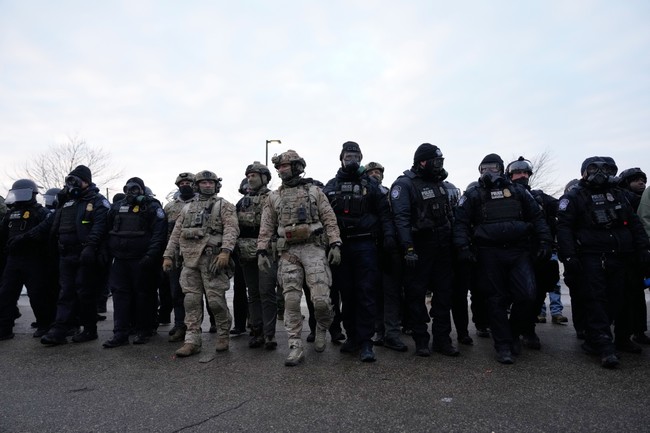
I’ll explain a recent claim from Blue Lives Matter about a counteroperation aimed at confusing anti-ICE activists, examine the context of escalating protests against ICE, reproduce the quoted post exactly as it appeared, and consider what this kind of grassroots support for law enforcement means for public safety and rule of law.
Anti-ICE activists have been increasingly aggressive, showing up at churches and confronting federal officers in ways that obstruct lawful enforcement. Those incidents have pushed some pro-law-enforcement groups to respond with creative tactics to protect agents and make enforcement possible. This story centers on a post shared by Blue Lives Matter that hints at large-scale decoy operations used to mislead protesters who try to interfere with ICE actions.
The tone of the Blue Lives Matter post is provocative and playful, but it also signals a willingness among veterans, off-duty officers, and patriotic volunteers to back up federal agents. That kind of civic muscle matters when activists attempt to block lawful operations, because enforcement cannot succeed if mobs can hamper it daily. Conservatives see this as community members stepping up to defend law and order when institutions struggle to do so on their own.
Federal agents, particularly ICE officers, are carrying out their duties amid harassment and public spectacle, and it’s unfair they must face manufactured chaos instead of straightforward legal process. The post suggests volunteer teams staged decoy activities, creating confusion that let real operations proceed. Whether literally true or intentionally ambiguous, the claim reflects a broader strategy: using misdirection and civilian support to blunt activist interference.
We’re not saying that Blue Lives Matter was behind feeding false information to far-left, anti-ICE protestors.
We’re not saying we had teams comprised of HUNDREDS of off-duty cops and veterans volunteer to run decoy operations so far-left activists THOUGHT they were conducting ICE raids.
We’re not saying they were in fact they were just driving around in what appeared to be unmarked vehicles with tinted windows… drinking coffee and listening to Guns and Roses…. being chased down and surrounded by protestors.
The second half of the original post ramps up the boast, implying success across multiple states and claiming support for actual raids that captured criminals. That kind of language is meant to rally supporters and intimidate would-be obstructionists. For many on the right, any lawful tactic that protects officers and preserves enforcement is a positive, especially when local officials or court constraints hinder action.
What we ARE saying is that if it DID happen…. it sure worked remarkably well in NINE DIFFERENT STATES, allowing ACTUAL raids to successfully take place unimpeded, helping support the capture of HUNDREDS of criminals.
Combat veterans, off-duty officers and patriotic Americans have had enough of the radical left… and are being activated across the country to back our #lawenforcement. And they’re smarter…more skilled… more driven… better trained than the left … and actually enjoy sitting in a deer stand for days on end just waiting.
@DHSgov @ICEgov we’ve got you.
The post stops short of an outright confession, which is likely intentional. Ambiguity gives supporters bragging rights without exposing anyone to legal risk. It also forces critics into a corner: do they denounce a vague claim that allegedly improved public safety, or do they admit frustration with tactics that might have actually helped enforcement? Conservatives tend to view ambiguity here as clever theater that keeps the focus on protecting communities and upholding the law.
There are practical implications. If activists are tracking ICE movements and trying to sabotage operations, then civil society actors stepping in to create noise and false trails can reduce that threat. That same activity can complicate activist coordination and give law enforcement breathing room to proceed. The argument from sympathetic observers is straightforward: enforcement needs space to do its job, and willing citizens can provide that space without breaking the law themselves.
Still, this approach raises questions about escalation and accountability. When private citizens coordinate to deceive protesters, it walks a fine line between protecting officials and contributing to an increasingly militarized civic environment. Republicans sympathetic to Blue Lives Matter will say the priority is officer safety and effective enforcement, while urging caution so volunteer actions remain legal and measured.
The broader picture is a polarized landscape where both sides use bold tactics. Anti-ICE crews aim to obstruct and publicly shame agents, while pro-law-enforcement groups respond with countermeasures that range from public solidarity to covert misdirection. That dynamic will likely continue as long as immigration enforcement remains a political flashpoint and activists try to shape outcomes through disruption rather than through courts and legislatures.
What really matters for voters is whether enforcement works and whether communities are safer. From a conservative perspective, grassroots support for law enforcement is preferable to letting mobs dictate enforcement outcomes. If volunteer efforts, in whatever form, reduce interference and help officers do their jobs, many on the right will see that as a pragmatic and necessary response to escalating anti-enforcement tactics.
At the end of the day, the Blue Lives Matter post feeds into a larger debate about how citizens support law enforcement in a time of intense protest and social fracture. Whether the specific claims are true or not, the reaction they provoke highlights deep frustration with activist obstruction and a willingness among some Americans to take direct action to preserve the rule of law.
Add comment