
This article explains how a Maryland judge blocked a Democrat-backed constitutional amendment on redistricting, how that decision echoes similar rulings in other states, and why Republican leaders view the ruling as a win for the rule of law while Democrats plan to appeal.
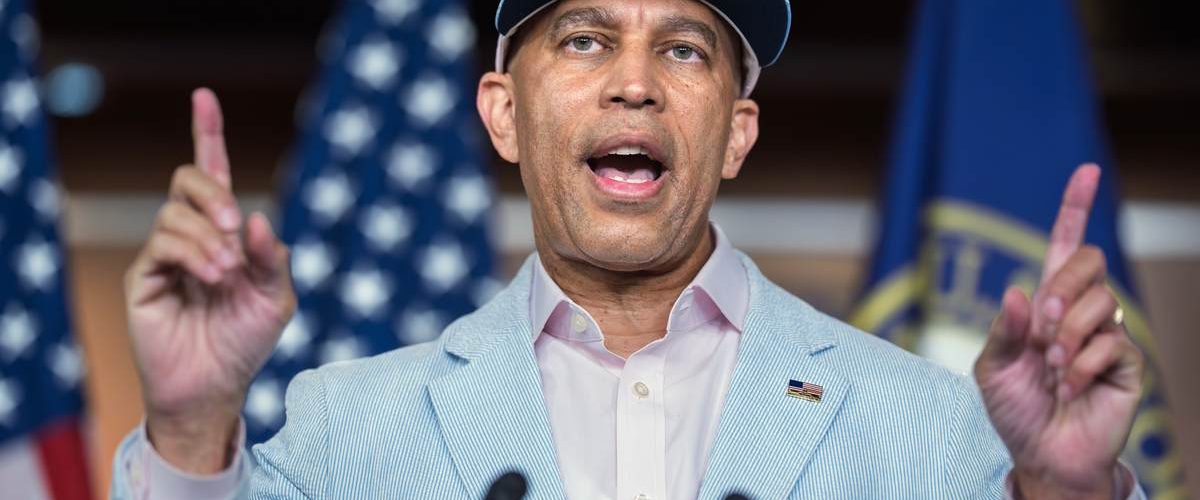
House Minority Leader Hakeem Jeffries has been urging friendly state legislatures to redraw districts in ways that would give Democrats extra congressional seats, and his push has encountered growing legal resistance. In Maryland, a judge found procedural and legal problems with a Democrat-backed amendment, halting its placement on the November ballot. That setback follows similar defeats for redistricting efforts in other states, underscoring persistent judicial scrutiny of these plans.
On Wednesday, an Anne Arundel County Circuit Court judge sided against putting the measure before voters, pointing to three major flaws: a missed statutory deadline, misleading ballot language, and a violation of the state’s single-subject rule. The judge, Robert J. Thompson, wrote that lawmakers “did not follow the very laws” they enacted. That line landed hard given Democrats’ repeated attempts to alter maps through state referendums.
The court stayed its own ruling so the case can move up to the Maryland Supreme Court, which may be forced to act quickly because ballots are set to begin printing soon. The timing leaves little margin for error and makes the appeal process the central battleground in the coming days. Republicans are framing the delay as confirmation that rules matter and that deadlines and statutory requirements are not optional for one party.
State Senator Steve Hershey, the Republican minority leader, said, “Today’s ruling is an important victory for the rule of law and for every Maryland voter who expects government to follow the Constitution and the election laws it enacts.” That quote captures the GOP view that enforcing process protects voters from partisan manipulation. Republicans argue that following established procedures is the only way to keep election changes transparent and accountable.
Maryland is not an outlier. Earlier this year, Virginia courts struck down a heavily criticized redistricting plan that critics nicknamed the “lobster map” after judges found constitutional problems with how the referendum was advanced. Colorado judges also intervened in June, blocking Democratic proposals that violated that state’s constitution. Taken together, these rulings show a pattern: when partisan map-making races to the finish line without respecting statutory constraints, courts intervene.
Jeffries traveled to multiple states encouraging Democratic-controlled legislatures to pursue maps that would swing seats his way, and his public involvement has made the push a national story. Republicans see his efforts as an orchestrated attempt to tilt the playing field, and they are using court victories in multiple states to argue that those attempts have failed. The string of defeats suggests legal boundaries remain a real check on partisan ambitions.
🚨 JUST IN: A Maryland judge SHOT DOWN the Democrat attempt to ELIMINATE the state’s sole Republican Congressional district on the ballot this November
https://x.com/MikenzieFrost/status/2092648866180968627
Jeffries PERSONALLY traveled to Maryland to lobby Democrat state lawmakers to do it.
Looks like it was for nothing 😆
Now on to the Maryland Supreme Court!
The Maryland ruling explicitly cited multiple statutory missteps, which critics say highlights sloppy or rushed drafting by lawmakers eager to secure a partisan outcome. Those same criticisms were leveled in Virginia and Colorado, where judges demanded compliance with constitutional text and statutory procedure. For Republicans, the practical lesson is straightforward: courts will enforce rules even when major political actors try to bend them.
Democrats in Maryland have already signaled they will appeal, arguing that voters should have the opportunity to weigh in on redistricting changes. A spokesman for the governor stated, “We believe Maryland voters deserve the opportunity to make their voices heard, and we will continue fighting to ensure they can.” That sets up an expedited legal showdown, one likely to be resolved under intense time pressure as election deadlines loom.
Legal challenges to redistricting measures have real political consequences because they can change which districts exist and which party controls them. Judges are now playing the role of gatekeepers, checking both the substance of proposed changes and the way they were pushed through statehouses. Republicans are emphasizing that judicial enforcement of deadlines and single-subject rules protects voters from last-minute power grabs.
In the short term, the Maryland case will proceed through the appeals process, and the state Supreme Court will have to decide whether the lower court’s procedural findings should stand. If the higher court upholds the ruling, Democrats will lose a direct path to altering congressional lines before November. If the court reverses, the political fight will move back to the ballot box under compressed timelines.
What is clear is that judges across several states have shown little patience for efforts that appear to flout constitutional or statutory requirements. For Republican leaders watching these cases, that enforcement reinforces the idea that the rule of law can block partisan map-making no matter how aggressively it is pursued. The coming days will determine whether Maryland voters see the amendment this November or whether the normal pace of the courts prevents another last-minute change.



Add comment