
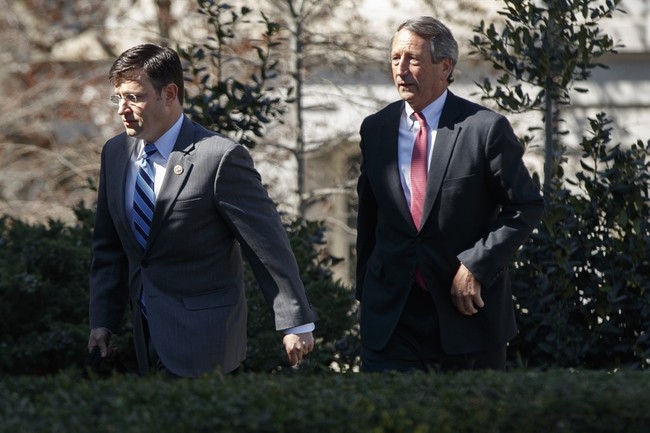
Mark Sanford’s recent choice to “suspend” his congressional campaign in South Carolina’s 1st District highlights how a long political career can be shaped by a single, public lapse in judgment and ongoing questions about credibility even among sympathetic voters.
Mark Sanford’s announcement that he will step away from the race to focus on launching a nonprofit centered on the national debt closes a short chapter in a campaign that never truly began. For Republicans who prioritize fiscal discipline, his focus on debt is welcome, but the timing and abruptness of the withdrawal will invite scrutiny. Donors and voters alike respond not just to policy promises but to the viability and optics of a campaign on the ground.
Sanford’s record of advocating for spending restraint and limited government is well established and remains relevant as federal debt climbs past $39 trillion with interest costs taking a growing share of the budget. His policy case against runaway spending aligns with core conservative principles that many voters continue to care about. Yet policy competence alone does not erase the memory of past missteps, and Republicans know that electability matters as much as principle in competitive districts.
In 2009, while serving as governor of South Carolina, Sanford vanished from public view for nearly a week. His staff said he was hiking the Appalachian Trail, but he was actually in Argentina pursuing an extramarital affair, an episode he later acknowledged in a televised news conference. That moment became a defining blow to his personal credibility and introduced a shorthand about political indiscretion that has followed him ever since.
Despite the scandal, Sanford completed his term as governor and staged a political comeback in 2013, winning a special election to return to the U.S. House. Conservatives took notice: his victory showed there is room for redemption when voters feel strong alignment on policy and when a candidate can offer a persuasive case on issues that matter. The comeback affirmed that the electorate can weigh policy priorities over personal failings, but it did not erase the lingering doubts about judgment.
Since then, Sanford served additional terms in Congress and continued to press the case for fiscal responsibility, often echoing Tea Party-era priorities. He ran briefly for president in 2020 without gaining meaningful traction, and subsequent efforts to rebuild national stature have been uneven. At 65, his latest quick withdrawal reinforces a reality many Republicans face: a troubled personal history can limit resurgence, even when policy arguments remain sound.
Political life operates at the intersection of competence, character, and credibility. Voters may forgive, but they rarely forget, and the reputation damage from past deception affects fundraising, endorsements, and primary dynamics. Even in a district where party alignment favors a candidate, primary contests are competitive and unforgiving when doubts about judgment persist.
The Appalachian Trail episode was a breach that mattered beyond private sin; it involved misleading staff, family, and the public while holding high office. Such conduct corrodes trust in officials and complicates efforts to rebuild a clear record of public service. For those who care about conservative governance, the question becomes how to balance proven policy commitments against the need for leaders who inspire confidence.
South Carolina Republicans are now navigating a competitive primary field that looks to weigh electability alongside ideas and character. That competition reflects a functioning party process where voters and activists evaluate candidates across multiple dimensions, not simply reward past notoriety or name recognition. Talent and policy insight open doors, but sustained success hinges on judgment that voters trust.
Sanford’s withdrawal offers a pointed lesson for the conservative movement: principles remain vital, but the stewardship of those principles depends on the credibility of their champions. As GOP voters consider alternatives, the emphasis will be on who can persuasively combine conservative ideas with a record and demeanor that convince the electorate they can govern responsibly.
Editor’s Note: The 2026 Midterms will determine the fate of President Trump’s America First agenda. Republicans must maintain control of both chambers of Congress.

Add comment