
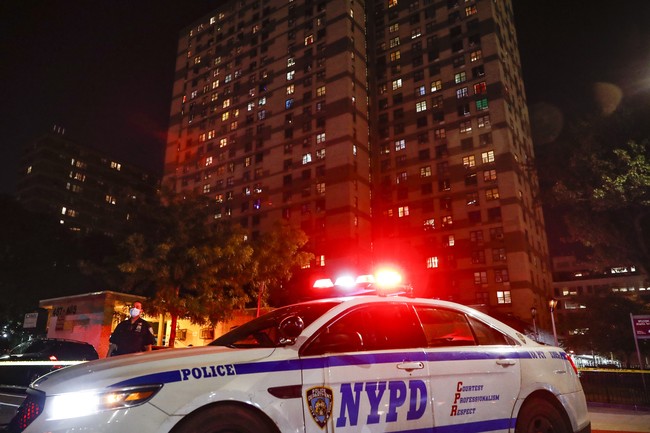
The Manhattan district attorney’s office chose to drop an assault charge in the viral Washington Square Park snowball incident, instead filing misdemeanor obstructing government administration and a harassment violation against the arrested suspect, a move that will frustrate New Yorkers already skeptical of soft-on-crime policies and a mayor who minimized the attack as a “snowball fight.”
On Monday, police were called to Washington Square Park after large snowballs struck officers responding to a report of unruly behavior at a planned post-blizzard gathering. Multiple videos showed snowballs being thrown repeatedly at officers, with some impacts described as forceful enough to injure, and the incident quickly drew public attention. The NYPD later announced the arrest of 27-year-old Gusmane Coulibaly in connection with the episode, noting his recent prior arrest as part of their public statement.
Coulibaly was the only person arrested so far among four individuals whose images the department circulated while seeking information. The footage of the event made it clear to many that this was more than a playful exchange of snow, yet official reactions diverged sharply. New York City Mayor Zohran Mamdani publicly called it a bunch of “kids” engaging in a “snowball fight,” framing the incident as harmless rather than a deliberate attack on police officers.
That downplaying mattered politically and practically. When elected officials minimize attacks on law enforcement, it sends a message about priorities and consequences, especially in a city already strained by rising public frustration over crime and enforcement. Police leaders called the incident disgraceful and promised an investigation, but prosecutors ultimately decided the evidence did not support pursuing assault charges against Coulibaly.
In court on Thursday, prosecutors substituted the original assault allegations with misdemeanor obstructing government administration and a harassment violation, asserting they could not prove an officer sustained a physical injury directly caused by Coulibaly’s conduct. The arraignment resulted in Coulibaly’s release on supervised release while the investigation remains open and the department continues to seek other suspects.
Manhattan prosecutors declined to pursue an assault charge against Gusmane Coulibaly on Thursday night, instead charging him with misdemeanor obstructing government administration and a harassment violation in connection with the viral Washington Square Park snowball fight.
Coulibaly, 27, was arraigned in Manhattan Criminal Court on Thursday evening and released on supervised release…
[…]
In court, prosecutors said that after reviewing the evidence, they were unable to prove that an officer suffered a physical injury caused directly by Coulibaly’s conduct and therefore did not pursue an assault charge. They said the investigation remains ongoing.
For residents fed up with lenient prosecutions, this outcome will feel familiar and infuriating. They see a pattern where high-profile incidents involving alleged attacks on officers are downgraded, reinforcing perceptions that certain prosecutors prioritize optics or political considerations over public safety and accountability. That sentiment is amplified when the mayor appears to dismiss serious conduct as mere youthful mischief.
The city’s law-and-order debate is playing out in public with each decision like this one. Conservatives argue that failing to pursue stronger charges undermines deterrence and invites repeated disrespect for law enforcement, while defenders of the prosecutors might say the legal standard for assault requires clear proof that a particular defendant caused specific physical harm. Either way, the legal nuance doesn’t ease the frustration felt by officers and fellow citizens who watched footage of the event and expected firmer action.
Video evidence and eyewitness accounts will continue to be critical if prosecutors choose to revisit charges or if additional arrests are made. The NYPD is still investigating and has kept pressure on finding the other individuals shown in the released images, which leaves open the possibility that further review of footage from multiple angles could change the legal picture.
The controversy also highlights political fault lines in how city leaders speak about crime. When a mayor with known soft-on-police views publicly minimizes confrontations with officers, it fuels a wider debate about priorities and the message sent to would-be wrongdoers. Many New Yorkers want clear, consistent enforcement that protects both residents and the officers who serve them.
As the investigation continues, observers on both sides of the aisle will watch for whether additional evidence produces different charges or if the prosecution stands by the current filings. Either outcome will be scrutinized for what it says about accountability in a city grappling with how to balance enforcement, civil liberties, and political pressures.


Add comment