
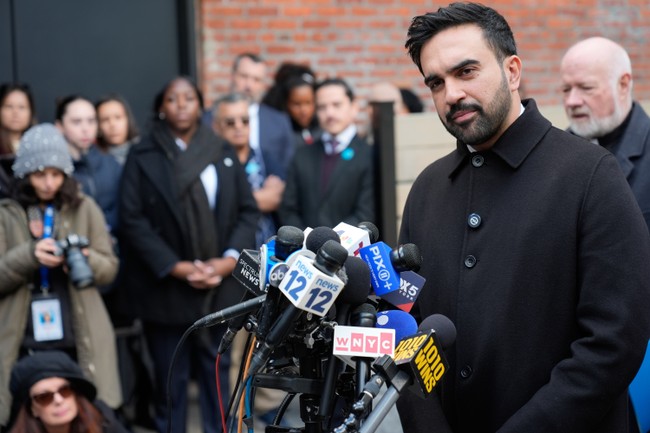
This article examines reactions to a violent protest at a Manhattan synagogue, the terse response from Mayor-elect Zohran Mamdani, and questions about his past associations and priorities as he prepares to lead New York City.
Voters were warned about Zohran Mamdani’s political posture before the election, and recent events have put those warnings in the spotlight. Over the last two weeks, his transition choices and public associations have kept critics talking, and a disturbing incident at a Manhattan synagogue raised fresh concerns about how he will respond to threats against Jewish residents. The scene at the house of worship left many New Yorkers demanding clearer leadership and stronger condemnation.
The protest outside the synagogue turned ugly, with attendees describing chants that included calls for violence and inflammatory slogans aimed at the Jewish community. Witnesses reported organized groups leading the demonstration and encouraging aggressive rhetoric, creating an atmosphere of fear among worshippers. City officials and community leaders reacted with alarm, calling for protection of congregations and unequivocal denunciations of antisemitic behavior.
“The Mayor-elect has discouraged the language used at last night’s protest and will continue to do so,” Mamdani spokesperson Dora Pekec tells The Times of Israel. “He believes every New Yorker should be free to enter a house of worship without intimidation, and that these sacred spaces should not be used to promote activities in violation of international law.”
That statement became a flashpoint, with critics mocking its measured tone and the phrase “discouraged the language used” as insufficient in the face of threats. Many expected a stronger rebuttal from a mayor-elect, particularly after the mayor at the time publicly condemned the incident and expressed solidarity with the synagogue. People who feel targeted by the chants want decisive action, not cautious phrasing that reads as distance from the seriousness of the attack.
Questions about Mamdani’s associations weighed on the reaction as well, since he has faced scrutiny for appearing at events and sharing platforms with controversial figures in the past. Those connections, combined with his public emphasis on alleged Islamophobia, have prompted critics to suggest he prioritizes defending certain communities over condemning antisemitism. That perception fuels doubt about whether he will stand equally for all faiths when intimidation or violence occurs.
Observers pointed out that when controversies arise involving Muslim communities, Mamdani often responds forcefully, framing criticism as bigotry and focusing on the supposed fear and marginalization of Muslim New Yorkers. Critics say his pattern shows an uneven allocation of political energy, with less urgency when the targets are Jewish. The synagogue incident intensified those critiques and brought demands for a clearer, more balanced approach.
Some commentators noted a hypothetical double standard, arguing that if a mosque had been the target rather than a synagogue, Mamdani might have issued a far stronger denunciation. That line of thinking stems from his campaign rhetoric that frequently defended Muslim communities and from his willingness to spotlight alleged Islamophobia on the trail. Critics want to see equal condemnation of all forms of religious intimidation, regardless of who is threatened.
Beyond rhetoric, there are calls for concrete steps to keep houses of worship safe, including better policing, targeted protection for vulnerable congregations, and public messaging that leaves no doubt where city leadership stands. Residents and religious leaders demand policies that prevent violent disruptions and clamp down on organized intimidation, rather than statements that simply discourage the language used. The expectation is practical measures backed by firm words.
The synagogue episode also reopened debates about public safety and the balance between protest rights and protection from harassment. Protesters have the right to voice political grievances, but community leaders argue that crossing into chants that call for violence or glorify attacks on civilians is a different matter entirely. Determining where protest speech ends and criminal intimidation begins is a test for the incoming administration.
New Yorkers are watching how Mamdani will translate campaign commitments into governing choices, especially when the city faces polarized, volatile demonstrations. The mayor-elect promised to represent all residents, and the synagogue incident has become an early test of that promise. For many, the key will be whether his next moves show clear support for law and order and an even-handed defense of every faith community.
Add comment