
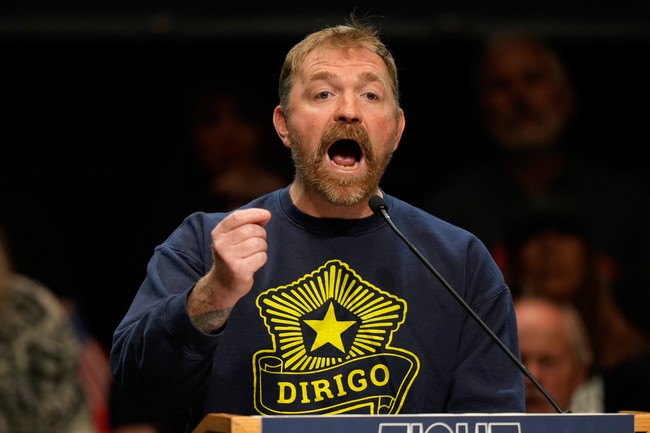
The Maine Democratic Senate debate to replace Graham Platner revealed a field of candidates out of step with mainstream voters, showcasing extreme policy positions, thin résumés, and gaffe-prone moments that together suggest a weak path to beating Sen. Susan Collins this November.
The debate came after Graham Platner dropped out amid serious allegations, leaving Democrats scrambling to present credible alternatives. What followed onstage looked less like a united front and more like a collection of unfocused pitches and ideological stances that will be easy targets in a general election. Voters were left wondering who among these contenders has the experience to take on an incumbent senator.
Moderators split the contest into two two-hour sessions with eight candidates spread across them, but that structure didn’t make the choices any more appealing. The first group included Shenna Bellows, Troy Jackson, Nirav Shah, and Jordan Wood, all of whom had run in statewide primaries this year. The second group featured Elizabeth Dickerson, David Costello, Dan Kleban, and Ashley Webb, some of whom lack traditional statewide political experience.
The candidates repeatedly embraced Medicare for All and proposals to abolish ICE, positions that will be easy to frame as out of the mainstream in a general election. Many answers focused on sweeping ideals rather than concrete plans for how to govern or win votes in a competitive state. That left the night feeling like an expression of party purity rather than a campaign for broad appeal.
Several moments onstage showcased how off-message some contenders were. Ashley Webb spent time talking about writing songs and books, which sounded more like a personal bio note than a Senate qualification. One contestant even drew attention to brewing experience, which underscored how thin some candidacies appeared. These moments will be used by opponents to paint Democrats as unserious about national security and legislative responsibilities.
The implosion of Mr. Platner, who dropped out days after being accused of rape, has left Maine Democrats choosing from a sparse buffet of candidates who either lost primaries for other offices this year or lack any traditional résumé to run for the Senate.
That inserted blockquote highlights the problem plainly: a sparse field of candidates, some of whom lost recent contests, others who lack proven track records. When the party must pick a nominee via a convention of just a few hundred delegates rather than a broad public primary, the chances of choosing the most electable option shrink. Voters expect real-world experience and clear competence, and many of these contenders failed to show either convincingly.
Troy Jackson had the most buzz, partly due to endorsements from the left, but his comments during the debate were revealing. He questioned whether Immigration and Customs Enforcement counts as law enforcement, a statement that will be framed as dangerous by opponents. He also confessed uncertainty about budget specifics with the line, “None of us knows the right way,” which makes it hard to trust him with fiscal responsibility.
Nirav Shah, who brought public health credentials, stumbled when moderators had to clarify his claims about Sen. Collins and votes she actually opposed. Those corrections undercut his attempts to cast Collins as a rubber stamp for federal officials, and they exposed a lack of command of voting records. Such missteps matter; general election voters want clarity and credibility, not corrected talking points.
https://x.com/RNCResearch/status/2077912498087289214
Shenna Bellows tried to remind viewers she once ran against Sen. Collins, but that recalled a heavy defeat rather than a strong showing. Bringing up a 2014 loss by a wide margin does little to reassure skeptical voters that she can reverse an incumbent’s advantage now. Her other moments, including difficulty answering practical household policy questions, contributed to a perception of poor debate performance.
The debate frequently drifted into progressive orthodoxy without showing how those positions translate into winning policies for Mainers. Calls for higher taxes on the wealthy and sweeping federal programs were repeated without persuasive plans for implementation or for addressing trade-offs. Meanwhile, campaign realities—credibility, electability, and the ability to explain trade-offs—were in short supply on stage.
With a convention set to select the nominee, the dynamics favor party insiders over a broad electorate, which raises concerns about who will ultimately represent Democrats in the fall. That process also increases the risk of an ideologically extreme nominee who could hand the race to Sen. Collins. From a Republican perspective, the night only strengthened the case that Collins will be a strong favorite in November.

Add comment