
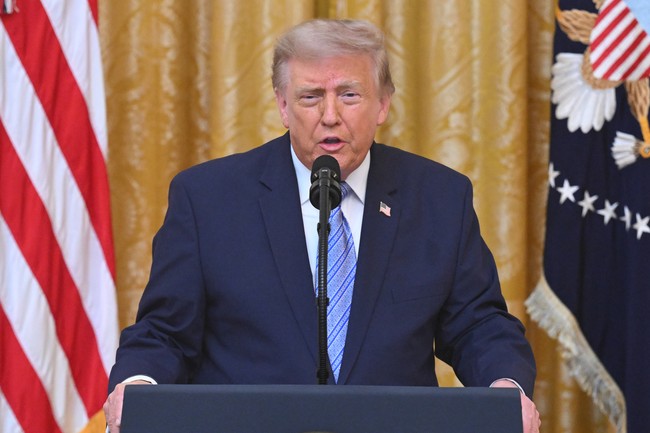
Declassified documents and new statements from President Trump have exposed what investigators say is a massive theft of American voter data by the Chinese Communist Party, raising alarms about election security, identity theft, and political interference tied to 220 million U.S. voter files.
Investigative reporting identifies a collection of personal data that could be combined with other leaks and hacks to create highly detailed profiles of U.S. citizens. The scale of the loss—220 million voter records—means that names, addresses, phone numbers, and political preferences could be used for targeted manipulation or fraud.
President Trump announced “the immediate declassification and release of critical intelligence revealing shocking vulnerabilities in our election infrastructure,” and some released materials include an explicit statement noting “China’s illicit acquisition of 220 million U.S. voter files.” That official move brought classified findings into public view and forced renewed scrutiny of how intelligence was handled.
Catherine Herridge, the investigative journalist cited in the reporting, warned that the voter file haul can be stitched together with other compromised datasets to create dangerous digital composites of individuals. She explained how combining voter rolls with health records and past security clearance data magnifies the risk of fraudulent voter registration, identity theft, and even targeted recruitment by foreign actors.
“In 2015, 22 million security clearance applications, known as the SF 86 (it’s a road map to your life) were hacked by China,” she . That phrase is preserved in the documents and in media accounts of the disclosures, and it underscores how older breaches layer onto newer ones. When multiple sources of personal data are aggregated, the resulting profiles are more actionable for hostile intelligence operations.
Herridge described the process as more than mere data theft; it is exploitation. “The threat comes from combining the data: weaponizing voter roles, health care records, and security clearance applications can build an entire profile of a US citizen,” Herridge explained. “This can be used for fraudulent voter registration, identity theft, targeting US citizens for recruitment by China.”
Reporting also alleges that some intelligence officials downplayed or obscured warnings about China’s influence campaigns during the 2020 election cycle. Investigators point to redacted emails showing an analyst editing a presidential daily brief to avoid drawing direct links to election matters, a move critics say cost the public and policymakers timely information.
https://x.com/RapidResponse47/status/2077924827625558373
That suppression claim, if accurate, suggests politicization inside the intelligence community at a moment when clarity and transparency were most needed. Republicans argue that withholding or watering down such intelligence undermines both national security and trust in election outcomes, and they call for accountability for officials who altered or minimized the record.
Herridge and others stressed the operational implications: a foreign power with access to voter rolls and supplemental datasets can distort registration processes, impersonate voters, and selectively target citizens for recruitment or coercion. Those are not hypothetical scenarios; they are practical threats that require concrete defensive measures from state and federal election officials.
Protecting voter registration systems, purging compromised records, and securing sensitive databases are immediate priorities if these disclosures reflect the true extent of the breach. Republicans frame this as central to national defense, arguing that election integrity is inseparable from homeland security and that strict identification and verification standards are a necessary response.
The documents and reporting also invite a broader debate about how intelligence is classified, shared, and acted upon inside government. Conservatives contend that declassification served the public interest by exposing vulnerabilities and forcing a policy response, while also demanding investigations into why crucial warnings may have been muted.
As the nation processes these revelations, the central questions remain: who knew what when, who altered or suppressed intelligence, and what steps will be taken to secure voter databases and penalize abuse. The political and security stakes are high, and the disclosures have already reshaped the conversation around election protection and foreign influence.
Embedded tweet continues:
… million U.S. voter files.
That information includes names, addresses, phone numbers, political party preferences, and other sensitive data that would be needed to register to vote, and engage in other nefarious activities.
This data loss presents an unprecedented election security nightmare. The intelligence even shows that China assigned a data exploitation unit specifically to this new project.



Add comment