
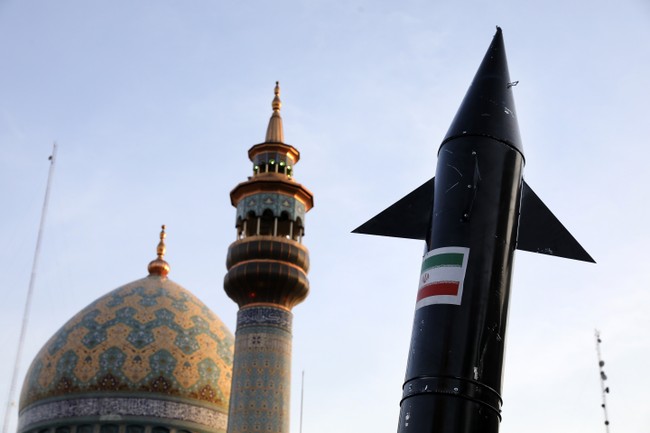
The Iranian crackdown has left hundreds dead and streets full of defiance, while Tehran reportedly put its underground missile caches and security services on the highest alert, raising the risk of a broader escalation that could reach beyond Iran’s borders.
Over 200 people are reported dead amid nationwide unrest, and protesters keep returning to the streets despite brutal repression. The U.S. has warned Tehran against taking actions that would further destabilize the region, and so far American forces have not struck Iranian targets. Still, demonstrators appear to have staying power and are pushing the limits of what the theocratic regime can tolerate.
“Secretary of State Marco Rubio backed the “brave people of Iran” Saturday, while protesters calling for regime change continue to burn Tehran — as fear grows that the death toll has climbed to more than 200.” This line captured international attention and underscored how Western politicians are publicly supporting those who seek to unseat the mullahs. Reports from human rights groups and medical staff suggest the casualty figures could be far higher than official tallies, and allegations of live ammunition being used against civilians are deeply troubling.
Then came a startling report: Ayatollah Ali Khamenei reportedly ordered the Islamic Revolutionary Guard Corps to activate underground “missile cities.” The idea that the regime would bring long-hidden ballistic weapons to a state of readiness while suppressing its own people is chilling. Such a step reads like a desperate bluff or a warning shot meant to deter outside intervention and to rally hardliners at home.
Meanwhile, the Islamic Republic’s supreme leader placed the country’s security services on its highest alert Saturday.
Ayatollah Ali Khamenei ordered the Islamic Revolutionary Guard Corps to activate “missile cities,” or giant underground caches of ballistic weapons, sources told The Telegraph.
“The IRGC’s underground missile cities – which were deliberately kept intact during the 12-day war – are all on high alert,” the insider said, adding that any intervention by the US could trigger an “apocalyptic” war.
The IRGC warned the public Saturday that safeguarding security was a “red line,” and the military vowed to protect public property.
There’s a brutal logic to Khamenei’s move: if the regime feels cornered, it signals that it can still threaten regional foes and thereby hope to split international resolve. That calculus is dangerous because it mixes domestic repression with external intimidation. Activating missile forces when civilians are being shot in the streets risks turning an internal crackdown into a regional crisis.
Iranian officials have described the rioters as terrorists and accused demonstrators of attacking law enforcement and military sites, setting public buildings on fire, and killing security personnel. Municipal offices in cities like Karaj have been torched and unrest has extended to Shiraz, Qom, and Hamedan. Labeling dissent as terrorism is a familiar tactic aimed at justifying sweeping countermeasures.
Iranian officials described the rioters as “terrorists” who were targeting military and law enforcement bases over the past two nights, killing several citizens and security personnel and igniting personal property.
Overnight Friday, a municipal building in Karaj, west of Tehran, was torched.
Protests also continued in the cities of Shiraz, Qom and Hamedan.
Two grim scenarios are now on the table. First, the regime might escalate its domestic campaign and resort to heavy firepower against populated areas to try to crush the revolt. That kind of response would be barbaric and would only harden international opposition to Tehran. Destroying neighborhoods to “protect public property” is a contradiction that reveals the regime’s desperation and moral bankruptcy.
Second, Tehran could attempt to shift the conversation outward by lashing out at regional rivals, especially Israel, to rally domestic support and distract from its collapse at home. Launching attacks abroad when the leadership feels threatened is classic behavior for failing states that hope to unify the populace under the flag. That option would dramatically raise the stakes and could draw the United States and its allies into direct confrontation.
For now, the mullahs appear to be clinging to power by the thinnest of threads. Their options are shrinking, and in that pressure cooker irrational decisions become more likely. The coming days and weeks will tell whether Iran’s leaders choose a destructive last stand or whether internal and external pressures force a different outcome.
Authorities are framing the unrest as an existential threat to the regime, while protesters continue demanding change and risking everything to get it. In that volatile mix, the activation of missile stockpiles stands out as a reckless escalation that could have consequences far beyond Iran’s borders.



Add comment