
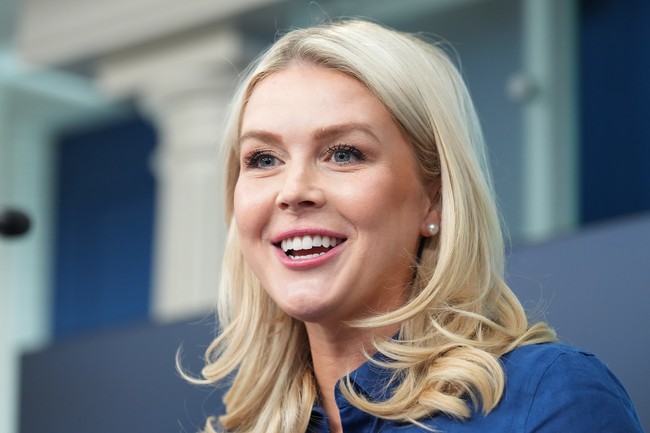
Karoline Leavitt, the White House press secretary, announced she will take maternity leave as she prepares to welcome a baby girl, and the mainstream press reacted like nobody at 1600 Pennsylvania Avenue can handle the messaging while she’s away. This piece looks at the reaction from legacy outlets, the practical reality of a functioning White House communications team, and how Leavitt herself made clear that operations will continue without a formal single fill-in at the podium. It also highlights her public reminders that the press can reach other officials and the president directly, and it lists the experienced staff ready to step up.
On Friday Leavitt told reporters at a press gaggle that it would be her last gaggle “for some time.” She and her husband are expecting a baby girl any day now, joining their toddler Niko and expanding their family to four. Leavitt has stayed professional and on point throughout her pregnancy, and she made clear she deserves time to bond with her newborn without having to announce a rigid return date.
Some outlets treated the temporary absence as a dramatic hole in White House communications, as if a single person speaks for the entire administration and nothing would move without her physically at the podium. That narrative ignores how a presidential communications team operates: the office is staffed with deputies, regional press directors, and policy officials who brief on their beats. The idea that the building becomes silent when one official steps away is a media construct, not the reality of governance.
POLITICO’s coverage framed the transition as a potential “Scoop,” suggesting Vice President JD Vance, Cabinet members, or even the president could appear at the podium during the leave. It painted a carousel of speakers as chaotic television rather than continuity of messaging. That take overlooks how rotating speakers can actually enhance transparency by getting subject experts and senior officials in front of the public.
SCOOP: WH @PressSec @karolineleavitt is scheduled to have her second child next week, a baby girl. Leavitt will be returning to the podium after her maternity leave, though it’s unclear exactly how many weeks she’ll take.
No one will be filling in for Leavitt formally during her leave — but the comms shop is planning to have some familiar faces at the podium to brief the press including VP JD Vance, Cabinet officials or even Trump himself. @playbookdc
Leavitt’s own Rose Garden remarks left no mystery about three things reporters should have accepted at face value. First, she said she would be away “for some time,” a natural and reasonable answer for a new mother who isn’t scheduling every minute of postpartum life for the press corps. Second, she reminded the room, “I know all of you have the President’s phone number personally, so I have no doubt you won’t have a shortage of statements while I’m gone,” making it plain the press can and should reach other senior officials.
Third, the White House has a full bench of experienced communicators and cabinet officials who routinely engage with reporters and the public. The job isn’t a one-person show; it is a coordinated effort across multiple teams who cover different policy areas and regions. That structure means briefings and statements will continue, and the communications cadence will be maintained even with Leavitt home with her family.
Predictably, some coverage treated the lack of a single named temporary press secretary as a scandal rather than standard operating procedure. That angle plays into the legacy media’s insistence that their preferred rituals must be honored to legitimize the flow of information. In truth, the administration’s decision to rotate officials or send subject-matter spokespeople to the podium is practical and efficient.
Leavitt herself pushed back on the breathless framing by publicly endorsing her team and directing attention to their X handles so reporters could follow their work. That move undercuts the narrative that the press will be left without access and makes clear the communications shop is prepared with staffers who understand the job. The list of those ready to handle briefings speaks to depth, not vulnerability.
- Pat Adams – Deputy Assistant to the President and Press Advisor
- Anna Kelly – Special Assistant to the President and White House Principal Deputy Press Secretary
- Kush Desai – Special Assistant to the President and White House Senior Deputy Press Secretary
- Abigail Jackson – White House Press Secretary
- Micah Stopperich
- Liz Huston – White House Regional Press Secretary
- Taylor Rogers – White House Assistant Press Secretary
- Davis Ingle – White House Press Office Spokesman
- Allison Schuste – Assistant Press Secretary
- Olivia Wales
- Keighan Nangle – Executive Assistant to Press Secretary Karoline Leavitt
Rather than admit the original piece was clickbait, some outlets doubled down on the idea that a fill-in was required to keep the press happy. That reveals a lot about how certain parts of the media view their own role: center stage, demanding a face to feed, rather than serving as conduits for factual information from whoever is best placed to provide it. The administration’s approach treats reporters as professionals who can follow multiple officials and sources.
Leavitt’s confidence in President Trump, Vice President Vance, her deputies, and the cabinet to manage communications is exactly what any competent press shop should demonstrate. Her announcement was simple, human, and practical, and it left no doubt the White House will continue to operate smoothly while she takes the time to welcome her child. The only people who seemed surprised were those who prefer spectacle over substance.
Editor’s Note: The mainstream media continues to deflect, gaslight, spin, and lie about President Trump, his administration, and conservatives.

Add comment