
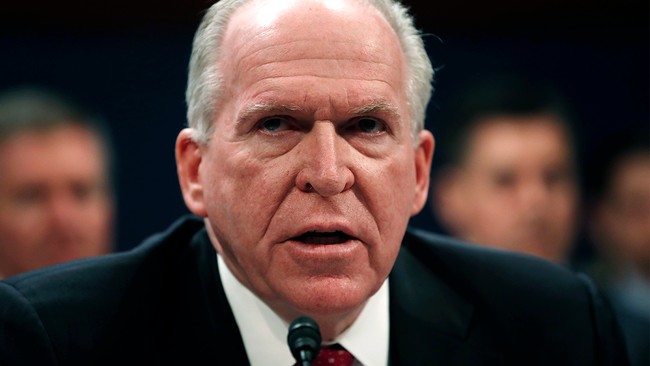
At a George Mason University conference, former CIA director John Brennan reacted angrily when questioned by Thomas Speciale, a national security consultant and former senior adviser to Director of National Intelligence Tulsi Gabbard, about the Steele dossier’s role in the ICA and Brennan’s signing of the intel letter on Hunter Biden’s laptop; the exchange grew heated, included graphic language, and drew sharp reactions from others on the panel.
John Brennan showed up expecting a restrained panel discussion, but the event took a confrontational turn when Thomas Speciale stood up and pressed him about the Steele dossier’s footprint in the intelligence community assessment. Speciale, who once worked for Tulsi Gabbard at ODNI, pointed to emails and declassified materials suggesting Brennan had a hand in including dossier material. The room quickly shifted from academic to accusatory, and Brennan’s response was volatile and unfiltered.
When Speciale raised the dossier question, Brennan erupted and snapped at him, “I don’t know who put you up to this,” he ranted. “I don’t know who you are, but it’s a bunch of bullsh**t that you just passed on.” Those words landed loud and clear and set the tone for the rest of the exchange, leaving few in the audience thinking the former CIA director was offering anything resembling a measured rebuttal.
Speciale didn’t back down and answered calmly that “The emails are clear, sir,” pushing Brennan into a defensive posture that drew an exasperated outburst from Michael Hayden on the panel, who shouted, “Next! Next! Next!” as if to end the interrogation. Brennan then dismissed Speciale’s point as “disinformation” and waved him off, but the moment had already spotlighted unresolved questions about how raw and contested the intelligence surrounding the Russia probe remained.
The confrontation didn’t stop there. Later, Speciale confronted Brennan again in a one-on-one challenge, asking why Brennan had signed the widely criticized letter from 51 former intelligence officials asserting the Hunter Biden laptop story was likely part of a Russian influence campaign. The physical intensity rose as Brennan advanced and jabbed a finger in Speciale’s direction while defending the letter’s language about influence operations.
During that face-to-face, Brennan insisted there was a meaningful distinction between labeling something disinformation and calling it an influence operation, saying, “And you misrepresented that. We never said it was disinformation. We said it was Russian influence operations, which is what they do. There’s a big difference between influence operations…” His sentence trailed off as he turned and walked away when Speciale invoked James Comey, underscoring that several senior intelligence officials are still at odds over what was said and why.
Speciale later told reporters he wanted straight answers “for my own personal interest” about decisions made by career intelligence figures and why those choices were defended publicly. That line of questioning resonates with a conservative skepticism about a permanent national security class operating with a different set of rules and less accountability. For many on the right, the episode confirms suspicions that critical judgments during the Russia probe and the Hunter Biden laptop controversy were driven more by institutional allegiance than straightforward facts.
The audience watched a once-respected intelligence chief lose his composure while being held to account in public, and Republicans will see that as a sign the establishment’s explanations don’t hold up under scrutiny. The back-and-forth also put a spotlight on previously declassified evidence and House oversight claims that a CIA officer helped draft an annex summarizing dossier material and that Brennan and then-FBI Director James Comey decided to include such material in the ICA.
Brennan’s assertion that the CIA was not ‘involved at all’ with the Steele dossier cannot be reconciled with the facts. As the newly declassified documents show, a CIA officer drafted the annex containing a summary of the dossier; Brennan made the ultimate decision, along with then-FBI Director James Comey, to include information from the dossier in the ICA; and, as discussed further below, Brennan overruled senior CIA officers who objected to the inclusion of the dossier material.
The exchange at George Mason was more than an awkward public dressing down; it was emblematic of a broader fight over narrative control and institutional responsibility. Whether one views Brennan as a defender of national security or as a member of an intelligence elite that protected questionable choices, the encounter exposed raw tensions and left unanswered questions about judgment, influence, and accountability.
For conservatives and lawmakers who have pursued oversight, moments like this feed a case for tougher scrutiny of intelligence actions and public statements by former officials. The visceral reaction captured on video is now part of the public record, and it will likely be used as evidence that senior intelligence voices need to be held accountable for the decisions they made during politically charged investigations.

Add comment