
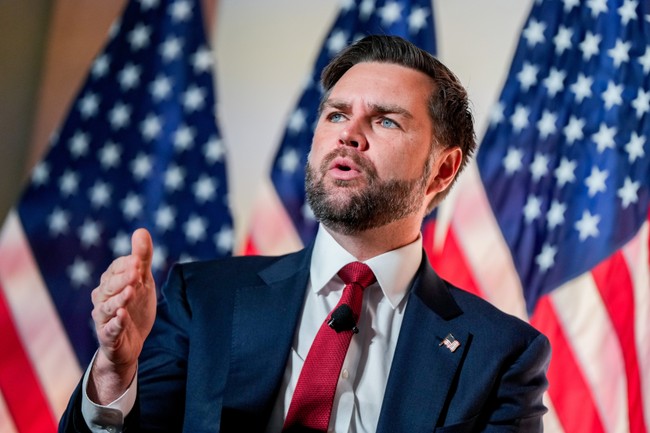
Vice President JD Vance pushed back hard in a recent interview after two public figures crossed the line with attacks on his wife, Usha, delivering blunt language and a clear defense of his family and values.
JD Vance refused to let mean-spirited attacks stand without an answer, and his response was immediate and unapologetic. The remarks from Nick Fuentes and Jen Psaki about his wife drew sharp condemnation from Vance and others who recognize when rhetoric has become personal and cruel. This piece reviews what was said, how Vance responded, and why his stance matters to conservatives who value family and decency.
Nick Fuentes lobbed a particularly ugly charge, using racialized language to question Vance’s loyalty based on his wife’s heritage. Those comments went beyond political disagreement into a toxic personal attack that undermines basic standards of respect. Vance and many on the right saw that line being crossed and recognized the need to respond forcefully in defense of a spouse and parent.
“Who is this guy, really? Do we really expect that the guy who has an Indian wife and named their kid Vivek is going to support white identity?”
Jen Psaki also made remarks that treated Usha as if she lacked agency, imagining a scenario where someone needed rescuing from her marriage. Her language suggested a patronizing view toward Vance’s family that many conservatives found condescending and politically motivated. For Republicans who prize individual dignity and equal treatment under the law, that sort of spectacle feels like a political stunt rather than serious analysis.
“I always wonder what is going on in the mind of his wife. Are you okay? Please blink four times. Come over here, we’ll save you,”
Vance’s reply was stark, straightforward, and protective. He told UnHerd and the public in no uncertain terms that anyone attacking his wife would get a pointed response. That kind of defense of family resonates with voters who expect leaders to stand up for their loved ones and shoot back at unfair personal attacks.
“Let me be clear,” he says. “Anyone who attacks my wife, whether their name is Jen Psaki or Nick Fuentes, can eat s***. That’s my official policy as vice president of the United States.”
Hearing a vice president speak that plainly about protecting his family is refreshing to many on the right, where toughness and loyalty are virtues, not liabilities. Vance didn’t couch his message in political euphemisms; he called out the behavior and made clear where he stands. That clarity is politically useful as well as personally honorable, because voters want leaders who defend their families and values without bowing to performative moralizing.
Beyond the raw language, the exchange highlights a larger cultural problem: commentators and pundits who substitute personal attacks for policy debate. Conservatives have long argued that the left’s cultural denunciations often replace substantive discussion of governance. When a public figure invents a story about someone’s private life or uses demeaning language to score points, it cheapens public discourse and distracts from real issues families face every day.
Vance also used the moment to reiterate his broader commitments — to patriotism, unity among conservatives, and a no-nonsense approach to politics. At events where he’s spoken before, he’s pushed back against woke institutions and promoted an America-first message that emphasizes loyalty, hard work, and civic duty. Standing up for his family fits cleanly into that image: a leader who defends those closest to him and expects opponents to debate policies, not demean people.
Supporters applauded the response as a principled boundary-setting move, and critics who cheered the original attacks now face a political cost for stooping so low. This episode is instructive for anyone who watches modern political media: insults aimed at family members rarely advance any constructive argument, and they often provoke a backlash. Vance’s directness ensured the conversation shifted back to character and respect.
At the same time, the incident spotlights the need for accountability across the board. Public figures should be held to higher standards when addressing private citizens or other public figures’ families, and voters should demand civility alongside conviction. Vance’s reply made that point simply: attack my family and you’ll get called out hard, and that is an understandable limit for any public servant who believes in protecting his household and honoring his commitments.
The debate around these remarks will continue, but one immediate effect is clear: JD Vance drew a line in the sand and did not flinch. Whether you agree with his politics or not, his defense of his wife sent a plain message about loyalty, decency, and the kind of political behavior that should not be normalized.
Across the conservative movement, responses to this episode reflect a broader impatience with performative outrage and personal attacks. Vance’s blunt answer reinforced the expectation that public discourse should return to policy and principles rather than personal degradation, especially when families are involved.



Add comment