
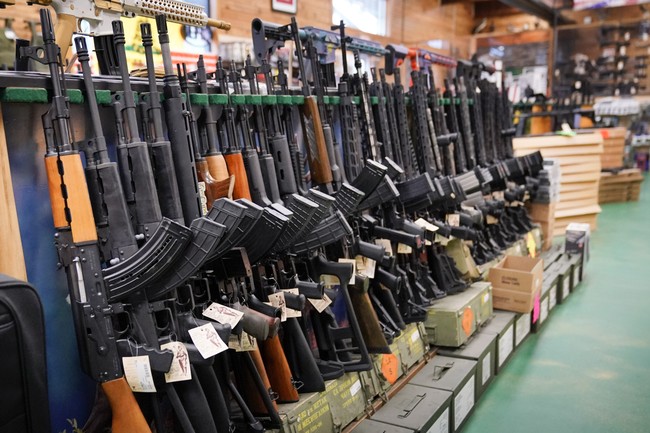
The Justice Department under the Trump administration has filed suit against the District of Columbia over its ban on semi-automatic firearms, arguing the city’s registration practices violate the Second Amendment and amount to unconstitutional refusals to register protected weapons for law-abiding residents.
The District of Columbia has long enforced strict local gun rules that clash with a plain reading of the Constitution, particularly the phrase “shall not be infringed” in the Second Amendment. For years, the municipal authorities in the nation’s capital have maintained a registration regime and blanket prohibitions that many see as an overreach. That friction has now escalated into federal litigation, with the DOJ stepping in to push back.
The Justice Department filed suit alleging that D.C. and the Metropolitan Police Department are unlawfully blocking residents from registering common firearms, including the AR-15 and other semiautomatic rifles. The complaint says MPD’s pattern and practice of refusing registration forces residents into a position where they risk criminal exposure for lawful possession. The DOJ framed the case as a defense of constitutional protections for people living in the seat of the federal government.
The administration’s move follows the Supreme Court’s landmark Bruen decision, which reshaped how courts evaluate Second Amendment challenges and made it more straightforward to contest sweeping local bans. In that legal environment, challenging D.C.’s registration ban is a logical next step for anyone committed to defending firearm rights. Residents of the capital should expect the same constitutional protections as the rest of the country, and the lawsuit insists on that parity.
Today, the Justice Department sued the District of Columbia’s Metropolitan Police Department (MPD), alleging that the District government and MPD unconstitutionally ban the AR-15 and many other firearms protected under the Second Amendment. The District’s gun laws require anyone seeking to own a gun to register it with D.C. Metro Police. However, the D.C. Code provides a broad registration ban on numerous firearms — an unconstitutional incursion into the Second Amendment rights of law-abiding citizens seeking to own protected firearms for lawful purposes. MPD’s current pattern and practice of refusing to register protected firearms is forcing residents to sue to protect their rights and to risk facing wrongful arrest for lawfully possessing protected firearms.
This suit is not the first test of D.C.’s gun law scheme. The watershed Heller decision nearly two decades ago declared that the Second Amendment protects an individual’s right to possess a firearm in the home for lawful purposes like self-defense. Back then, the Court overturned Washington’s handgun ban on the grounds that the right of the people to keep and bear arms is not a second-class right. The new DOJ filing draws directly on that precedent and on the post-Bruen framework to argue that current D.C. practices are unconstitutional.
In 2003, a D.C. special policeman named Richard Heller sued Washington, D.C. because the laws at the time prevented him from owning a handgun and keeping it in his home for self-defense. In 2008, the U.S. Supreme Court, in its landmark decision Heller, held that the Second Amendment does, in fact, protect the rights of law-abiding citizens to own a semi-automatic weapon in their homes for lawful purposes, such as self-defense. Unfortunately, today, the District still prevents ownership of these very same weapons through a pattern and practice of broadly blocking gun registration. Law-abiding citizens throughout our nation’s capital are facing wrongful arrests due to the enforcement of unconstitutional laws.
Advocates for gun rights have been winning a string of courtroom victories recently, and this case adds another front to that trend. Many conservatives view the Second Amendment language as categorical and insist on literal application without incremental limitations. That perspective fuels energetic legal challenges aimed at overturning statutes and policies seen as inconsistent with the Founders’ intent.
The practical stakes are high: the lawsuit challenges the government’s ability to criminalize everyday citizens who attempt to exercise a constitutionally protected right. If the court accepts the DOJ’s arguments, D.C. residents who sought to register and lawfully possess protected firearms could be spared the prospect of arrest and prosecution. Conversely, a loss would allow municipal authorities to maintain a de facto prohibition under the guise of registration rules.
The case is only beginning, but it follows a clear line from Heller and Bruen and will likely move through vigorous litigation. Expect aggressive factual and legal disputes over what constitutes a protected firearm, the scope of registration authority, and how Bruen’s standard applies in an urban municipal setting. Observers on both sides know the litigation could reach higher courts, potentially reshaping the law for years to come.


Add comment