
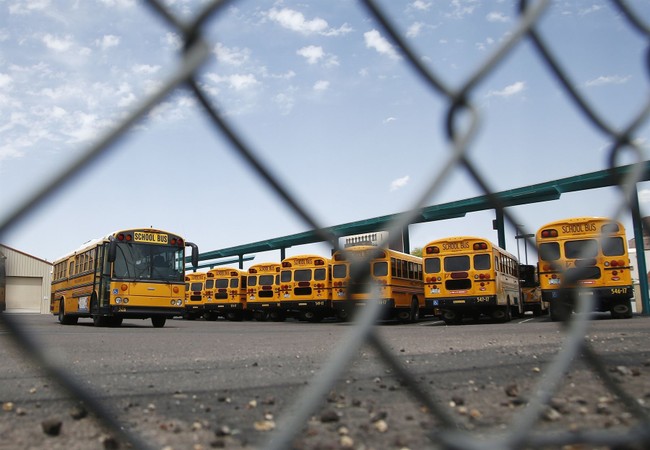
The move to electric school buses in New York promised cleaner air and quieter rides, but has produced real problems for families this winter, including reports of buses running with reduced or no heat, breakdowns that left children waiting outside in frigid weather, and local tension between parents and school officials over safety and battery management.
New York has a mandate that by 2027 all school buses must be electric, and the state has committed roughly $263 million for the transition, with vehicles costing about $156,000 each. Proponents say electric buses offer cleaner air, a quieter environment for drivers and students, and potential academic benefits from reduced pollution exposure. Those are reasonable selling points on paper, but implementation is where policy clashes with everyday life, especially when temperatures drop and battery performance changes.
In Erie County, parents in the Lake Shore Central School District are reporting that children are coming home cold because drivers are turning down or shutting off heaters to conserve battery power for the bus. The concern centers on the fact that heaters use the same electricity the bus needs to move, and charging strategies or route planning can leave less capacity for cabin heat. One parent put it plainly: “The heaters on the bus run off the same electricity as the bus itself. They were told that it drains the battery capacity of the bus itself.”
There’s a practical clash between theory and reality: batteries lose range in cold weather, and while agencies claim routes are planned to accommodate this, families are seeing different results. A grandparent described a child returning home after a morning with no heat when the temperature was 23 degrees. That kind of anecdote drives home the difference between optimistic technical estimates and everyday experience on a freezing morning.
Beyond window anecdotes, parents also report longer, riskier waits when buses break down or are delayed, which grows worse when substitute buses arrive late or there’s no way to quickly warm children who’ve been standing in the cold. “The bus broke down on route. They deployed a substitute bus, and the bus was more than 30 minutes late. My son stood outside for over 35 minutes waiting for a bus that wasn’t coming. Some of those kids are on there for upwards of a half hour or more while the bus makes its route. There’s no reason that the kids should freeze for all that time.”
School officials have defended the electric buses. Superintendent Phil Johnson stated: “All routes are planned so that the electric bus battery capacity is more than sufficient to support both the route and continuous heating, even in winter weather. The district values its transportation staff and continues to provide training and support to ensure students and staff are safely transported.” That reads like an assurance, but it doesn’t erase the real, recent reports from families who say practice differs from planning.
The New York State Energy Research and Development Authority acknowledges that battery range can fall in cold weather while still saying the vehicles remain sufficient for most local routes. The phrasing matters: “While battery range can decrease in cold weather, they are still sufficient to complete operations on most local bus routes.” That caveat allows for exceptions, and when exceptions affect children waiting on a curb, people stop seeing abstract policy and start seeing consequences.
Investing $263 million and deploying buses that cost roughly $156,000 each represents serious taxpayer commitment, and that makes accountability reasonable to demand. If heating concerns are tied to route planning or driver practices, those are fixable problems with clearer training, revised schedules, or auxiliary power solutions. If the issues are inherent to the current battery tech in extreme cold, then policymakers need to admit the limits and adjust timelines or funding for hybrid stopgaps.
The emotional response among families is understandable: parents expect their children to arrive at school warm and safe, not shivering because someone prioritized preserving a battery over turning on the heater. Officials and advocates who champion electric school buses should confront the messy, real-world trade-offs and not dismiss parental complaints as political noise. Good policy is practical and protects kids first, not ideology first.
There’s a clear political angle: the push for electric buses has been framed as part of the broader climate agenda that many on the left embrace enthusiastically. Supporters can keep promoting the environmental benefits, but they should also be open about operational limits and ready to make immediate fixes where children’s comfort and safety are at risk. Parents deserve straightforward answers and quick action so kids stop becoming collateral in an ideological rollout.
“Every single day, here at RedState, we will stand up and FIGHT, FIGHT, FIGHT against the radical left and deliver the conservative reporting our readers deserve.”

you saying these busses are unable to do one pickup and one drop off and back to the barn ( normal day ) without eating all the battery juice?