
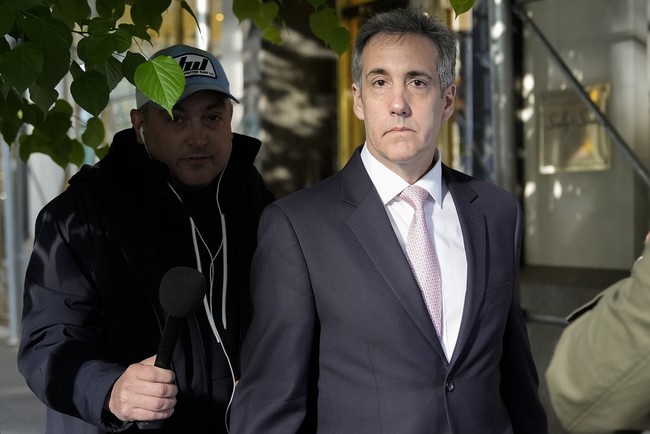
President Donald Trump sat down with Michael Cohen on his radio show, sparking renewed debate after CNN legal analyst Elie Honig delivered a stark assessment of the hush-money prosecution and Cohen’s shifting role as a witness. That exchange, and Honig’s blunt verdict that the case’s factual basis has collapsed, drew attention from Trump and his supporters and prompted a wider discussion about how prosecutors handled the matter.
In a segment that surprised some viewers, Honig argued the prosecution’s case depended heavily on Michael Cohen’s credibility and that recent statements have undermined that foundation. He said prosecutors from both the Biden Justice Department and a previous liberal Democratic district attorney had declined to charge, citing doubts about Cohen. Honig’s critique laid out a simple but damaging scenario for the prosecution: if Cohen is truthful, he claims he felt coerced; if he is dishonest, the case rests on falsehood.
https://x.com/trumptruthsbot/status/2090572950131101740
Honig’s exact words were pointed and simple: “And anyone who cheered that hush money prosecution to Donald Trump two years ago has nothing left to stand on.” The analyst framed the moment as a collapse of both legal and factual grounds, saying the star witness’s credibility is now in question. That assessment was framed as a turning point, one that undercuts the narrative prosecutors had built.
“Because now the star witness, the guy who is the reason why every prosecutor who looked at this case, including the Biden DOJ, the prior liberal Democratic DA, passed on charging this case, is because they didn’t trust Michael Cohen beyond a reasonable doubt.
“Alvin Bragg rolled that dice. And now Michael Cohen has said publicly that he, quote, ‘felt’ –“
The interview host interjected on the word “felt,” and Honig completed the point: “Felt pressured and coerced by prosecutors.” That phrase, short but heavy, shifted the frame from legal technicalities to the reliability of witness testimony. For supporters of Trump, it reinforced the view that the case always rested on shaky ground and that prosecutorial choices were questionable at best.
“So where do you stand on Michael Cohen now? If you believe he’s a truth teller, then he felt pressured and coerced by prosecutors. That’s not acceptable. If you believe he’s a liar, then your case is built on a liar.
“So that case is going through its appeal process incredibly slowly. I think there are major legal infirmities with it. But now the factual predicate has collapsed as well.”
That blunt assessment prompted the host to call it a “bad week for the resistance,” language that invited partisan reaction and commentary. Honig has previously criticized aspects of the prosecution, saying the law was contorted to pursue the case, and his latest comments fed into that line of critique. Observers on both sides seized on the exchange, seeing it as confirmation of long-held positions.
The broader context for the conversation was Trump’s decision to interview Michael Cohen, a move few expected given their history. Cohen has been a vocal critic and key witness in past proceedings, yet the radio sit-down showcased a thawing dynamic that surprised many. The interview included candid exchanges about media coverage, political polling, and policy topics such as the border and Iran.
Cohen recalled a heated moment from an old CNN appearance and how it became a viral line, and Trump responded by saying mainstream outlets “weaponized” people like Cohen. Cohen referenced the exchange that produced the meme “says who,” and Trump answered plainly that the media had used and amplified narratives against him and others. Their back-and-forth revealed a mix of grudging respect and political theater.
At one point Trump acknowledged Cohen’s shift in tone toward him, saying, “I respect the fact that you recanted everything you said. That’s a big thing that you did.” That statement highlights how political relationships can change rapidly and how public recantations or repositioning can have outsized repercussions. The conversation signaled that reconciliation, or at least pragmatic engagement, is possible even after bitter disputes.
The interview also touched on the practical fallout from the legal drama, including the slow grind of appeals and how public perception shapes legal narratives. Honig emphasized that, beyond legal technicalities, the erosion of the factual predicate matters because juries and appeals courts weigh credibility heavily. For a prosecution that relied on testimony and timeline construction, those credibility cracks are a central vulnerability.
Observers will likely keep watching the appeals and any further media moments between Trump and former critics, because these interactions shape public understanding as much as legal filings do. The intersection of courtroom strategy, witness credibility, and media narrative continues to define how this story plays out in public, and the Cohen interview reignited that debate in a high-profile way.
Add comment