
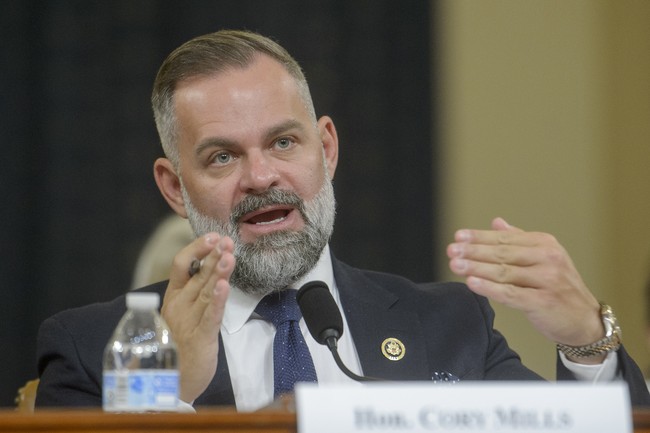
Checklist: explain the challenge to Rep. Cory Mills, outline Mike Haridopolos’s intervention, describe the allegations and investigations, detail the primary outcome and political fallout.
Cory Mills Blamed His Enemies for His Downfall. The Call Was Coming From Inside the House.
Florida Republican Cory Mills spent weeks insisting each new story about him was a political hit job, and he fought efforts to step aside. Party operatives quietly prepared an alternate plan while leadership and the White House publicly kept backing him longer than many local leaders thought wise. Internal alarms sounded as allegations, financial woes, and questions about his record piled up before the primary.
Mike Haridopolos, a well-known Florida Republican and former state Senate president, privately recruited Ryan Elijah, a former Orlando television anchor, as a safer option for the party. Haridopolos worked discreetly but decisively, reaching out to colleagues in Washington and across the delegation to build support for a change. He saw the district’s vulnerability and believed leaving Mills on the ticket would put the seat at unnecessary risk.
The 7th Congressional District in Florida sits around R+5, a margin that requires competent, untroubled incumbency to hold. Haridopolos told Republican leaders that the party needed a backup candidate and pressed the case that this seat could easily flip if problems continued. That calculation drove his decision to recruit an alternative who could be competitive and steady heading into the general election.
House leadership quietly allowed Haridopolos to proceed, even as public endorsements for Mills lingered from national figures. Only a small number of members publicly shifted, with Rep. Anna Paulina Luna among the few who took an active stance for Elijah. Most elected officials stayed on the sidelines in public while the work continued behind the scenes to ensure a viable Republican nominee would emerge.
Elijah entered the race in April after allegations were already under review by House Ethics, centered on claims involving sexual misconduct, dating violence, and campaign finance irregularities. Democrats targeted the district and their nominee reported substantial cash on hand, putting added pressure on Republicans to field someone who could avoid a costly fall fight. Reports of Mills’ campaign debt painted a bleak fundraising picture compared with the Democratic opponent.
Questions about Mills’ military record surfaced and then grew more serious when a report said the Department of Justice had opened a criminal investigation, though the precise subject was not disclosed. Mills pushed back, saying there was no written confirmation from DOJ or the FBI and that he knew of no investigation. His immediate response was to accuse opponents of timing their attacks to influence the primary.
“This appears to be a desperate lie from my political opponents,” Mills said. “I have nothing to hide.”
Despite those denials, Republican strategists pressed on. Elijah urged Mills to suspend his reelection bid after the DOJ report became public, arguing that party unity required avoiding an unclean contest. Mills opted to stay in the race, believing his explanations and choosing to contest the claims rather than bowing out, a gamble that ultimately did not pay off.
Haridopolos continued campaigning hard for Elijah, bringing him around the state and making his endorsement public in early August. The move was meant to steady the district and prevent a bruising November fight that could have cost millions. With the internal effort in place and voters increasingly concerned about the allegations, the path opened for a change at the top of the ticket.
On primary night, Elijah defeated Mills by about 13 points, a decisive margin that ended Mills’ two-term tenure in the House. The Republican nominee now faces Democrat Bale Dalton in November, and party officials believe the district will be far easier to defend with a fresh, less controversial candidate at the top of the ticket. Haridopolos and others argued the forensics of the campaign showed the party avoided what could have been a very expensive and risky general election fight.
Trump had endorsed Mills in February but by Election Day Mills was no longer on the recent list of Trump-endorsed candidates for Florida, and reports indicated the former president had privately advised Mills to quit. Mills refused to step aside when asked. That refusal, many conservatives now argue, was a miscalculation that allowed internal pressure to replace him rather than letting the party unify behind him.
Those maneuvering inside the party left Mills isolated after the primary, and he has not been in contact with Haridopolos since the endorsement was formalized. Local Republicans say the episode demonstrates the risks of clinging to wounded incumbents when a party’s broader interests are at stake. The 7th district now moves forward with a new nominee and the hope among Republicans is that they sidestepped a major fall liability.

Add comment