
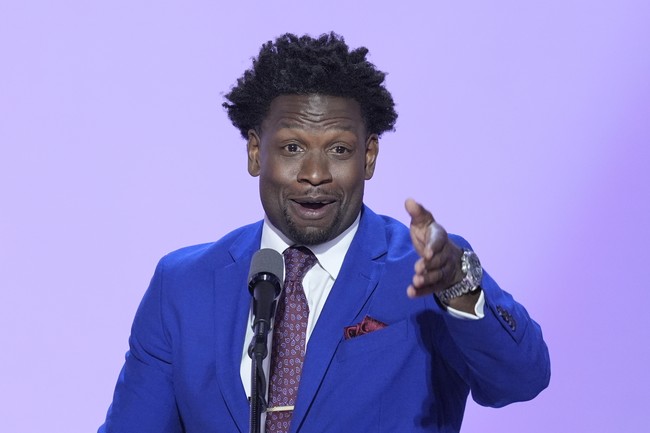
Checklist: Discuss Pastor Lorenzo Sewell’s speech to Dearborn council; explain his claim that the city is under Sharia law and the reaction it provoked; note law enforcement’s response and context about Dearborn’s demographics; cite related warnings from public figures and Sewell’s background.
Michigan pastor Lorenzo Sewell took the council microphone in Dearborn and delivered a blistering, no-holds-barred address that captured national attention. He accused local leaders of letting the city drift away from American legal norms and into something he called Sharia law. The moment felt like a deliberate challenge to officials and a rallying cry for concerned residents. People in the room responded with a mix of boos and cheers as Sewell made his case.
Sewell did not soften his words. He told the council directly, “America, we have lost this city,” and added with rising urgency, “This is a city that is no longer under American laws; we are under Sharia law. We will not have it anymore.” He punctuated his remarks with the terse line, “Enough is enough!” The tone was confrontational and meant to force a public reckoning on policy and priorities.
The pastor asked each council member to state whether they would renounce Sharia law before his time expired, then returned to his seat. That demand was designed to put elected officials on record and to make the issue impossible to ignore. A smattering of boos met him, but much of the audience cheered. The scene underlined a sharp divide between Sewell’s supporters and those who saw his remarks as inflammatory.
Sewell pressed the point that Muslims make up a relatively small percentage of the national population, and he warned that Dearborn’s trajectory threatens core American principles. He signaled a belief that cultural accommodations have crossed into legal erosion. For many conservatives, that kind of erosion is exactly what must be fought to preserve the rule of law. The message was less a policy proposal than a demand that city leaders clarify where they stand.
The pastor also accused authorities of failing to adequately pursue attackers in an incident involving anti-Islam activist Jake Lang, asserting, “You are not up under American law. You are up under Sharia law. That is the reason why you have made no arrests.” Law enforcement did arrest one individual in that case and has sought information on others, but Sewell and his allies remain unsatisfied. The dispute highlights a familiar conservative complaint: law enforcement sometimes appears to favor de-escalation over full accountability for politically sensitive confrontations.
https://x.com/TheChadLedger/status/2089929365937070379
Dearborn is widely known for having the highest per-capita Muslim population in the country and for housing major Islamic institutions, which makes it a focal point for debates about assimilation and public life. That demographic reality is central to why Sewell’s speech resonated beyond the city limits. Conservatives argue that when a city becomes strongly associated with one faith or culture, civic leaders must ensure American law and public norms remain paramount. Sewell framed his remarks around that exact concern.
Former Director of National Intelligence Tulsi Gabbard has expressed similar alarm about Islamist ideology gaining traction in certain U.S. communities, warning that clerics in some cities are “openly pushing this Islamist ideology, trying to recruit and radicalize young people.” Gabbard also pointed to organizations that she says aim to use legal and political systems to advance religious law. Those comments have circulated among conservatives as further evidence that vigilance is warranted where culture and religion intersect with government.
Critics of Sewell say his rhetoric inflames divisions and unfairly targets Muslim Americans, while supporters argue he is sounding an alarm that elected leaders refuse to hear. Either way, the episode forced a public debate in a city that already sits at the center of national attention on religion, immigration, and civic identity. Council members now face pressure to respond in a way that either reassures concerned residents or defuses tensions, and their choices will matter.
Sewell is a familiar figure to national audiences, known for leading a Detroit-area congregation and for a high-profile prayer at a presidential inauguration. His background lends weight to his words among conservatives who see him as a principled voice speaking up for law and order. Whether his blunt approach wins policy change or simply amplifies cultural conflict, it has clearly energized a segment of the electorate that is focused on preserving American legal norms.
Add comment