
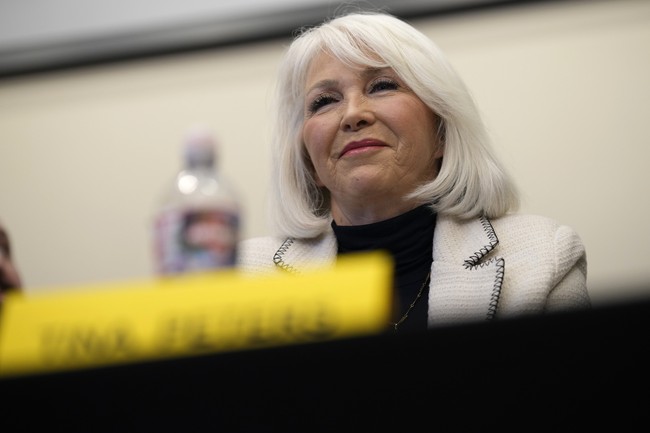
Tina Peters, a former Mesa County clerk convicted in 2024 on election-interference charges, had her nine-year state sentence commuted by Colorado Governor Jared Polis, triggering fierce reactions from Democratic leaders and sparking renewed debate over free speech, prison conditions, and equal treatment under the law.
The commutation came after months of public pressure and comparisons to lighter sentences given to others accused of similar conduct. Supporters argued Peters faced a politically charged prosecution and undue harshness, while critics described the move as undermining confidence in elections. The decision sets her release for June 1, 2026, and leaves fault lines exposed in how cases tied to elections are handled.
BREAKING: Colorado Gov. Jared Polis has now CONFIRMED he has commuted Tina Peters’ sentence, saying he believes the election whistleblower’s free speech rights were violated
Polis says the judge “held her speech against her.”
Peters will OFFICIALLY be free in just a couple weeks, with a release date of June 1.
Colorado Gov. Jared Polis on Friday announced he is commuting the sentence of former Mesa County Clerk Tina Peters, who was facing more than eight years in state prison for allowing unauthorized access to voting machines following the 2020 presidential election.
Polis’ decision — which was swiftly condemned by other Colorado Democrats — follows months of pressure from President Trump to release Peters, who has promoted Mr. Trump’s false claims of widespread fraud in the 2020 election. The president had threatened “harsh measures” if Colorado did not free Peters from prison.
Peters’ case stirred national attention not just because of the conviction but because of questions about the trial’s fairness and the severity of the punishment. Advocates for election integrity and civil liberties argued certain courtroom dynamics and sentencing choices suggested political influence. Supporters pushed for relief through public appeals and legal avenues, while some national figures applied additional pressure from outside state authority.
Senator Michael Bennet expressed strong disapproval of the governor’s action, joining others who warned it would harm public trust. The reaction from leading Democrats was swift and pointed, highlighting political polarization around electoral disputes. Their statements framed the commutation as a dangerous precedent for how election-related crimes are treated.
Former governor and senator John Hickenlooper was among those who criticized the move, echoing concerns about undermining election integrity. High-profile condemnation focused on the message the commutation sends to voters and election officials. Those critics argued that reducing a sentence tied to the security of voting systems erodes deterrence.
Tina Peters is guilty as sin and a disgrace to Colorado.
She tried to undermine Colorado’s free and fair election system. When she was caught red-handed, she was prosecuted by a Republican district attorney and rightfully convicted by a jury of her peers.
Reducing her sentence sends the wrong message to those seeking to undermine trust in our elections and it will do nothing to deter Donald Trump’s illegal attacks on Colorado. I strongly disagree with this decision.
The background of the case includes a conviction for election interference and undue influence of a public official, with Peters originally receiving a nine-year term. Supporters highlighted Peters’ age and health issues and argued incarceration conditions worsened her well-being. Her legal team sought sentence review, but appeals were denied until the governor stepped in with clemency.
Comparisons to another recent case intensified scrutiny: a Colorado state senator convicted on related charges received probation, community service, and a fine. That discrepancy prompted calls for a review of Peters’ punishment and for consistency across cases. Critics of the original sentence pointed to those differences as evidence of uneven treatment when political affiliation and profile vary.
Governor Polis reviewed multiple cases and announced clemency actions in a broader package affecting dozens of people. Peters was one of 44 names included, and Polis cited concerns about her free speech rights being weighed against criminal punishment. The governor set a specific release date and framed the action as a response to unequal outcomes and constitutional questions raised by the case.
President Donald Trump offered public support for Peters, and his attention to the matter added pressure from national politics. Peters herself issued a public statement expressing remorse for past actions and outlining plans for lawful advocacy on election integrity and prison reform after release. Her words emphasized learning from mistakes and a desire to help improve the corrections system.
Peters wrote a statement to her X account, thanking the governor.
Thank you Governor Polis.
I made mistakes, and for those I am sorry. Five years ago I misled the Secretary of State when allowing a person to gain access to county voting equipment. That was wrong. I have learned and grown during my time in prison and going forward I will make sure that my actions always follow the law, and I will avoid the mistakes of the past.
I strongly condemned it when people not connected to me threatened to storm the prison I am in. I myself have faced threats, so, I also want to be clear that I condemn any and all bullying, threats and acts of violence against voters, county clerks, election workers, and other public officials, and concerned citizens like myself.
Upon release, I plan to do my best through legal means to support election integrity and based on my own personal experiences to elevate the cause of prison reform to help ensure the detention system is more fair and equitable for people of all ages. My experiences have given me a perspective that plan to share with others to improve Colorado’s corrections system. I am grateful for a second chance and an earlier release, and I look forward to doing good in the world.
Peters is scheduled to leave custody on June 1, 2026, under the terms set by the commutation. The decision will likely keep the case in public debate, with supporters celebrating the outcome and opponents warning about long-term consequences for election security. The commutation itself raises questions about how elected officials balance constitutional concerns with criminal enforcement in politically sensitive cases.



Add comment