
The United Nations debate over a Bahrain-drafted resolution to allow force to protect shipping through the Strait of Hormuz has hit an unexpected snag, with France joining Russia and China in opposing authorization for military action. Gulf states wanted clear backing to defend transit passage after repeated Iranian threats, but diplomatic friction and calls for a ceasefire complicated consensus. This article walks through the Security Council standoff, Gulf concerns, and the political fallout from France’s decision in plain terms.
The Gulf states pushed a resolution meant to give them or multinational partners the legal cover to keep the strait open and protect commercial shipping. Their goal was straightforward: deter or respond to attempts to close, obstruct, or interfere with navigation in one of the world’s most important maritime chokepoints. After a series of incidents and escalating threats, leaders in the Gulf argued that self-defense and collective action must be clearer under international law.
“[A]uthorizes member States, acting nationally or through voluntary multinational naval partnerships, with advance notifications to the Security Council,” to use all necessary means “to secure transit passage and to deter attempts to close, obstruct or otherwise interfere with international navigation through the Strait of Hormuz.”
Bahrain’s foreign minister made the case in forceful terms to the Security Council, accusing Iran of “treacherous” and preplanned aggression toward its Arab neighbors. He listed attacks on civilian infrastructure like airports, water stations, seaports, and hotels as proof of a broader campaign that, in the Gulf view, threatens commercial traffic and regional stability. Those claims framed the resolution as a defensive, practical measure rather than an offensive loose authorization to wage war.
Bahrain’s foreign minister, Abdullatif bin Rashid Al Zayani, told a session of the Security Council on Thursday that “Iran’s aggressive intentions” toward its Arab neighbors were “treacherous” and “preplanned,” and violated international law. He said Iran had targeted civilian structures such as airports, water stations, seaports and hotels.
Iran signaled on Thursday that it intended to continue to oversee shipping traffic through the critical Strait of Hormuz, even after the war.
Instead of rallying behind that defensive posture, three members of the Security Council blocked the effort from moving forward, with France aligning itself with Russia and China in opposing authorization of force. That is a serious development because it leaves Gulf states legally constricted and politically exposed while Iran asserts control over transit. The French position was reportedly based on concerns about escalation and risks to personnel from Iran’s Revolutionary Guard Corps.
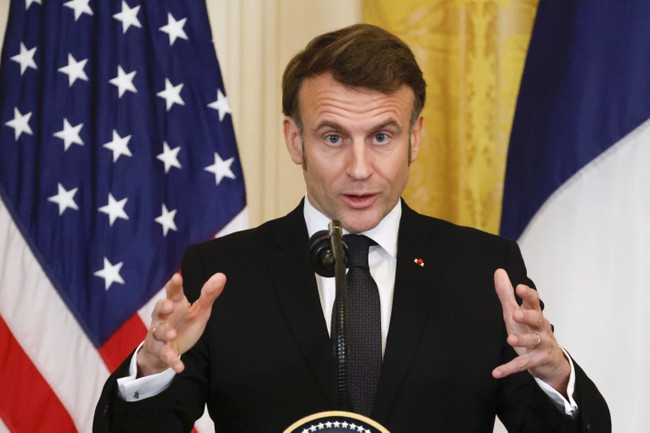
French President Emmanuel Macron described the use of force as “unrealistic” because it would “take an inordinate amount of time” and expose people to threats from the Iranian Revolutionary Guard Corps (IRGC). That argument matters to some, but for many in the Gulf and in Washington, it reads like a refusal to back allies facing direct coercion. The choice pushed the debate from legal mechanics into politics and trust among partners.
The international coalition convened virtually to discuss coordinated steps, with 41 nations on the call chaired by the United Kingdom, but agreement on action remained limited. Participants criticized Iran for “trying to hold the global economy hostage” and discussed sanctions and diplomatic pressure, yet many conditioned further steps on a ceasefire. That hesitancy frustrated those who see swift, decisive protection for shipping as essential to global trade and deterrence.
A 41-nation virtual call, chaired by the U.K., saw jabs at Iran for “trying to hold the global economy hostage,” fresh talk of sanctions, and a promise to up diplomatic pressure over the continued blockage of the vital trade artery.
Some officials pushed back, saying the Gulf states do not actually need Security Council approval to defend commercial passage if they choose to act unilaterally or in regional partnerships. The problem is political: without broad international support, any defensive action risks being portrayed as aggression, and coordination becomes harder. For those who favor a robust response, the issue is simple—protect the sea lanes and punish attempts to shut them down.
There was also a pledge from coalition participants to “comprehensively reject the imposition of tolls” or other attempts by Iran to exact fees for passage, reflecting concern that Tehran might monetize control of the strait. That language signals a willingness to use economic and diplomatic tools, but words alone do not guarantee swift enforcement. The core question remains whether nations will couple those words with the military resolve necessary to keep the waterway open.
A readout of the meeting, provided by the U.K. side, said participants agreed to turn up international heat, including through the UN, to send clear and co-ordinated messages to Iran to permit unimpeded transit passage through the Strait of Hormuz and to comprehensively reject the imposition of tolls on vessels which seek to pass through.”
On the ground, leaders who favor tougher measures argue the legal authority from the UN would streamline multinational action and remove doubts about the legitimacy of defensive steps. Opponents counter that authorization could trigger wider confrontation and put sailors and marines at risk. For now, the council remains gridlocked, and the Gulf is left to weigh its options while Iran asserts influence over a choke point critical to global commerce.


Everybody can earn 250$h+ 1k$ daily… You can earn from 6000-12000 a month or even more if you work as a full time job…It’s easy, just follow instructions on this page, read it carefully from start to finish… It’s a flexible job but a good eaning opportunity.. go to this site home tab for more detail thank you .
open here → → PayAtHome1.Com