
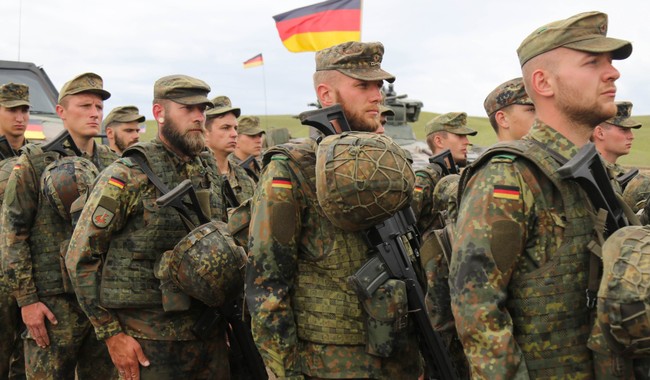
European countries have moved a small but visible military presence to Greenland in response to international tensions over the island, deploying roughly 34 personnel in a short training mission to sharpen Arctic skills and signal unity among NATO partners.
The long military traditions of Europe frame this latest move, with France, Germany, the United Kingdom, Sweden, and Norway all taking part in a rapid, two-day mission on Greenlandic soil. What looks modest on paper is meant to send a clear diplomatic and operational message: Arctic readiness and allied cooperation matter now more than ever. Leaders portray the deployment as practice for operating in extreme conditions and as a demonstration that they can move forces quickly when needed.
French officials announced a commitment of land, air, and sea assets focused on Greenland, tying their actions to growing strategic interest from other global powers. A colleague summarized the French announcement this way: French President Emmanuel Macron on Wednesday announced that France would deploy “land, air, and sea assets” to Greenland, as President Donald Trump continues to mull the acquisition of the world’s largest island, which is largely covered by ice and uninhabitable. As Trump correctly warns, both Russia and China have increasingly shown their respective interests in Greenland due to its strategic Arctic location. That framing highlights concern about long-term competition over Arctic access and resources.
What the press is calling a “mighty force” is in fact a small, specialized group geared for cold-weather operations. Reports list deployments such as a 13-person reconnaissance detachment from Germany and 15 mountain specialists from France, with several officers from Sweden, Norway, and Britain rounding out the mission. Those numbers add up to roughly 34 troops, which some commentators have used to lampoon the exercise as symbolic rather than substantial.
There is truth to both readings: the mission is both symbolic and practical. Arctic and sub-Arctic operations demand specific training and equipment, from cold-weather movement to mountain and ice-craft skills, and these short exercises help militaries retain and exchange that expertise. At the same time, a coordinated multilateral presence underscores political alignment among NATO nations at a time when the region is being eyed by major powers.
One account described the movement plainly: Troops from several European countries deployed to Greenland and are on the ground there Thursday for a quick two-day mission to bolster the territory’s defenses. France, Germany, Sweden and Norway are participating in the exercise, Fox News has learned. Leaders say the mission is meant to demonstrate they can deploy military assets “quickly.” The development comes as the Trump administration is pushing to acquire the Danish territory. Germany deployed a reconnaissance team of 13 personnel, France sent 15 mountain specialists and Sweden, Norway and Britain sent three, two and one officers, respectively, according to Reuters. Those operational details point to a focus on reconnaissance, mobility, and alpine-style capability in Arctic terrain.
Beyond training, the move reflects a political calculation: smaller deployments allow allies to show presence without escalating into a broader confrontation. Denmark and Greenlandic authorities emphasized cooperation with NATO partners and expanded exercise activity in the region. Their public statement made the point plainly: “The geopolitical tensions have spread to the Arctic. The Government of Greenland, and the Danish Ministry of Defense have therefore decided to continue the Danish Armed Forces’ increased exercise activity in Greenland, in close cooperation with NATO allies,” the Danish Ministry of Defense said in a statement Wednesday. “From today, there will be an expanded military presence in and around Greenland — in close cooperation with NATO allies. The purpose is to train the ability to operate under the unique Arctic conditions and to strengthen the alliance’s footprint in the Arctic, benefiting both European and transatlantic security,” it added.
Veterans of cold-weather courses note that short, targeted rotations are common and useful. Training at sites like Camp Ripley or other northern facilities often mirrors the scale seen here: compact groups practicing sustainment, movement, and survival in sub-zero conditions. The logistics footprint may seem exaggerated when only tens of troops are involved, but Arctic operations require specialized gear, transport, and support even for small teams.
Politically, the deployment is unlikely to block larger strategic plans from other actors, and it will not deter any serious military buildup by nations with significant Arctic ambitions. Still, the exercise sends a message to Moscow and Beijing that European partners are paying attention. For now, the coordinated presence is designed to reassure Danish authorities, test interoperability, and keep Arctic skills fresh across allied forces.
Public commentary around the mission ranges from mockery of the small numbers to sober acknowledgment of the region’s strategic importance. Either way, the operation highlights how Greenland has moved from a remote territory to a focal point of geopolitical attention, where a few dozen trained personnel can speak loudly about allied intent and readiness.


Add comment