
Checklist: explain the incident and state response; contrast red-state and blue-state approaches to ICE enforcement; describe the Jacksonville arrest and charges; include Gov. DeSantis’s quote and public reaction; keep multimedia embeds in their original locations.
This piece looks at a recent Florida arrest tied to an anti-ICE confrontation, highlights how Republican-led states handle immigration enforcement, and reports on Gov. Ron DeSantis’s pointed reaction. It places the Jacksonville episode against a broader pattern where cooperation between state and federal law enforcement matters, and it notes how rhetoric from officials in different states changes outcomes. The article keeps the key facts, the charges reported, and the exact quote from Gov. DeSantis intact, with embedded video and social posts preserved where they appeared.
When federal immigration agents move into a neighborhood, the tone set by local leaders can make a big difference. In many Republican-led states, officials work with federal partners and emphasize law and order, which tends to prevent chaotic confrontations. That practical approach reduces the chance of violent clashes and helps ensure operations proceed safely for officers and residents alike.
By contrast, some Democratic-run cities have leaned into antagonistic language toward ICE that can energize protests and complicate enforcement. Where mayors and governors use charged terms for federal agents, those words can ripple through activist networks and increase the likelihood of confrontations. The Minnesota situation is a recent example where a tense local climate met an enlarged ICE presence and produced volatile scenes.
Florida has positioned itself as the opposite model, prioritizing cooperation with federal immigration authorities and a strict posture toward anyone who attacks law enforcement. That stance is reflected in policy decisions and public messaging from state leaders who emphasize consequences for violent behavior. The state’s approach aims to deter attacks and protect officers conducting legally authorized operations.
The Jacksonville incident involved a woman who allegedly assaulted a state trooper while an immigration enforcement operation was underway. According to public accounts, she was taken into custody at the scene and later booked on several charges. Jail records indicate the woman faces multiple counts tied to resisting an officer and battery on law enforcement, among other alleged offenses.
Video from the arrest scene circulated quickly and shows the tense moments after officers detained the suspect; another clip with audio was also shared publicly. Watch what happened after her arrest (video via ) – language warning:
State officials described the episode as an unacceptable attack on a trooper conducting official duties. The law-and-order perspective here is straightforward: attacking officers is a crime that will be prosecuted, and it will not be tolerated in Florida. That message was made emphatically clear by the governor at a press conference following the arrest.
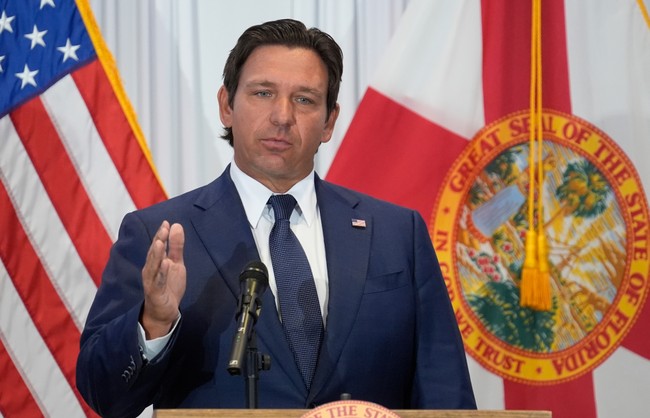
Gov. Ron DeSantis also addressed the incident during a press conference, saying, “I do know there was a woman who came out and assaulted one of our troopers. Let me just tell you guys, this is not Minneapolis. That is not going to end well for you in Florida […] the idea that you’re going to assault one of our troopers is unacceptable, and you are going to face consequences as a result.”
The governor’s remarks were followed by a short video of his comments that was shared widely online and on social platforms. He reiterated the simple point that Florida will back its law enforcement officers and enforce the law without hesitation. That kind of backing matters to rank-and-file officers who face risks during enforcement actions.
Officials also made statements on social media reinforcing the same message and pointing to the charges filed. The booking record lists resisting an officer with violence, battery on law enforcement, driving with a suspended license, and related offenses. Prosecutors will decide final charges, but the initial filings reflect the severity of the alleged conduct.
Community reaction was mixed, but many residents welcomed a firm response that prioritizes officer safety and the rule of law. In neighborhoods where crime and illegal activity are concerns, visible cooperation between state and federal authorities is often seen as necessary to restore order. Supporters of the governor’s stance argue that deterrence and clear consequences keep citizens safer.
Finally, the wider debate over border security and immigration policy continues to shape how these episodes are perceived politically. Some credit recent federal policy shifts for reducing illegal crossings, while others say local enforcement and state cooperation remain crucial on the ground. Whatever the broader arguments, the Jacksonville arrest underlines that assaults on officers carry real legal consequences and that Florida’s leadership is publicly committed to enforcing them.

Way to go Governor Ron! Don’t let any of this Sedition or Treason slide!