
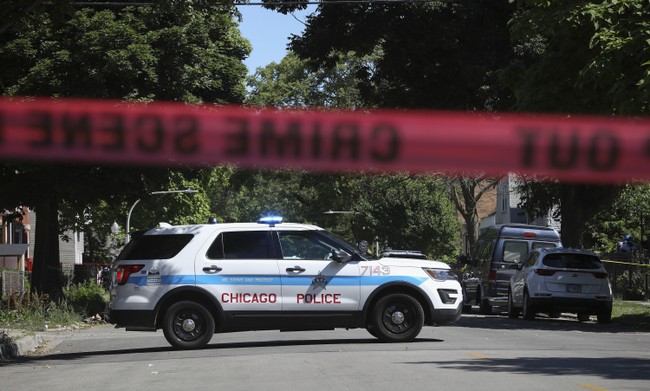
The city of Chicago is again in the spotlight after a series of violent episodes: a woman severely burned on a train by a repeat offender, a chaotic downtown riot that left multiple teenagers shot and at least one dead, and partisan leaders resisting federal help. This piece lays out the incidents, names the local officials blamed for policy failures, and records the conservative reaction to what many see as a preventable slide into lawlessness. Quotes from officials and eyewitness accounts are kept intact to show how the narrative unfolded on the ground. The story connects the recent attacks to broader questions about public safety, enforcement, and political choices in a major American city.
A 26-year-old woman remains in critical condition after being set on fire aboard a Chicago train by a man whose criminal history reportedly spans decades and scores of arrests. The attacker’s lengthy record has become a focal point for critics who argue the system repeatedly failed to protect innocent riders. Local leaders labeled the attack an “isolated incident,” a phrase that many residents and commentators found hollow given the city’s steady headline-making violence. The account of the victim’s condition has galvanized debate over whether current policies prioritize offenders over public safety.
Just after that brutal transit attack, downtown Chicago spiraled into a violent scene during a public event, with many teens involved in the unrest and multiple people shot. The incident occurred near the city’s Loop business district and followed a holiday gathering that was supposed to be a family-friendly celebration. Witnesses described chaos as groups of juveniles clashed with police and civilians, turning a civic moment into a dangerous mob situation. The casualty numbers, especially among young people, have left families and neighbors stunned.
At least eight teens were shot, one fatally, and multiple police officers were attacked Friday after a riot broke out in the Chicago Loop, the city’s downtown central business district.
Local officials insisted the outbreak of violence was limited, but the scale reported by on-scene sources suggests something far broader and more dangerous. One alderman estimated hundreds of juveniles were involved, and accounts described officers being assaulted with chemical sprays and electric devices. Several officers were injured, and at least one required hospitalization after confronting the mobs. The rapid escalation raised questions about crowd control, resource allocation, and whether law enforcement had clear authority to intervene forcefully.
This is what happens when a city surrenders its streets to chaos… when leadership treats criminal mobs like “kids just having fun”… when police are told to stand down and let the violence breathe.
The list of victims reads like a string of teenaged names and ages: a 13-year-old, two 14-year-olds, a 15-year-old, a 16-year-old, a 17-year-old, and others wounded in the mayhem. Less than an hour after the initial shootings, a 14-year-old boy later died at a hospital, and an 18-year-old was wounded. Those grim outcomes have left a city asking why so many young people were roaming downtown late at night and why violence spread so quickly. Families are demanding answers while civic leaders exchange statements and reassurances that many find inadequate.
The political response quickly became part of the story, with Governor JB Pritzker and Mayor Brandon Johnson publicly insisting they have matters under control and rejecting federal intervention. President Donald Trump criticized the local leaders on social media, bluntly blaming permissive policies for the continuing bloodshed and accusing them of enabling chaos. That public clash over federal aid and local responsibility has turned into another battleground for officials who disagree over the right balance between enforcement and reform. The debate is now as much about political philosophy as it is about immediate tactics on the street.
Critics argue the pattern of leniency and lack of decisive action has emboldened repeat offenders and fostered a climate where violence becomes routine. They point to the recurring nature of high-profile crimes and to repeat offender statistics as evidence that current approaches are failing victims. The rhetoric from some progressive leaders, framed as prioritizing rehabilitation and reducing incarceration, is being read by opponents as cover for a hands-off approach that leaves citizens vulnerable. The human toll in injured and grieving families casts those policy debates in painfully tangible terms.
The failures of leadership under Brandon Johnson, Governor Pritzker, Toni Preckwinkle, Stacy Davis-Gates, and Jackson Porter have contributed to a breakdown in public safety, financial mismanagement, and policies that are actively harming Chicago’s communities.
The scenes from recent nights leave little doubt that ordinary Chicagoans are exhausted by recurring cycles of violence and official platitudes. Parents worry about letting their children enjoy public spaces, small businesses fear for their customers and livelihoods, and commuters ask whether transit will ever feel safe again. When leadership is perceived as indifferent or ineffectual, the consequences spill over into daily life, economic decline, and erosion of trust in institutions. The images and statistics from these incidents will likely fuel ongoing calls for accountability and for a different approach to protecting communities.


Add comment