
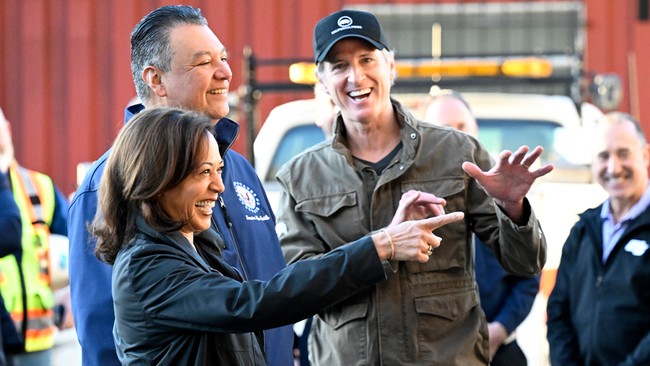
The latest polling from CBS/YouGov shows most Californians do not want Gavin Newsom or Kamala Harris to run for president in 2028, and that sentiment says a lot about the Democratic bench and the party’s direction heading into the next cycle.
A recent poll in California found 48 percent of voters would support Gavin Newsom running for president while 52 percent said he should not run. Among Democrats, 72 percent favored Newsom, but Republicans and many independents reject the idea, leaving the governor’s national appeal limited beyond his base.
The numbers are even worse for Kamala Harris, with roughly seven in 10 respondents indicating they do not want her to run again. That response reflects lingering concerns about her 2024 performance and public perception of her debating and communication skills.
Independents generally lean against both candidates, though Newsom attracts more of their support than Harris. That gap matters because independents often decide general elections, and in 2028 the GOP will be eager to court those voters where Democrats look thin on credible alternatives.
California’s choices reveal a deeper problem for Democrats: a thin bench and few believable options who can compete nationwide. Party insiders tossing around names like Rep. Alexandria Ocasio-Cortez for the top of the ticket only underline how weak the field looks to many voters.
When the Democratic Party’s best ideas for leadership include figures who energize only niche progressive bases, it makes Republican message discipline and policy contrast more effective on a national stage. Conservatives see an opening where Democrats are stuck recycling the same unpopular figures.
Voters remember the 2024 cycle, and many are still skeptical of candidates who couldn’t make a convincing case against the opposition. That skepticism fueled the high unfavorable numbers for Harris and left Newsom viewed as a personality-driven politician rather than a unifier with national appeal.
Evidence of that personality focus is everywhere: governor-as-celebrity branding, headline-grabbing moments, and policy gestures that play well in coastal media but not necessarily in the heartland. It’s a strategy that can win state races in California, but it doesn’t scale when the whole country is the electorate.
The poll results suggest Democratic strategists need to confront reality: enthusiasm within the party does not equal electability in a general election. Without fresh faces or clearer messages that resonate with swing voters, the party will repeat past mistakes and hand advantages to Republicans who present sharper alternatives.
Public gaffes and perceived incoherence also damage credibility. For instance, when Harris was asked by a television co-host what she would do differently than President Joe Biden, her answer was, “nothing comes to mind.” That exact phrase stuck with viewers and opponents, becoming a political problem rather than a throwaway comment.
Meanwhile, the internal dynamics in California are a cautionary tale for national Democrats. Voters are tired of recycled candidates and performative politics, and they want leaders who can explain policy clearly and defend a coherent vision in debates and on the trail.
On top of leadership concerns, Democrats are grappling with policy fights that play poorly with independents, including debates over immigration and fiscal priorities. Conservative messaging has focused on those issues, arguing they affect everyday Americans more than elite cultural debates do.
That messaging is amplified by perceptions of dysfunction in Washington, such as ongoing budget clashes and the so-called Schumer Shutdown referenced by many commentators. Republicans frame those fights as evidence that Democrats put partisan priorities ahead of everyday Americans, which resonates in key regions outside the blue coastal states.
As Republican strategists plan for 2028, these California poll numbers look like more than local frustration; they are a snapshot of a national problem for Democrats. Weak alternatives, public missteps, and policy priorities that do not translate broad appeal create a real opening for a conservative comeback.
What happens next depends on whether Democrats promote fresh voices who can talk to swing voters and answer tough questions without sounding scripted. Until then, the growing chorus of Californians saying they do not want Newsom or Harris on the 2028 ballot will be used as proof that the party’s national prospects are shaky.

Add comment