
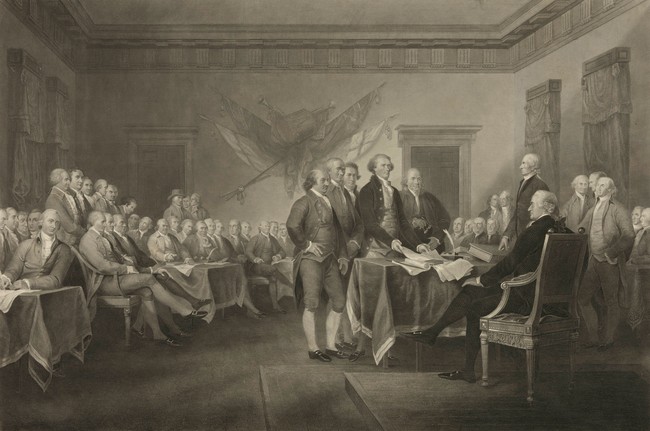
This piece marks America’s 250th birthday by tracing a simple fact: life expectancy in the United States has roughly doubled since 1776. It looks at the medical, public health, and social advances that made that jump possible, notes setbacks that slowed progress, and highlights why longer lives matter to the nation’s future.
As the nation reaches its 250th year, many of us are thinking about liberty, opportunity, and the American experiment that rewards hard work. Those ideals matter, but so does another quiet triumph: Americans today live far longer than their Revolutionary-era counterparts. That extension of life reflects practical changes in daily life as much as it does technological breakthroughs.
https://x.com/GenericSnarky/status/2071283737099399414
Historians estimate that average life expectancy around 1776 was roughly 35 to 40 years, a number that shocks modern readers but hides an important detail. High infant and child mortality dragged averages down, so people who survived childhood often lived into their 60s or 70s. Fast forward to 2026 and the typical American lifespan sits near 79 years, more than double the early national figure.
The reasons for that rise are straightforward and cumulative. Improvements in sanitation and access to clean water cut infectious disease rates dramatically, while better nutrition and housing helped overall health. Vaccinations, antibiotics, and modern medical care turned once-common killers into preventable or treatable conditions, pushing the needle steadily upward.
Medical experts emphasize how much changed in public health and clinical practice. “Childbirth was dangerous, and without antibiotics and vaccines, many infectious diseases, such as measles, smallpox and pneumonia, were deadly. Now we have cleaner water and sanitation, vaccines and antibiotics that have significantly prolonged life.” That observation captures the leap from limited survival to routine longevity.
Public infrastructure played a big role. The spread of indoor plumbing and early sewer systems gave cities safer drinking water and reduced waste-related illness. Government actions to address cross-border disease threats and to regulate food and drug safety also helped lower mortality. Each policy step built on the last, creating a safer environment for more people.
Scientific and regulatory milestones tracked with improvements in life expectancy. By 1900 the U.S. average had climbed into the high 40s, and laws addressing food and drug standards improved public safety. Around the same time, vaccines for major infectious diseases began to emerge, shaping a century in which preventable infectious deaths became far less common.
The mid-20th century offered another big surge thanks to antibiotics and expanded public health knowledge. By 1950 American life expectancy reached about 68 years, bolstered by treatments for bacterial infections and better emergency care. Later decades saw mortality fall further as society learned to prevent heart disease and reduce tobacco use.
Progress has not been steady or uniform, and recent years exposed new vulnerabilities. Rising deaths from opioid overdoses, suicide, and alcohol-related causes have chipped away at gains, especially among younger adults. The COVID-19 pandemic also briefly reduced average life expectancy, a reminder that infectious threats can still shift national health curves.
Beyond medicine, changes in everyday safety mattered too. Safer cars, mandatory use of car seats and seat belts, and better workplace protections all reduced accidental deaths. These practical protections often receive less attention than dramatic breakthroughs, but they collectively have a large impact on population longevity.
Understanding the long arc from a 35-year average to nearly 80 highlights how policy, science, and civic investment interact. Clean water systems, vaccine programs, antibiotics, food safety laws, and public education campaigns all combined to extend lives across generations. Those are the kinds of durable changes that transform a society.
Despite recent setbacks, the historical trend remains clear: Americans today benefit from an infrastructure of medical knowledge and public policy that their ancestors could scarcely imagine. Improving and protecting those systems matters for future gains, especially as the nation faces new health challenges and demographic shifts.
Technological innovation and public awareness will determine the next phase of life expectancy trends, from preventing chronic disease to addressing mental health and substance abuse. Investments in prevention, equitable access to care, and continued vigilance against infectious disease are likely to shape whether longevity continues to rise.
The Founding generation hoped for a country where life, liberty, and the pursuit of happiness were available to more people over time, and rising life expectancy is one concrete measure of that progress. Preserving the public health gains of the past and confronting modern threats will be essential to ensure those gains extend to all Americans.



Add comment