

The piece examines Democratic Rep. Jasmine Crockett’s recent claims tying donations labeled “Jeffrey Epstein” to Republicans, her appearance on MS NOW where she doubled down on insinuations without full fact-checking, and the sharp public response from Lee Zeldin calling out the inaccuracies and motives behind her statements.
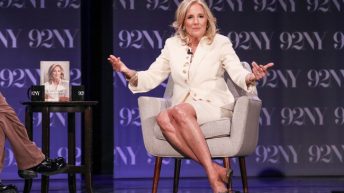
Jasmine Crockett pushed a narrative that linked donations bearing the name “Jeffrey Epstein” to Republican officials, and the explanation she offered on television made the situation worse instead of clearer. She appeared on MS NOW’s Weekend with Jacqueline Alemany and tried to defend comments she had made before Thanksgiving about donations. Crockett’s original implication was that a donor named Jeffrey Epstein was the notorious sex offender, even though the records point to other individuals with the same name.
On the show Crockett said she had limited time and that she had checked FEC records quickly, insisting she spoke “with specificity” because of her legal background. She acknowledged time constraints and framed her wording carefully, admitting she used the phrase “a Jeffrey Epstein” rather than claiming it was the convicted predator. That admission did not rescue her from the larger problem: she was knowingly insinuating a link without solid verification.
Her attempt to connect donations to Republicans was framed as a response to actions aimed at Delegate Stacey Plaskett, who faced criticism for other conduct and for having a donation from someone with that name. Crockett’s remarks blurred the line between sloppy reporting and deliberate implication, which matters because insinuations carry political consequences. Public officials and donors were pulled into a controversy driven by a shorthand that didn’t hold up under scrutiny.
“I had maybe 20 minutes. We researched the FEC and, because I like to speak with specificity — that’s kind of what comes with being an attorney — I made clear that there was a Jeffrey Epstein,” Crockett said. “They knew on the other side that I did not have time to actually pull up and actually research, especially since that particular one that Lee Zeldin got up in an uproar about was specifically out of the New York area. We know that he was out of that area and this obviously was not done post Jeffrey Epstein’s life, so I made sure that I said ‘a Jeffrey Epstein.’”
Her timeline was off. Crockett claimed the donation under dispute occurred before the convicted Epstein’s death, when, in fact, the records show contributions labeled to Lee Zeldin came after that. She admitted she was “insinuating that it could be possible” that the notorious Epstein was involved, which is a troubling choice for a member of Congress who has the bully pulpit to clear things up instead of muddying them.
“But you were trying to insinuate that it was the Jeffrey Epstein,” Alemany pressed.
“Oh, I absolutely was insinuating that it could be possible. That is true,” Crockett admitted. “But the point is, I never said that it was that specific one because I did not have the adequate time to do it. And so the Jeffrey Epstein has stepped forward and that’s not like, you know, a normal name. And I think that what would have been problematic is if I would have claimed that, say, that happened and it legitimately never happened. So ultimately, he cleared the record. I have not researched further. I’ve not talked to this doctor.”
Her concession that she did not research fully after the fact undercuts the moral high ground she tried to claim. Saying someone “cleared the record” does not replace a duty to verify before making public insinuations. For an elected official, the difference between implying a scandal and confirming facts is significant, and Crockett’s performance blurred that difference on national television.
Lee Zeldin, now serving in the Biden administration as EPA Administrator, responded forcefully and publicly to Crockett’s remarks. He called the timeline discrepancy a lie and highlighted that the donation she referenced was made after the convicted Epstein’s death, a direct contradiction of her on-air explanation. Zeldin’s rebuttal focused on the record and on Crockett’s admitted approach to insinuation rather than truth-seeking.
In her latest defense of the indefensible, Genius Jasmine Crockett, JD, now claims the donation I received from Dr. Jeffrey Epstein was BEFORE the other Jeffrey Epstein died. That is a LIE and she knows it, hoping there would be no push back from the TV host. The FEC record she has cited as her source shows the date of the donation I received as well AFTER the other Jeffrey Epstein was dead.
Also, note that at the end she says, “I can agree that Lee Zeldin has said that he didn’t receive money from THE Jeffrey Epstein”, implying that her lie could still be true even though it’s obviously not, even though she previously conceded that I “cleared the record”, AND even though the record she has referenced herself as her source says the donation I received was from a physician who donated to me AFTER the other Jeffrey Epstein was dead.
Critics argue this wasn’t an honest mistake but a deliberate attempt to deflect from the party’s own problems with donor scrutiny and conduct. The episode reads as an opportunistic smear attempt that relied on public confusion over identical names. That tactic raises questions about whether the aim was accountability or political theater.
Beyond the political theater, the episode shows how easily an unverified insinuation can spin into a headline and drag multiple people into an avoidable controversy. The doctor who donated, the public official accused by implication, and the broader conversation about ethics and transparency all got caught up in a narrative that rested on shaky ground. The incident serves as a reminder that elected leaders should prioritize facts before casting serious public aspersions.

Add comment