
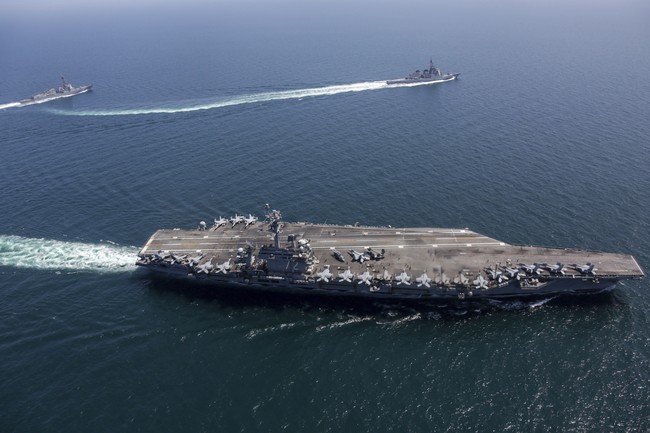
The USS Abraham Lincoln wrapped up an extraordinary 250-day stint at sea and is finally headed for a port call in Thailand, giving thousands of Sailors and Marines a long-awaited chance to rest, resupply, and reset after prolonged operations in the Arabian Sea and tense encounters in the region.
The carrier and its crew set records for consecutive days at sea while conducting missions against Iranian threats and dodging hostile drones. Families and service members have been tracking the ship’s movements closely, and morale updates from command have pushed back against media narratives about widespread unhappiness on board. The Thai Navy described the stop as a routine chance for personnel to “rest and recuperate … as well as to receive logistical support.”
After the USS Lincoln was relieved by the USS George Washington, it began the trip home and is expected to dock in Thailand next week. Word of the plan has reached family members who are planning for the visit and sharing hotel tips for loved ones finally getting time off the carrier. The carrier carries roughly 5,000 Sailors and Marines, all of whom have been operating under an intense tempo for months.
Public attention lately has centered on claims of low morale and complaints about food and long sea days, which drew some media scrutiny. U.S. Central Command chief Adm. Brad Cooper made a ship visit, directly observing the crew and countering the sensational coverage that had circulated. Cooper described the situation differently, noting the crew’s endurance and accomplishments rather than collapse.
Cooper, however, didn’t describe a crew in collapse. He described Sailors and Marines who have endured an exceptionally demanding deployment, carried out thousands of combat missions, and have every reason to be proud of what they’ve accomplished. This echoes what Acting Secretary of the Navy Hung Cao said on Friday – the real story is that the crew of the Lincoln “crushed the mission.”
That message of pride and mission focus is the kind of leadership effect supporters point to when they credit the current administration for restoring a warrior ethos in the force. The carrier’s deployment involved high-stakes operations in an environment where stand-off threats and small, fast-moving enemies demanded constant vigilance. Those conditions strain any unit, yet commanders report the Lincoln delivered on tasking and sustained operations without major breakdowns in effectiveness.
Social media predictably lit up with jokes and imagination about what shore leave in Thailand will look like for a carrier’s worth of young service members. Some posts were playful, others more pointed, but they underscore how crew welfare and downtime are central to any port visit’s success. With thousands of Sailors and Marines finally getting time off the ship, the Navy faces a familiar challenge: balancing liberty opportunities with force protection and logistics.
https://x.com/nypost/status/2092312395649548420
Operationally, port calls are about more than sightseeing; they are an essential part of sustainment, medical checks, mail and supply delivery, and a temporary normalcy after months on station. The Lincoln’s visit will also give families and communities a chance to reconnect with a crew that has been largely out of sight. Commanders and sailors alike understand that effective recuperation ashore contributes directly to readiness on return to sea.
The media debate over morale highlighted an important point: public narratives can drift from operational reality when sources are incomplete or motivated by a story angle. On the Lincoln, senior leaders and sailors emphasize mission accomplishment. Acting leaders argued that headlines focusing on discomfort missed the broader picture of a crew that executed complex missions under pressure.
As the carrier moves into port, standard protections and protocols will be in place to safeguard service members and local communities. Those processes include controlled liberty schedules and logistical coordination with hosts to ensure facilities and services can handle a large influx. For the Sailors and Marines who have spent most of the year at sea, the routine parts of a port visit will likely feel extraordinary simply because of the contrast with their recent tempo.
The broader context of this deployment is a reminder that American forces operate far from home to deter aggression and protect national interests, often without fanfare. Praise for the crew’s performance comes alongside calls for steady, clear leadership and policies that prioritize readiness and morale. For now, the focus is on letting those who “crushed the mission” catch a breath, get needed support, and return to duty refreshed and ready.
Stay safe out there, Sailors and Marines of the USS Abraham Lincoln!



Add comment