
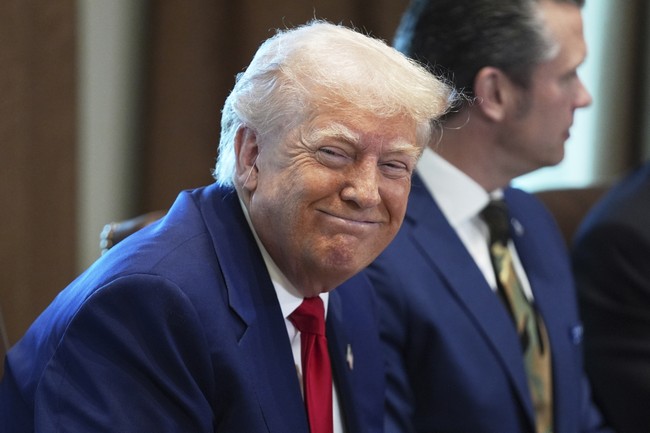
President Trump ridiculed the media’s push that he’s suffering from “fatigue,” turning a White House Cabinet meeting and his own work habits into proof that the story doesn’t hold up. He pointed to heavy workweeks, frequent press interactions, and an on-camera sharpness that he says outpaces his critics’ assumptions. The reaction in the room, laughter and applause, underscored the divide between the president’s public style and how many outlets have chosen to frame his fitness for the job. What follows is a clear retelling of those moments and why they matter to the broader question of media bias and presidential accountability.
The core claim from critics has been that Trump is tired and diminished, often packaged as “fatigue.” That narrative picked up traction after pieces in major outlets suggested concern about his stamina and cognition. Supporters point to recently released White House logs and schedules showing long days and 50-hour workweeks as evidence that the president remains engaged. Those records, and eyewitness accounts from reporters who cover him directly, contrast sharply with the portrayal pushed by some in the press.
On Tuesday the president held a live Cabinet meeting that lasted roughly three hours, a format and length most observers say would be unimaginable for his predecessor. Trump ran the session tightly, moving through a wide array of topics and directing conversation with a level of control that critics rarely acknowledge. Witnesses in the room laughed and reacted to his quips, which fed into the optics of someone energetic and in command. That real-time pushback—people laughing at media-driven claims—became part of the story itself.
During the meeting, Trump dismissed the narrative around his condition and mocked the coverage, asking rhetorically, “Is he in good health?” He bragged about doing multiple news conferences and dismissed media criticism with colorful language, calling reporters “very intelligent lunatics — you people.” That line got a lot of attention because it captures both the contempt he feels for his critics and the performative quality of his public persona. He also pointed out that his predecessor often avoided prolonged engagement with the press, noting a long stretch without a major news conference.
Trump recalled an incident when skipping a single day of interaction with reporters set off alarm bells in newsrooms: “There’s something wrong with the president.” He used that example to argue the press selectively amplifies any minor deviation from their preferred storyline. The pattern he outlined tells a consistent tale: small actions by a president become evidence of decline for some outlets, while larger, sustained gaps in presidential availability by others were downplayed or ignored. That asymmetry is central to why his supporters distrust mainstream coverage.
He didn’t stop with generalities. At one point he snapped at the assembled press and critics, saying, “You people are crazy.” That blunt dismissal summed up his stance: he believes the media has been willfully blind about his rivals and relentlessly hostile toward him. He capped the moment with a self-assessment that mixes confidence and bravado: he feels “sharper today than 25 years ago” but admitted, “but who the hell knows?” That last phrase humanizes the exchange, even as it undercuts the solemn tone many outlets tried to adopt.
Beyond the colorful language, there are concrete contrasts that supporters say journalists ignore. White House schedules show extended work hours and packed days, while some past administrations had long stretches without substantive public engagement. The result is a credibility gap: when outlets push a “fatigue” narrative about Trump, many Americans who follow his activities directly see a different picture. That divergence feeds skepticism about media motives and reporting choices.
Critics of Trump argue that mockery and spectacle don’t prove policy competence, and they point to other measures to assess a president’s performance. Supporters respond that the media’s readiness to treat ordinary, explainable moments as signs of collapse is itself a form of bias. The exchange in the Cabinet room, with laughter and jabs at reporters, read to many as an attempt to expose that bias in real time. It was theater, but it was also a public relations rebuttal.
There are two separate questions at play: how a president is actually functioning day-to-day, and how the press interprets and frames those activities. Trump, through his remarks and the meeting’s length, tried to collapse the two by showing the public a working schedule and a lively interaction with officials. Whether that changes minds among skeptics is another matter, but it does clarify why his base sees the “fatigue” story as overblown. The laughter in the room was not incidental; it was a line drawn against what he calls unfair coverage.
Editor’s Note: Do you enjoy RedState’s conservative reporting that takes on the radical left and woke media? Support our work so that we can continue to bring you the truth.


Start now generating extra home based cash by doing very easy and simple job from home. Last month i have earned $19753 from this job in my part time. This job is just awesome and its earning are greater than 9 to 5 office job.
Here is I started_______ EarnApp1.Com