
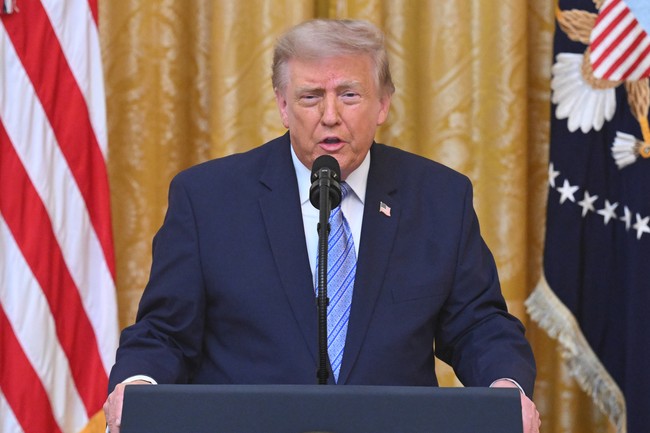
President Trump delivered a focused address on election integrity that sparked immediate, predictable reactions from Democratic figures and establishment critics. This piece examines the responses, contrasts them with the speech’s themes, and highlights the partisan theater that followed, with particular attention to prominent Democrats and media outlets who denounced the address as authoritarian and alarmist.
The speech itself was concise and intentional, aimed squarely at raising alarms about the integrity of upcoming elections and proposing stricter safeguards. Critics were quick to label the rhetoric as dangerous and conspiratorial, framing it as a prelude to future election manipulation. Supporters argued the address raised legitimate concerns about ballot security and foreign interference that deserve sober attention rather than reflexive outrage.
On the left, Democratic reactions were immediate and loud, suggesting the speech was an attempt to delegitimize future results before votes are cast. Representative Adelita Grijalva was among those who dismissed the remarks as building a “dictator persona” and warning voters about potential subversion. The tone from many Democrats was to paint any talk of election security as an immediate threat to democracy rather than a policy discussion.
California Governor Gavin Newsom amplified that message by branding the speech as the ravings of an autocrat and calling on people to organize and vote. His critiques included warnings that President Trump was laying the groundwork to rig the 2026 midterms and urging broad mobilization. These responses fit a broader pattern where criticism focuses on intent rather than engaging point by point with facts presented.
Newsom’s commentary grew intense across multiple posts, repeating the theme that the speech was a willful attempt to undermine confidence in future elections and to scare voters into inaction. His rhetoric often framed any defensive election policy as anti-democratic, even when those policies aim to increase transparency or secure voter files. The repeated alarms from his camp fed a narrative of imminent authoritarianism.
https://x.com/Rep_Grijalva/status/2077923913539985712?ref_src=twsrc%5Etfw
Outside elected officials, several advocacy groups and pundits piled on, reframing the address as proof of a broader scheme to disenfranchise opponents. Some reactions leaned into theatrical language, declaring the speech proof that American institutions were under threat from within. This rhetorical escalation turned a policy speech into a referendum on character and intent rather than a debate over concrete proposals.
Senator Mark Warner publicly accused the president of setting the stage to rig the next midterms and called for media accountability in pushing back against what he called dangerous claims. The back-and-forth with major networks highlighted how decisions about what to air and how to edit coverage shape public perception of a speech’s content. Warner’s insistence that journalists must police these narratives raised questions about whose standards define responsible coverage.
Several broadcast outlets chose to truncate or selectively air portions of the address, prompting accusations of editorial bias. Commentators noted that cutting away during key segments can reinforce a pre-baked narrative about a speaker instead of allowing audiences to judge the full argument. That editorial approach fed into the broader controversy, with some saying the networks abdicated the role of neutral conduit for information.
Television personalities and pundits offered real-time hot takes, ranging from outraged condemnation to dismissive mockery, and many viewers were urged to rely on secondhand interpretations rather than the primary source. Media critics on both sides argued influence over coverage matters, and viewers were encouraged to watch the speech for themselves to form independent judgments. The media spectacle often overshadowed the policy proposals being discussed.
Legislative responses also revealed partisan divisions on proposed election safeguards like the SAVE America Act, which proponents say would standardize voter ID and protect ballot integrity. Opponents argue such measures suppress turnout and are unnecessary, signaling a deep disagreement on how to prevent fraud while preserving access. Congressional gridlock on those proposals demonstrates how heated rhetoric translates into stalled policymaking when trust is low.
Commentary outlets and podcasters added layers of critique that often turned into personality-driven attacks, minimizing discussion of the specifics in favor of snark and insult. That trend makes civil debate difficult and reduces public discussion to soundbites that inflame rather than inform. Observers on both sides lament that policy debates have been replaced by theatrical responses and performative outrage.
Former Vice President Kamala Harris weighed in with strong criticism, calling election reform efforts “voter suppression” and accusing the speech of distracting from other issues. Such responses underscore the partisan split: where one side sees necessary safeguards, the other sees a threat to access. The clash is shaping the narrative heading into 2026 and will likely dictate how election policy fights play out across states and in Congress.
Tonight, America watched the ramblings of a mad king.
Donald Trump’s address was not about the last election — it was THIS one.
Before a single vote has been cast, he’s already laying the groundwork to rig this election and convince YOU not to trust the results if they don’t go his way.
This is what authoritarians do. Don’t fall for it.
Organize. Mobilize. SHOW UP and VOTE in November!
Add comment