
I’ll explain the lawsuit over interview audio, show why the Presidential Records Act matters, quote the key exchanges as published, outline the political stakes, and place the original embed tokens where they appeared.
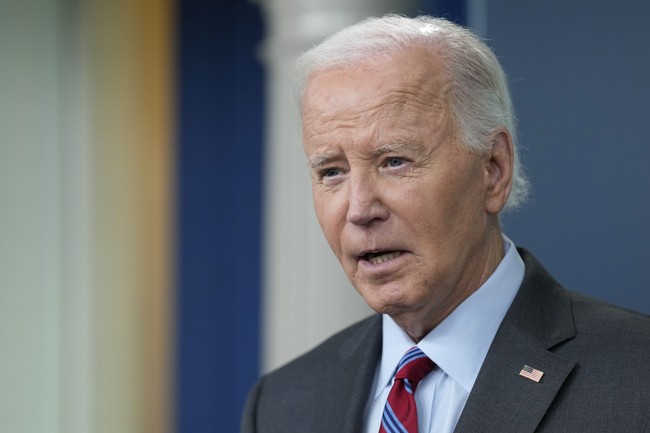
President Trump publicly attacked Joe Biden after news that Biden had sued the Justice Department to block release of interview tapes collected by Special Counsel Robert Hur during the classified documents probe. The dispute centers on whether the tapes are personal records protected under the Presidential Records Act or records subject to disclosure because they were gathered in a federal investigation. Trump used his usual platform to blast Biden, framing the move as an attempt to hide embarrassing material. The political fight now turns on legal definitions and public appetite for transparency.
On Truth Social, President Trump labeled Biden a “” and amplified that claim with a media post intended to draw attention and outrage. The complaint filed by Biden’s legal team argues the audio and transcripts are personal and that disclosure would invade his privacy. That defense invokes the idea that some presidential materials remain private even when government officials obtain them in investigations.
President Donald Trump lashed out at former President Joe Biden late Tuesday after his predecessor sued the Justice Department to block the release of audio recordings and transcripts tied to the special counsel investigation into his handling of classified documents.
“A Crooked Politician!!!” Trump wrote on Truth Social while sharing a Just the News article about Biden’s lawsuit against the DOJ.
The Biden team’s primary argument seems to revolve around these being personal documents:
Biden’s lawyers said in the lawsuit that the Justice Department plans to release the files to Congress and the conservative Heritage Foundation after previously arguing that they were exempt from disclosure under federal public records law.
According to the filing, Biden’s attorneys argued that disclosure would “constitute an unwarranted invasion of President Biden’s privacy.”
The legal core turns on the Presidential Records Act and how it defines “personal records.” The PRA provides the statutory language that courts will interpret when deciding whether these interviews are exempt. The definition includes diaries, personal notes, and materials that do not relate to official duties, which is why the Biden team believes it has a strong statutory shield. But courts will also weigh the context of how the materials were produced and why the special counsel obtained them.
(3) The term “personal records” means all documentary materials, or any reasonably segregable portion therof,2 of a purely private or nonpublic character which do not relate to or have an effect upon the carrying out of the constitutional, statutory, or other official or ceremonial duties of the President. Such term includes—
(A) diaries, journals, or other personal notes serving as the functional equivalent of a diary or journal which are not prepared or utilized for, or circulated or communicated in the course of, transacting Government business;
(B) materials relating to private political associations, and having no relation to or direct effect upon the carrying out of constitutional, statutory, or other official or ceremonial duties of the President; and
(C) materials relating exclusively to the President’s own election to the office of the Presidency; and materials directly relating to the election of a particular individual or individuals to Federal, State, or local office, which have no relation to or direct effect upon the carrying out of constitutional, statutory, or other official or ceremonial duties of the President.
Those statutory categories are precise, and they leave room for argument. If a court finds the interviews are truly personal in nature, the files could remain withheld under the PRA. If a court finds their content relates to official duties or the investigation itself, disclosure becomes likelier. Legal precedent and the specific content of the tapes will drive that conclusion.
Beyond the legal question, this case is political theater with real consequences. Opponents argue the tapes might show cognitive lapses or other issues that are politically damaging, while supporters call the effort a necessary defense of privacy and precedent. The back-and-forth will play out in filings, potential hearings, and public statements, and each side will use the process to shape voters’ perceptions.
The history of similar fights shows courts sometimes split the difference, allowing redacted releases or partial disclosure. That could be the likely outcome here: some material released, some withheld. Meanwhile, the Biden team has pursued every available legal avenue to keep the tapes private, while critics accuse them of hiding politically damaging evidence.
The stakes are unusually high because the materials touch on a former president and a sitting or recent occupant of the highest office. This is not only a legal test of the PRA but a political test of how much privacy a modern president can claim when questioned under oath in a federal inquiry. Citizens and courts will now watch how the balance between transparency and privacy is struck.

Add comment