
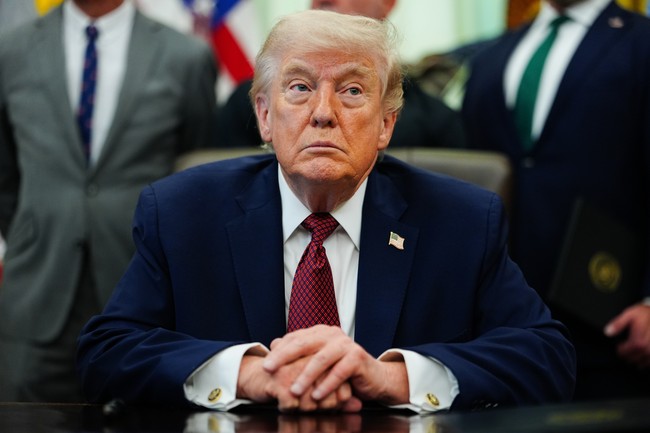
President Trump sharply criticized Virginia’s redistricting referendum as “rigged,” pointing to a late surge of mail-in ballots and what he calls deceptive ballot language that flipped a tight race to the Democrats, and he urged courts to intervene as allies press for legal action.
Trump called out the late-counted ballots after election night, saying the returns shifted dramatically in favor of the “Yes” side when mail ballots were tallied. He framed the result as part of a familiar pattern where last-minute additions change the outcome in ways he finds suspicious. Those concerns echo broader Republican alarm about transparency and ballot handling in close contests.
In his public posts the President singled out the mail-in process as heavily biased toward the “Yes” vote and repeatedly attacked the ballot wording. He wrote, “A rigged election took place last night in the great Commonwealth of Virginia!” and claimed that Republicans had been leading most of the day until “the very end when, of course, there was a massive ‘Mail In Ballot Drop!'” These are his words, left intact as he posted them.
Trump also dismissed the referendum language as deliberately misleading, saying the wording was “purposefully unintelligible and deceptive.” He added, “As everyone knows, I am an extraordinarily brilliant person, and even I had no idea what the hell they were talking about in the Referendum, and neither do they!” That blunt phrasing underlines how intensely he and his supporters view the measure as a political setup.
Beyond rhetoric, the President argued the result will transform Virginia’s congressional landscape from relatively balanced maps to ones dominated by a single party. He warned that the change could turn a competitive delegation into a lopsided lineup ahead of the 2026 midterms, framing the referendum as a strategic grab for long-term advantage. Those practical stakes are why Republican leaders are pushing legal challenges rather than accepting the outcome as routine election noise.
Legal action is now the focal point for critics who say the process lacked fairness from start to finish. Trump urged the courts to “fix this travesty of ‘Justice,'” and allies are already signaling they will press state and federal judges to review the referendum’s legality. If judges agree that procedures or ballot text were improper, the entire map could be subject to reversal or delay.
Former Virginia Governor Glenn Youngkin also weighed in, publicly calling on the state Supreme Court to step in and strike down what he described as an unconstitutional process. That appeal from a high-profile Republican adds political weight to the legal arguments and increases pressure on the judiciary to act quickly. The question now is whether courts will move fast enough to affect maps before candidate filing deadlines and campaign plans lock in.
Critics point to several elements they say made the vote unfair: confusing ballot language, a late swing in mail-in tallies, and broader doubts about whether those ballots reflect the electorate. Republicans argue these factors combined to produce a result that does not align with the day-of-election returns or the state’s usual partisan balance. Supporters of the referendum, by contrast, insist the process followed legal norms and that mail ballots are a legitimate part of modern voting.
As the legal fight gains momentum, analysts on both sides are mapping out possible remedies ranging from injunctions to full judicial review of the redistricting scheme. Court intervention could halt map implementation and force a more transparent process, or judges could decline to intervene and let the new boundaries stand. That outcome will shape not just Virginia politics but also national calculations for the coming midterms.
Republicans are also using this moment to renew calls for stricter oversight of mail ballots and clearer, simpler referendum language. The episode is being presented as a case study in why election procedures matter and how small technical choices—ballot wording, counting protocols, and mail ballot deadlines—can sway major political consequences. For those already skeptical of the system, the Virginia result reinforces a broader narrative about the need for reform.
Despite fierce claims and colorful language, the core dispute will be settled in courtrooms and state houses rather than on social media. Whether judges find procedural faults or endorse the process will determine if the result becomes the new reality or a temporary setback for Republican hopes. Until then, the debate over fairness, transparency, and who benefits from the system will continue to dominate political conversation in Virginia and beyond.



Add comment