
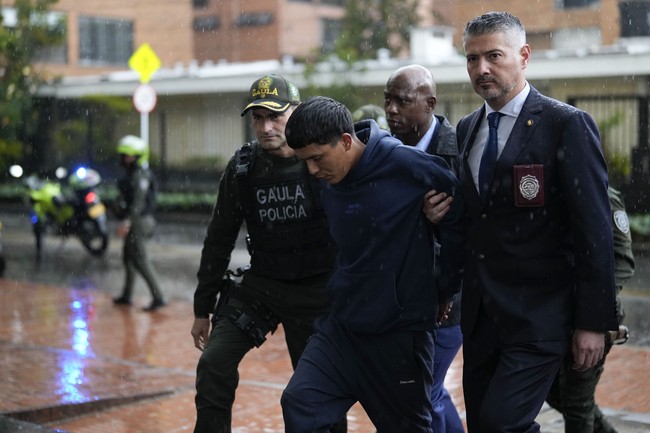
Abelardo de la Espriella, nicknamed “El Tigre” and backed by pro-Trump allies, appears poised to win Colombia’s presidency in a razor-thin runoff, prompting challenges from the left and urgent calls for scrutiny while regional partners signal immediate interest in cooperation on security and immigration.
Abelardo de la Espriella, a political outsider who ran a hard-line campaign on crime and cartel violence, led the preliminary count by about one percentage point over leftist Sen. Iván Cepeda. Electoral authorities had not declared a final winner when the preliminary tally showed de la Espriella at 49.7 percent to Cepeda’s 48.7 percent. De la Espriella declared victory, while Cepeda announced plans to contest results from thousands of voting stations.
Colombians voted with security and public safety at the forefront after four years under President Gustavo Petro, whose “total peace” approach faced criticism for rising violence. Under Petro, armed groups grew their influence, coca production stayed high, and extortion and homicides climbed to worrying levels. Those trends formed the backdrop for a campaign that turned on the promise of restoring order and strengthening law enforcement.
Marco Rubio, speaking for the Trump administration’s perspective, quickly congratulated the president-elect and outlined priorities for U.S.-Colombia cooperation. Rubio emphasized regional security, efforts to curb illegal immigration to the U.S., and bolstering economic ties between the countries. The statement underlined how closely Washington will watch Colombia’s transition and what it expects from the incoming leadership on common challenges.
“Just spoke to Colombian President-Elect @ABDELAESPRIELLA to congratulate him on his electoral victory.
https://x.com/SecRubio/status/2068851809440116849
The Trump Administration looks forward to working closely with your incoming administration to advance regional security cooperation, end illegal immigration to the United States, and strengthen our economic ties.”
De la Espriella made security the central pillar of his pitch, promising to break the arrangements he said Petro had allowed to fester with criminal groups. He vowed to expand military operations against cartels and guerrilla forces and to restore aerial coca eradication as a core counternarcotics tool. He also proposed building large detention facilities modeled on aggressive anti-gang strategies used elsewhere in the hemisphere.
Cepeda, running as the progressive alternative, campaigned on a continuation of Petro-style social spending, labor reforms, and renewed peace talks with armed groups while proposing a pause on new oil development. His platform appealed to voters convinced that social programs and negotiations could address the roots of violence and inequality. The two visions for Colombia could not have been farther apart, and the narrow margin reflected a deeply divided electorate.
Violence hung over the race in a very literal way, with attacks and threats targeting politicians and events. Conservative candidate Miguel Uribe Turbay was shot during a campaign stop and later died, underscoring how dangerous politics has become. Campaigns operated under intense security measures as bombings, kidnappings, and intimidation continued to shape political life in several regions.
De la Espriella gave his victory speech behind bulletproof glass in Barranquilla and delivered a message aimed at calming tensions and promising unity. “I appear before you tonight to announce the most important news of my life: the Colombian people have entrusted me with the supreme honor of serving them as their next president of the Republic of Colombia,” he said. “I will govern for all Colombians. There will be no retaliation, no persecution, because in a democracy there are no irreconcilable enemies.”
Cepeda called the preliminary count “unofficial and non-binding” and announced a legal challenge that would target thousands of voting stations. President Petro urged a full audit of the results and publicly claimed, without presenting evidence, that Israel had compromised the election software by changing server IP addresses. Petro said the system showed signs of penetration and insisted a thorough review should be completed before any final declaration.
Supporters of the left protested in several cities after the preliminary results, with demonstrations reported in Bogotá and confrontations in Cali. Some protesters burned U.S. flags and clashed with police as tensions flared across multiple urban centers. Authorities faced the difficult task of maintaining order while protecting the integrity of the counting and any ensuing review processes.
Colombia remains the world’s largest cocaine producer, and its stability is vital to regional security and U.S. interests in the hemisphere. De la Espriella has repeatedly called for closer cooperation with Washington on counternarcotics, border security, and organized crime, themes that align with the immediate reaction from U.S. officials. With the preliminary result pointing to a shift away from Petro’s agenda, the next steps will be intense scrutiny of ballots and legal procedures while international partners watch closely.
Add comment