
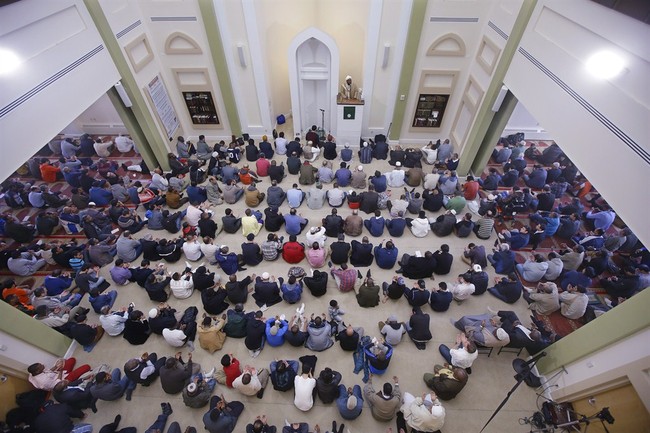
This article looks at the uproar in McKinney, Texas, after the town council approved a major expansion for the Islamic Association of McKinney, covering the packed public meeting, charged testimony from residents and public figures, and the council’s unanimous vote to allow a new campus that could hold up to 2,000 people.
Tensions Explode After Texas Town Council Approves Massive Islamic Center Expansion
The town council meeting in McKinney drew an extraordinary crowd, with more than 150 residents signing up to speak and overflowing out into the hallway. The meeting’s start was delayed as officials processed the long list of speakers, and the energy in the room was clearly intense. Residents came prepared to press their views, and many left none too pleased with the outcome.
The crowd’s impatience was obvious: people began clapping loudly to kick things off, determined to be heard. When the meeting finally began, council members were met with a torrent of comments that reflected deep concern and raw emotion. The subject at hand was the Islamic Association of McKinney’s plan to move to a 5.5-acre site that could accommodate around 2,000 worshippers at a time.
Local partisan lines showed up in the room as well, with some attendees voicing support for the expansion and others vehemently opposed. Republican Rep. Keith Self weighed in with a blunt warning: “Child marriage, honor killings, don’t tell me it can’t happen here.” His remark drew a standing ovation from many in the audience and set the tone for a meeting heavy on fear and suspicion.
An Iranian Christian who described himself as having survived Sharia law in his home country told the council, “I’m a Sharia law survivor from Iran, an I’m here to tell you, this is a dangerous ideology you’re allowing in their country!” That testimony added a personal and emotional dimension to the debate, and clearly moved several people in the room. Emotions escalated as speakers exchanged accusations about intentions and potential risks tied to the new campus.
🚨 NOW: Outrage is ERUPTING after McKinney, Texas council votes to APPROVE a large Islamic Center
Countless citizens stormed the meeting to oppose it, including an Iranian Christian migrant who SURVIVED Sharia Law
“I’m a Sharia law survivor from Iran, an I’m here to tell you, this is a DANGEROUS ideology you’re allowing in their country!”
https://x.com/EricLDaugh/status/2086598632224997463
Other angry residents: “They forced their way into countries and forced their religion!”
“It may become a base where young men and women will be taught and trained to overthrow this great nation, a threat for which my forefathers fought with their own blood to build for the liberty of its citizens!”
“The imam of the McKinney Islamic Association, Sheikh Mohammed Ajabali holds leadership roles with the Islamic tribunal of the Dallas area. The Attorney General stated that the group has sought to replace actual courts of law, impose Sharia on disputes among Texas Muslims and falsely represent its decisions as final judgments with the approval of the Texas without the approval of the Texas judicial system.”
THIS HAS TO BE BLOCKED, EVERYWHERE!
The council members are traitors.
Supporters of the mosque’s expansion also made themselves visible, urging tolerance and pointing to the long-standing presence of Muslim families in McKinney. Former Mayor George Fuller spoke on behalf of that perspective, saying the local Islamic community “has been a member of our community for years,” and reminding listeners that many families have contributed to civic life. His defense of the project was not universally accepted, and he faced boos and accusations of betrayal when he supported the plan.
Despite the heated opposition, the council voted unanimously to approve the Islamic Association of McKinney’s expansion plan. For opponents, the verdict felt like a dismissal of their worries; for proponents, it was validation of the right to a place of worship and community growth. The unanimous vote did not erase the strong feelings voiced by a large portion of the public, however, and the aftermath left many in McKinney frustrated and anxious.
National political figures stepped into the conversation, amplifying concerns and reframing them as part of broader cultural and security debates. In a television interview, Rep. Nancy Mace voiced alarm over what she sees as the consequences of expanding Muslim influence in the United States, warning about cultural change and the rights of women in particular. Her remarks sharpened the national angle of the local dispute and highlighted how local zoning fights can quickly become symbolic battlegrounds.
The debate in McKinney combined questions of land use, religious freedom and community identity, but it was also steeped in fear about cultural change and national security. Speakers raised allegations about religious tribunals and the role of local leadership, and some framed the expansion as a potential threat to American values. Those claims fed the anger that filled the council chamber and the hallways that night.
What unfolded in McKinney is a reminder that development projects involving places of worship often inflame more than planning questions. When proposals touch on religion, immigration and national identity, the discussion can shift from technical details to existential concerns. The council’s unanimous approval will likely not settle matters; instead, it appears to have opened a new chapter of contentious debate within the community.

Add comment