
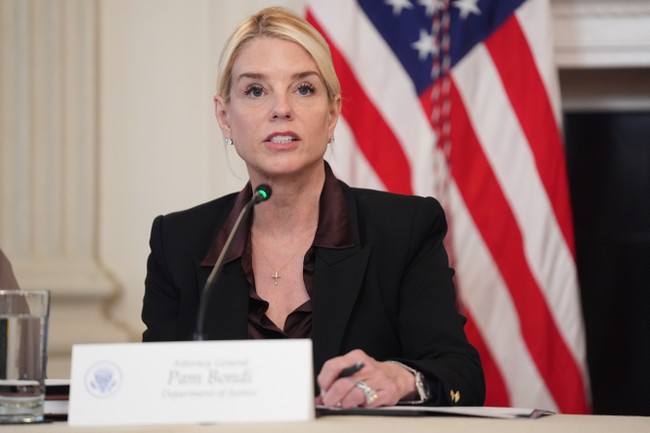
Preamble: This article summarizes Attorney General Pam Bondi’s update to President Donald Trump on the federal crime crackdown, details enforcement numbers and multi-agency actions, contrasts the current approach with the previous administration’s policies, and highlights how these results are being framed politically as a restored commitment to law and order.
Attorney General Pam Bondi stood before the President during a Cabinet meeting and delivered hard numbers from recent multi-agency operations across multiple cities and states. Her briefing emphasized seizures, arrests, and prosecutions that she says demonstrate a clear change in federal priorities. The message she delivered was direct: aggressive, coordinated enforcement can reduce the flow of drugs and illegal weapons into our communities.
Bondi laid out specific drug seizures and their potential lethality, showing the scale of operations led by the DEA and partners. She reported “over 45 million fentanyl pills, 4,200 kilos of fentanyl powder. That is equivalent of 347 million potential lethal doses.” Those figures are framed as proof that focused federal action can disrupt trafficking networks and save lives. The weight of the confiscated drugs was described as roughly equivalent to “the weight of 17 full semi trucks of the drugs just since you’ve been in office.”
Beyond the drug numbers, Bondi credited ATF efforts for massive firearms interdictions, noting more than 31,000 illegal guns seized under operations she highlighted. She specifically added that “Nineteen thousand of those were from trafficking cases,” underscoring a focus on networks rather than isolated possession charges. This emphasis on trafficking aims to show federal efforts targeting the supply chains that feed street violence.
Bondi broke down arrests in hot spots like Memphis, where she cited about 3,500 arrests as part of concentrated campaigns. She pointed to a broader array of prosecutions as well, including terrorism-related cases and actions against transnational criminal groups such as MS-13 and Tren de Aragua. The Justice Department also highlighted charges tied to political violence, reporting more than 500 defendants charged with assault on federal officers under recent directives.
The AG framed past policy choices as permissive and partly responsible for worsening public safety, contrasting them with the current administration’s more robust posture. She argued that previous priorities allowed drugs and weapons to flow unchecked and that soft-on-crime approaches, tied to initiatives like social justice and DEI, hamstrung law enforcement. From a Republican perspective, this contrast is presented not as partisan talking points but as a case for restoring operational clarity and accountability across agencies.
Bondi also emphasized corrective action on prosecutions she described as politically motivated during the prior administration, saying the department has “dropped countless cases against Americans that were prosecuted under the Biden administration, including J6, COVID, FACE Act, and more.” That reclamation of prosecutorial discretion is presented as both a legal recalibration and a political statement about priorities and fairness in enforcement.
On civil liberties and oversight, Bondi did not shy away from naming abuses she believes occurred, asserting that “No one is above the law, and that includes what happened in Arctic Frost.” The comment was used to underline a broader theme: federal power should be exercised within legal bounds and with equal application, especially when alleged surveillance or targeting involves political actors. The administration’s rhetoric pairs accountability with a promise to clean up any misuse of investigatory tools.
Politically, proponents see these operational wins as central to the President’s message that he restored order and competence to federal law enforcement. They argue that decisive action in cities and border regions alike addresses voter concerns about safety and public order. Critics will dispute the framing and the causes of crime trends, but the numbers Bondi presented are being used to craft a clear law-and-order narrative ahead of future political contests.
What remains clear from Bondi’s report is that federal agencies have been running coordinated, resource-intensive campaigns with measurable seizures and arrests. Whether these efforts translate into sustained drops in crime rates will be watched closely, but for supporters the initial results validate a return to aggressive enforcement. The administration is using the data to argue that policy matters and that reversing the previous era’s priorities can produce concrete operational outcomes.



Add comment