
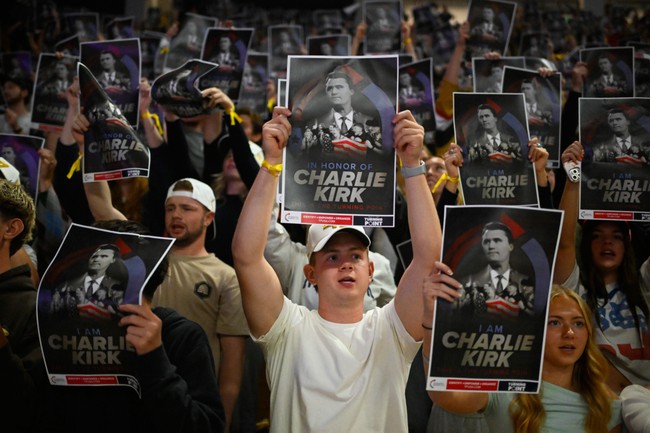
The assassination of Charlie Kirk has left a clear mark on campus life, making many students hesitant to attend or speak at controversial events and sharpening ideological divides, according to recent survey findings and commentary from researchers at the Foundation for Individual Rights and Expression.
Colleges are supposed to teach students how to think and how to engage respectfully with opposing ideas, especially in public forums and classrooms. Instead, many campuses have drifted toward an environment where disagreement is discouraged and controversial viewpoints are effectively sidelined.
The FIRE survey of undergraduates found a measurable chill across campuses after the Utah Valley University killing, with a significant share of students saying they feel less comfortable attending or participating in contentious events. That reluctance is dangerous for civic life because it reduces opportunities for debate and the exchange of competing ideas students need for intellectual growth.
In practice, when institutions react to fear by pulling back on speech, they hand victory to intimidation, whatever its source. Students who now avoid controversial speakers or shy away from classroom debate miss out on learning to defend their views and refine their arguments under pressure.
Following the assassination of Charlie Kirk, half of the nation’s college students report feeling less comfortable attending controversial public events on campus and nearly half are less comfortable voicing opinions on controversial subjects in class.
Chief Research Advisor Dr. Sean Stevens at the Foundation for Individual Rights and Expression told The Center Square that Charlie Kirk’s September assassination at Utah Valley University “has had a chilling effect — not just at UVU, but across the country.”
The Foundation for Individual Rights and Expression (FIRE) surveyed 2,028 undergraduates nationwide – including an “oversample” of 204 students from Utah Valley University – in order to “understand how the assassination is shaping student attitudes and behavior.”
Stevens told The Center Square that “some of the data from Utah Valley University students are encouraging – revealing signs of increased tolerance, and even relative trust in administrative protections for free speech.”
Context matters: “Controversial” on many campuses has become shorthand for anything conservative, and that framing shapes which events get canceled and which speakers are protected. When one ideological bent dominates institutional response, the campus becomes less a marketplace of ideas and more an echo chamber.
The FIRE release also highlights a troubling tilt in behavior across ideological lines, showing conservatives and moderates moving away from accepting disruptive tactics while liberal respondents’ tolerance for those tactics held steady or rose. That divergence signals not just fear but a shift in how students conceive of acceptable political action.
However, Stevens also said that the assassination of Kirk “appears to have deepened existing ideological fractures between liberals and conservatives on campus.”
A press release on the survey showed that following the assassination, “moderate and conservative students across the country became significantly less likely to say that shouting down a speaker, blocking entry to an event, or using violence to stop a campus speech are acceptable actions.”
“In contrast, liberal students’ support for these tactics held steady, or even increased slightly,” the release said.
When one side grows comfortable with disruption, it normalizes a tactic that silences opponents and trains the next generation in extra-legal political behavior. That will have consequences far beyond campuses, because normalized heckler tactics become part of political strategy outside the quad.
Colleges can respond by making expectations explicit: defend free expression while enforcing rules against disruption, and treat violations consistently regardless of viewpoint. If schools want to be credible guardians of free inquiry, their policies must be even-handed and their consequences clear and enforced.
Students also have a role to play by choosing engagement over silence. That means asking tough questions during Q&A, following speakers with respectful debate, and using classroom assignments to test competing ideas. Civil confrontation sharpens arguments; avoidance calcifies them.
Administrators and faculty must model free-speech principles in practice, not just in printed statements. That means protecting diverse speakers, ensuring safe—but uncensored—forums, and disciplining anyone who resorts to violence or deliberate suppression of others’ voices.
Campuses will recover their role as places of intellectual contest if leaders insist on norms that promote speaking, listening, and debating. Those are the skills graduates need to participate in a free society, and allowing fear or ideology to shrink that space is a loss for everyone.

Add comment