
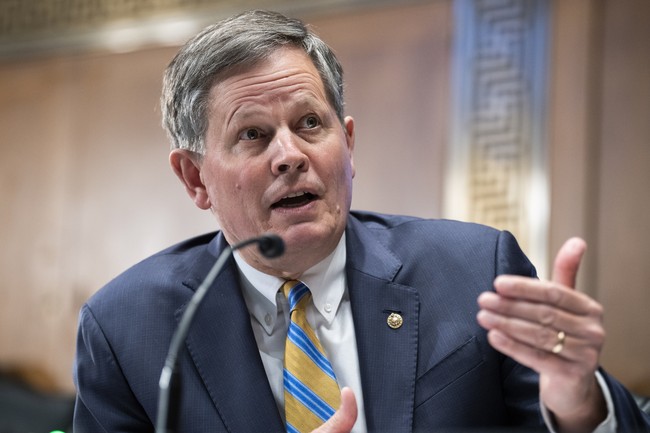
I’ll explain the late filing drama in Montana, detail Steve Daines’s surprise withdrawal and video confirmation, outline Kurt Alme’s sudden entry and endorsement, and note how this reshaped the GOP field in the final minutes before filings closed.
With the clock winding down at 4:52 p.m. Wednesday, Montana U.S. Attorney Kurt Alme filed paperwork to run for the U.S. Senate seat held by Sen. Steve Daines. That filing came just eight minutes before the statewide deadline, making it one of the last possible moves in a tight window that often decides who appears on the ballot. Montana law demands filings be in before 5 p.m., so those final minutes are where races can change in an instant.
State records show that, before the five o’clock cutoff, Daines—who had previously filed to run again—pulled his name off the ballot. The withdrawal arrived in the final stretch, and it immediately reshaped the Republican contest in the state. Reporters watching the filing system noticed the change and relayed it quickly, creating a scramble to understand the next steps for Montana conservatives.
Soon after records reflected the filing updates, Daines’s chief of staff indicated that the senator had withdrawn from the race. At that point, the retreat from the ballot was factual but not yet explained by Daines himself. For a party that values clarity and steady leadership, the timing was awkward, but the GOP bench had moved quickly to respond to the opening.
Three hours later, after the deadline had passed and the fallout had settled, Daines posted a video message at 8:02 p.m. Eastern confirming his decision not to seek reelection. The video made the withdrawal official and offered his reasons to Montanans after a long run in public service. Republicans can respect the candor of an elected official who announces his decision directly to voters instead of letting rumors steer the narrative.
In his statement, Daines framed the decision as the result of months of thought about life after 13 years in Congress. He said, “Serving the people of Montana in the U.S. House and the U.S. Senate the past 13 years has been the greatest honor of my professional career. After much careful thought, I’ve decided not to seek reelection.” That line gives a clear sense of finality and gratitude without hedging, the kind of plain talk voters expect.
Daines’s political resume is straightforward: elected to Montana’s at-large House seat in 2012 and to the Senate in 2014, he rose to prominence in the Senate GOP conference. He later chaired the National Republican Senatorial Committee from 2023 through 2025, playing a central role in Senate campaign strategy during key cycles. Republicans will debate how his departure affects the party’s chances in Montana and beyond, but his tenure shaped the GOP’s approach to statewide contests.
When Daines stepped aside, he did not leave the field directionless. In his statement he endorsed Kurt Alme, praising his work on crime and drug trafficking issues across the state. That endorsement instantly gave Alme a powerful boost among conservative voters concerned about law and order. An endorsement from a sitting senator in the final filing minutes matters a lot in a state where personal endorsement and reputation carry weight.
Alme later confirmed he would run, announcing his intention to seek the Republican nomination to represent Montana in Washington. He emphasized service to Montana communities and a focus on public safety and the rule of law, themes that resonate with many voters across the state. For Republicans focused on practical results rather than flash, a candidate with a law enforcement background is an obvious fit for the ticket.
By the time Daines went public, the practical effects were set: his name was off the ballot and the filing deadline had passed. That sequence left the Republican primary with a fresh face and a compressed timeline for organizing a statewide campaign. Party leaders and activists have to pivot fast now, coalescing behind candidates who can unite the base and articulate a conservative agenda for Montana.
The suddenness of this switch highlights how campaign timelines and last-minute decisions can shift political landscapes in an afternoon. For Republicans in Montana, the priority is clear: consolidate support behind candidates who will defend public safety, economic freedom, and local control. The coming weeks will reveal whether Alme’s late entry and Daines’s endorsement can translate into a durable statewide coalition.



Add comment