
The Senate voted 53-47 to reject a Democratic War Powers resolution aimed at limiting President Trump’s Operation Epic Fury against Iran, a decision that keeps the campaign moving while sparking sharp debate over constitutional authority, military risk, and America’s long-running confrontation with the Islamic Republic.
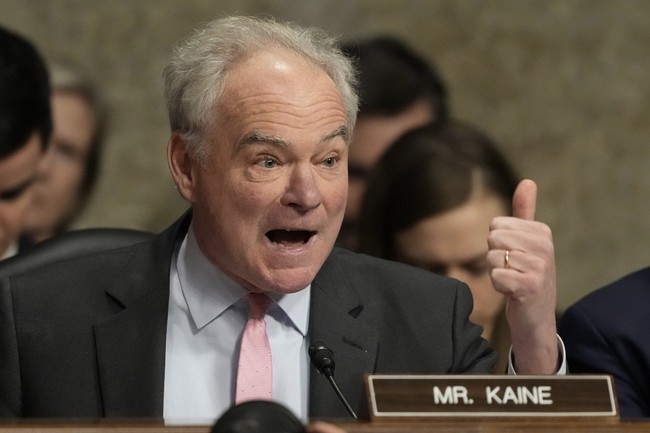
The Senate’s vote fell mostly along party lines, with two notable defections: John Fetterman and Rand Paul. Fetterman has publicly signaled support for forceful action against Iran, and Rand Paul co-sponsored a related resolution earlier in the year with Sen. Tim Kaine. The rejected measure would have forced the removal of U.S. forces from hostilities with Iran unless Congress explicitly authorized such action.
Senators argued over the balance between executive flexibility and congressional oversight, with Democrats insisting the War Powers Act preserves legislative authority. Republicans countered that America has faced a hostile Iranian regime since 1979, one that sponsors terror, brutalizes its own people, and has flirted with acquiring nuclear weapons. For many GOP senators, decisive pressure on Iran is overdue and necessary to protect Americans and American interests abroad.
The symbolic nature of the resolution was clear to lawmakers on both sides; a presidential veto was all but guaranteed had the measure reached the president’s desk. Even so, Democrats pressed the issue to underscore concerns about unchecked military action and to force public debate about when Congress should assert control. Republicans saw the exercise as political theater that would not alter the mission in the field.
Operation Epic Fury has been presented by administration officials and supporters as a targeted effort to degrade Iran’s capacity to threaten the region and the United States. Supporters emphasize that the strikes are measured and intended to prevent further escalation and future attacks on American troops and allies. Critics worry about mission creep and the slipperier slope from strikes to sustained ground commitments.
Senator Roger Wicker spoke for many Republicans when he framed the strikes as a moral and strategic response. He said he grieved “the six American servicemen and women who’ve died in the fighting” and added that he was also mourning “the thousands of Americans that have died over the last 47 years at hands of the brutal Islamists.” He praised the president’s actions as “profound, deliberate and correct.”
There remains a clear line in Republican thinking: air and precision strikes can and should be used to neutralize immediate threats without dragging the nation into prolonged occupations. That caveat carries political weight inside the GOP caucus, where some senators warned they would insist on congressional approval if the president ever sought to deploy ground forces. Sen. Josh Hawley put it plainly, “I’ve always drawn a line at ground troops,” and said attempting to put boots on the ground would “require some sort of authorization.”
Democrats counter that the War Powers Act gives Congress a role when hostilities are expanded or prolonged, and they argue that the framers intended checks and balances on executive war-making. The act’s defenders point to its 1973 passage over a presidential veto as proof that lawmakers can and must reclaim authority when needed. Republicans reply that modern threats demand speed and discretion, and that sitting on legislative approvals can cost lives.
The political dynamics were unavoidable: Democrats used the vote to highlight constitutional concerns and to score points with anti-war voters, while Republicans defended the president’s prerogative to protect Americans and press adversaries. The two cross-party votes by Fetterman and Paul underscored the complicated coalitions forming around the issue of force, not simply the usual partisan split. For supporters of the administration, the result affirmed that Congress would not hobble an operation designed to blunt an immediate danger.
Opponents warned that sidelining congressional input sets a precedent for future presidents, potentially lowering the bar for military action. Proponents argued that decisive action against a regime that sponsors terrorism and seeks regional dominance is a legitimate exercise of executive responsibility. The debate will continue in the House, which planned its own vote on a similar measure, yet the Senate outcome left the campaign intact for now.
As the political theater played out, the practical implications for troops and regional partners mattered most to many lawmakers. Congressional leaders on both sides acknowledged that further escalations or a shift to ground operations would likely prompt renewed fights over authorization and oversight. In the meantime, Operation Epic Fury proceeds without being legally curtailed by the Senate’s vote, leaving the administration to manage the operation and its consequences on the diplomatic and military fronts.



Add comment