
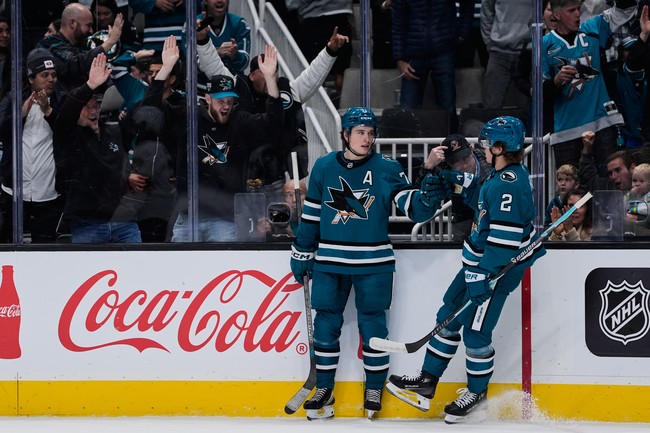
The piece covers three sports moments: a landmark contract for Macklin Celebrini with the San José Sharks, a new Buffalo Bills alternate jersey rollout, and a heated incident at a Seattle WNBA game that exposes how identity politics are colliding with basic fairness in women’s sports.
Hockey first: on July 29, 2026 the San José Sharks locked up Macklin Celebrini with a five-year extension paying an average annual value of $18.8M. That makes him the highest-paid player per year in the NHL, and the move signals the franchise betting everything on a generational young talent. Fans weary of uncertainty now have reason to expect real leadership, and the club looks like it’s finally building toward a future with purpose.
Celebrini is still under the legal drinking age, but his workload and skill level are anything but juvenile. Observers who value hustle and results will appreciate that the Sharks didn’t penny-pinch on a core player who can change a locker room. The timing of the contract suggests San José wants stability and a captain who can carry the team forward.
Switching to football, the Buffalo Bills rolled out a new alternate jersey to go with their upcoming stadium season, and reaction has been loud and mixed. The fan base known as Bills Mafia has not given it a universal thumbs-up, though some supporters like the fresh look. Uniform changes often spark debate, but this one highlights how teams try to balance tradition and marketing in an era where every aesthetic tweak becomes a flashpoint.
There’s a generational argument here, too: some fans want retro nods that connect to a team’s past, while front offices chase modern rebrands to appeal to broader audiences. Jerseys matter because they’re identity and revenue in one package, but alienating the base is always a risk. The Bills’ alternate will be scrutinized once the season starts and the new stadium opens.
Now to a more troubling story out of Seattle from July 28, 2026 involving the Indiana Fever and the Seattle Storm. Before tipoff, a group of fans staged a peaceful show of support for a player who has publicly opposed biological men competing in women’s sports. What began as a respectful demonstration turned ugly once those fans were inside the arena. The escalation shows how tense stadiums can become when political theater collides with sport.
Reports indicate some attendees reacted angrily to fans who expressed a conventional view on women’s competition, and the scene exposed a larger cultural gap. Seattle’s sports community, like much of the city, has embraced progressive orthodoxy in many institutions, and that posture can make simple questions about fairness feel taboo. When debate on basic definitions becomes forbidden territory, we stop having honest conversations about competition and safety in women’s athletics.
https://x.com/BuffaloBills/status/2081733848363307171
The Storm organization issued an apology for a co-owner’s outburst, which is an expected PR move, but it doesn’t solve the underlying problem. What’s needed is a direct, personal apology to the girls affected at that event and a clear defense of the distinction between male and female competition categories. Fans and families deserve environments where the rules of sport are upheld without performative virtue signaling.
These three stories—Celebrini’s massive young contract, a divisive Bills uniform change, and a WNBA incident driven by identity politics—don’t exist in isolation. They reflect how sports remain a mirror for wider cultural debates: how we value talent and investment, how we honor tradition while courting modern audiences, and how we protect fair competition for women. Sports should be a place of clear rules and earned achievement, not a battleground for ever-shifting ideological experiments.


Add comment