
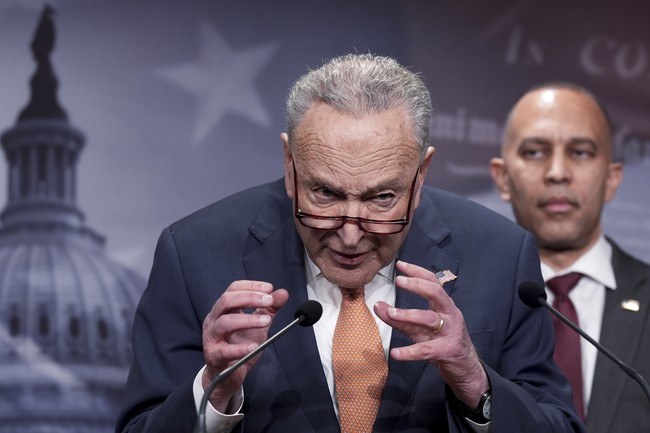
The Democratic Party’s turmoil after recent New York primaries has spilled into the Senate, where Sen. Elissa Slotkin publicly suggested new leadership is needed, criticizing the party’s strategy and contrasting it with former President Trump’s single-message approach; this piece examines her comments, the party’s internal conflicts, and the political implications from a Republican perspective.
More Dem Disarray As Prominent Senator Calls for New Leadership
The New York primary results handed a win to socialist candidates and opened old wounds inside the Democratic coalition. Voters reacted loudly in neighborhoods and at events, and that push from the left has forced mainstream Democrats to confront uncomfortable questions about direction and control. The unrest makes clear the party no longer speaks with one coherent voice.
Sen. Elissa Slotkin took that frustration public on SiriusXM’s “Straight Shooter” with Stephen A. Smith, arguing the party must change its leadership and its game plan. She framed the problem as an internal battle over priorities and identity, arguing that the current model simply isn’t delivering. Her critique landed like a warning flare: this is not just about tactics, it’s about who sets the agenda.
Slotkin said plainly, “Every day there’s a debate within the party about the path forward.” That line captures the paralysis: factions argue, voters tune out, and opponents smell opportunity. Republicans see that as evidence that Democrats are more interested in intra-party fights and ideological purity tests than in offering voters simple, practical solutions.
“That’s why I believe we need significant new leadership,” she said. “The old models are no longer working, and that includes the Democratic Party.”
The senator likened her party to a “circular firing squad,” where “everyone is reacting to the crisis, but too few people are talking about what they actually want to accomplish.”
“To me, that’s a fundamental failure of leadership,” she urged.
When Smith pressed whether she meant replacing the top leaders, Slotkin did not dodge. Her response was blunt about adaptation and making room for those who can meet today’s challenges. That indirect call to remove both House and Senate leaders signals that fractures run to the top.
“I’m saying that if people can’t recognize that the game has fundamentally changed and can’t adapt, then they need to make room for others who can,” she responded.
Slotkin even contrasted the Democratic haze with the clarity she credited to Donald Trump: one direct promise on affordability and pocketbook relief. She said, “To me, the lesson was simple. Democrats had too many priorities. They tried to make everyone happy and answer every question. When you prioritize everything, no one knows what you actually stand for.”
She continued by noting Trump’s single-message appeal: “He said, ‘I’m going to make your life more affordable. I’m going to put more money in your pocket’. … He won because he kept his message simple and focused on the issue Americans cared most about.” That observation stings because it admits what many Republicans have been saying: voters reward clarity and results, not ideological scattershot.
Critics on the right point out that while Slotkin calls for coherence, Democrats’ choices show a mismatch between rhetoric and action. They profess concern for affordability while their primaries elevate candidates who push radical redistribution and symbolic attacks on private success. For many voters, words without workable policy quickly look like political theater.
The bigger issue is trust. When a party seems willing to embrace extremes and then offers only talking points to mask internal chaos, voters drift away. Republicans argue that a focus on real economic relief, lower costs, and straightforward governance resonates more than ideological contests and factional infighting.
Democrats now face a clear crossroads: reconcile their factions under new leadership or continue to fracture and hand advantage to an opposition that promises focus and results. Slotkin’s public intervention may be a sign that even her party’s insiders think the current path risks long-term damage.
https://x.com/RNCResearch/status/2069888701748949178



Add comment