
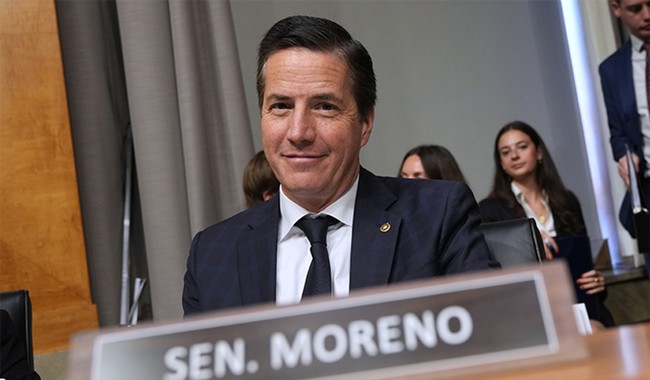
The Senate hearing that put Anthony Fauci in the hot seat turned into a public dressing-down from Republicans who demanded answers and accountability for COVID-era mandates and policies, with Sen. Bernie Moreno delivering a blistering confrontation that left Fauci invoking the Fifth and staying mostly silent.
The hearing opened under the shadow of Fauci’s refusal to answer questions, and Republicans on the Homeland Security and Governmental Affairs Committee pressed forward anyway. Sen. Rand Paul led off, firing questions about gain-of-function funding, the Wuhan lab theory, and whether Fauci pushed a public narrative he privately doubted. Fauci declined to engage, choosing to remain silent while counsel handled the appearance.
That silence only inflamed members who felt the nation deserved explanations. The committee moved through familiar disputes about lockdowns, mask rules, and vaccine mandates while Fauci sat quietly, occasionally flush-faced and visibly uncomfortable. The optics were unmistakable: a federal official who once dominated the pandemic conversation now on the defensive and refusing direct answers.
When routine decorum broke down, Rand Paul removed Fauci’s attorney after the lawyer attempted to speak for his client from too-close quarters. That motion underscored a larger point for Republicans: accountability means direct answers in public, not filtered statements from a seat beside the witness. The maneuver drew applause and signaled that senators would not accept procedural theater in place of substance.
Sen. Bernie Moreno escalated the confrontation with a line aimed straight at the heart of the policy debate: “Who the f–k do you think you were for doing that?” He was referring to the broad, coercive measures many Americans felt stripped away liberties—mandates, school closures, and employment punishments tied to vaccination. Moreno’s anger echoed a deep Republican grievance about centralized pandemic power and the human costs of sweeping public health decisions.
“If, during the time of the COVID pandemic, you were called the racist for calling the virus a ‘Wuhan virus’ or the ‘China virus’; if you thought the six-foot rule was total crap; if you thought the vaccine wasn’t something that you should take; if you thought it was outrageous the way the mass policy was rolled out; if you were fired from your job for not taking that vaccine, including members of the military; if you thought closing schools was catastrophically stupid … saying these things made you somehow a lesser human being,” Moreno said.
Moreno did not stop with rhetoric. He demanded an apology on behalf of Americans who lost jobs, saw children kept out of classrooms, or were punished for private medical choices. The line of questioning aimed less at legal minutiae and more at moral responsibility, putting Fauci’s decades of service up against the lasting fallout of pandemic edicts. For Republicans, that reckoning matters far more than polite deflection.
Another portion of the hearing was theater: Fauci’s silence, legal posturing, and the gallery’s reaction. Republicans made political and substantive points about trust, transparency, and whether public officials should face consequences for policy decisions that had sweeping social effects. The exchange with Moreno was intended to puncture any lingering reverence and force a public accounting of harm done.
Besides the confrontation itself, the hearing raised broader questions about how public health experts influence policy and how elected officials should police that influence. Republicans framed the debate around overreach: who gets to set nationwide mandates and what checks exist when those mandates collide with constitutional freedoms. The party argued for more scrutiny and less deference to unaccountable bureaucratic power.
Fauci’s decision to decline answering remains a focal point for critics who say it denied victims of policy mistakes the chance to hear admissions or apologies. Republicans used the opportunity to voice personal stories and political grievances alike, turning the hearing into an accountability session rather than a neutral review. The clash satisfied those who wanted a tough, no-nonsense approach to topics many feel were handled without sufficient oversight.
Watch:
https://x.com/townhallcom/status/2082478050877305029



Add comment