
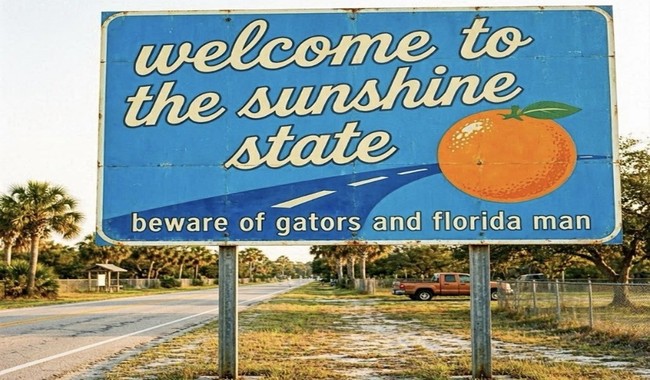
The Sunshine State Psychosis Report rounds up a week of odd and alarming episodes across Florida, from a Walmart parking lot standoff to targeted thefts and bizarre threats, presenting a picture of local strange behavior and law enforcement responses without the national media noise.
Florida’s particular flavor of headline-making didn’t take a break while the country focused on national political theater and cultural controversies. Small-town disputes, odd crimes, and confrontations kept local newsrooms busy, delivering a steady stream of stories that range from comic to dangerous. This report stitches several of those incidents together to show how ordinary days can suddenly spiral into chaos in ways that are uniquely Floridian.
The opening tale involves a parking-lot fight that escalated into a full-blown robbery and then a mobile-home siege. Blake Reed, confronted by officers, holed up inside his RV with a flamethrower in the vehicle, triggering a 14-hour standoff. The situation intensified enough that SWAT used robotic breaching gear to end the siege, turning a grocery lot into a scene fit for a movie about things going drastically wrong.
One acquaintance of Reed offered this exact line: “He’s a great guy, and this is just a flukey thing that happened to him, and praise God he’s OK. These guys, they did what they had to do, and we’re all going to surround him with our love and get him a new motor home. That’s what we got to do.” That kind of reflexive loyalty is part of what makes these stories both human and worrisome. It’s understandable to want to support someone, but there’s a clear line between community care and enabling reckless behavior.
Not all incidents are so theatrical, but they are no less alarming. In New Smyrna Beach, Kevin John Moss allegedly tried multiple entry points on a home while shouting threats and terrifying the family inside. Doorbell camera footage reportedly captured a distinctive two-foot palm tree tattoo that helped police identify him, and his shirtless appearance only added to the surreal image caught on video. Moments like these remind observers that modern surveillance often turns odd acts into solid leads for law enforcement.
A case from The Villages turned what could have been a mundane hookup into a criminal mess involving a crash and gun threats. Sixty-seven-year-old David Allen O’Brien allegedly met a 21-year-old for an arrangement that soured, and after an argument he chased the young woman’s friends, instigated a collision, and brandished a firearm. He now faces aggravated assault and battery charges, while the younger woman was not charged over the failed agreement.
https://x.com/wakeupnj/status/2080383079152078910
Theft in Florida sometimes gets specific to the point of obsession. At a Walgreens, a group conspired to distract staff while two members pocketed about $650 worth of body wash. Investigators traced the operation through surveillance and past records, which pointed to Gerald Cobbs as part of the crew. Cobbs’ rap sheet reportedly includes dozens of prior convictions and extensive jail time, making his continuing presence in similar schemes a head-scratcher for anyone tracking repeat offenders.
Cross-dressing or eccentric appearance aside, law enforcement actions in these petty organized thefts show a pattern: small teams, coordinated distractions, and items chosen for resale value. The combination of familiarity with the territory and frequent reoffending makes these crimes more predictable and yet harder to eradicate unless accountability steps up. When suspects are repeatedly arrested and then back on the street, communities start to feel the frustration of a revolving-door system.
Marine thefts around the coast produced another clear trail for investigators. Robert Anthony Esposito was accused of stealing multiple boats across Martin County and stripping them of Garmin GPS units. Authorities estimate about $60,000 in tracking devices were taken, which suggests a focused effort to resell specialized electronics. Stealing location hardware carries its own irony: the very technology meant to help find things can also be used to track thieves when evidence is left behind.
One of the stranger entries involved a man allegedly making threats toward infrastructure rather than a person. Logan Everett Cimms reportedly texted friends warnings to avoid the South Causeway Bridge, claiming damage to support legs and even alluding to taking down a water tower. Those messages were preserved by acquaintances and passed to authorities, turning boastful or reckless talk into prosecutable evidence.
Across these episodes, a consistent theme emerges: ordinary interactions—arguments, hookups, petty thefts—can escalate into dangerous or surreal scenarios in short order. Surveillance, witnesses, and sometimes a tattoo on a homeowner’s camera clip wind up being the thin threads that lead police from chaos back to accountability. For communities, the result is a mix of exasperation, relief when arrests happen, and concern about the behaviors that keep repeating.
These dispatches from Florida cover a range of human failing and miscalculation, and while some stories provoke a chuckle, others underscore real threats and the need for solid policing and civic responsibility. From mobile-home sieges to maritime thefts and violent threats texted on social platforms, the Sunshine State continues to be a place where the unusual and the criminal collide in front of cameras and courthouses.
Add comment