
Checklist: summarize the Senate minibus passage and its cost; note the looming January 31 funding deadline and remaining DHS dispute; include exact quoted remarks from colleagues and leaders; report the Senate recess and next steps for the House; keep factual tone and preserve original quotes and numbers.
Congress is racing to finish appropriations ahead of the January 31 deadline, and the Senate took a big step by approving a three-bill minibus this week that funds several agencies through the end of fiscal 2026. The package cleared the Senate with strong bipartisan support and now moves toward the president for signature. That progress matters because lawmakers still have half the funding measures to finalize, and a few sticking points could still threaten a shutdown. One of the most prominent remaining disputes revolves around funding for the Department of Homeland Security.
The Senate vote on the three-bill package landed at 82-15, moving the country closer to completing its funding work for the year. The minibus covers the Commerce, Justice, Energy and Interior departments through September, and it represents the second three-bill bundle the chamber has advanced. Senate leaders portrayed the vote as momentum in an appropriations cycle that so far has been marked by bipartisan cooperation on several measures.
The Senate on Thursday passed a package of three spending bills, hitting the halfway mark in its push to fund the government for fiscal 2026 ahead of the end-of-month deadline.
Senators green-lighted the second three-bill minibus, 82-15. The package included measures to fund the Commerce, Justice, Energy and Interior departments through the end of September.
…
Overall, Congress has OK’d six funding measures, with the remaining half-dozen expected to come down the rails in the next two weeks.
However, the process still has some bumps in the road lawmakers will have to overcome.
As a companion action, the House recently passed a two-bill package aimed at funding Treasury and State, winning a substantial 341-79 margin in that chamber. That move keeps the broader funding effort alive, but it also highlights how the two chambers are moving in parallel rather than in lockstep. Differences between House and Senate priorities are routine, yet they can create last-minute friction if not worked out quickly. One unresolved matter that has drawn attention is DHS funding, where Democrats in the House have pushed back on provisions included in some proposals.
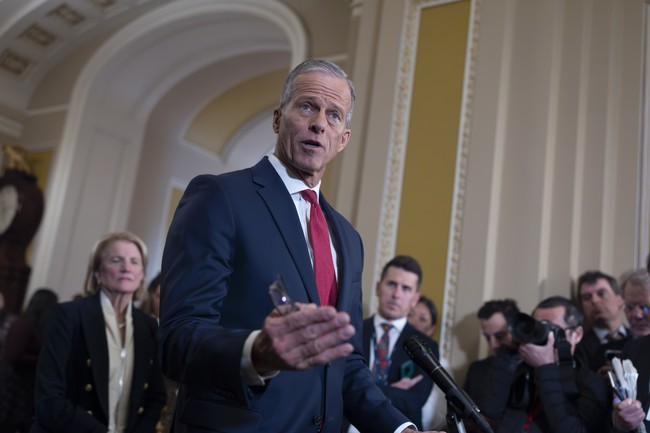
Senate leadership expressed cautious optimism that appropriators can iron out the remaining differences. On the Senate floor, Majority Leader John Thune emphasized the need to keep bipartisan momentum and finish the work before the end of the month. His public comments underlined the expectation that the remaining measures will be processed and sent to the president so the government remains funded. Getting all the bills wrapped up will require cooperation from both parties and both chambers over the next two weeks.
“Appropriators are working on another package of the four remaining bills, which I hope will receive the same bipartisan backing that has characterized the appropriations cycle thus far. And before the end of the month the Senate will need to process all of these funding bills and get them to the president’s desk.”
The spending plan the Senate passed totals roughly $174 billion, reflecting the cost of the departments included in this specific minibus. That figure is a snapshot of part of the broader funding picture, which will swell as the remaining bills move forward. Senators recessed after the vote, pausing floor activity as the House continues work on the rest of the measures. Lawmakers face a compressed calendar because the House will be out of session for part of the final week of January.
Some of the remaining appropriations will require careful negotiation to secure support from both parties, particularly where policy riders or border and DHS-related provisions spark disagreement. Committees and appropriators are expected to meet behind the scenes to reconcile language and funding levels so neither chamber faces a stark impasse. If talks stall, the possibility of short-term continuing resolutions could return as a stopgap, but leaders still prefer to avoid that outcome.
Procedurally, the Senate will still need to take up the House-passed bills and then send the fully reconciled appropriations package to the president’s desk for signature. With the Senate entering recess after the minibus vote, the timing of those next steps will depend on how quickly negotiators finalize the outstanding packages. Members on both sides of the aisle have signaled they want to avert a shutdown, but the next two weeks will test that resolve and the ability to reach workable compromises.
For now, passage of the three-bill minibus marks a tangible accomplishment in the appropriations process, buying time and clarifying the path forward. Lawmakers will continue to wrestle with contentious details and competing priorities as they aim to finish the job before the deadline. The next phase of negotiations will determine whether Congress can translate this momentum into a complete set of funding bills that keep the government running through fiscal year 2026.



Add comment