
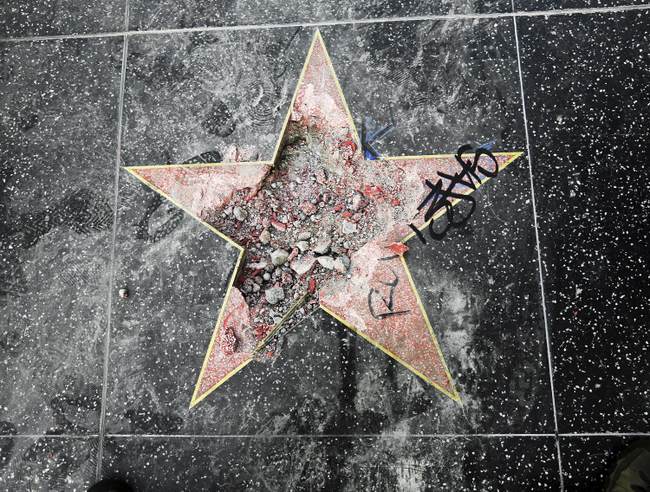
This piece argues that the Hollywood Walk of Fame has become the world’s worst major tourist attraction, based on a Stasher study, and pins blame on California leadership under Gavin Newsom and Karen Bass for the city’s decline. It describes the visitor experience as dirty, unsafe, and overhyped, reproduces industry commentary and a defensive column verbatim, and pushes a Republican critique of local governance and policy consequences. The article balances direct quotes from the Stasher analysis and an opposing journalist while keeping the focus on how leadership decisions have shaped Los Angeles tourism.
We’ve all shown up at a famous spot only to find it underwhelming, overcrowded, or outright unpleasant, and the Walk of Fame checks a lot of those boxes. According to a global analysis by the luggage storage firm Stasher, Hollywood’s marquee boulevard ranks dead last among 101 major tourist destinations. That’s a stinging verdict for a place that once sold dreams as easily as postcards.
Stasher’s findings hinge on measurable factors like Google Reviews and airport distance, and those metrics don’t care about nostalgia or spin. The Walk of Fame carries a 4.0 Google rating — the lowest in the study — and sits nearly 40 kilometers from the nearest major airport, details the firm used to justify their ranking. Those are hard numbers, and numbers don’t flatter the current scene.
The Stasher analysis found that, based on their metrics, the Hollywood Walk of Fame was the “worst” tourist destination in the world.
This, Stasher researchers said, is due to multiple factors, the biggest being Google Reviews (the 4-star review the Walk of Fame has on Google is the lowest of the 101 locations in the study) and distance from the airport.
Jacob Wedderburn-Day, Stasher’s CEO, called the ranking a reality check, and his critique lands without rhetorical buffering. “The Hollywood Walk of Fame’s last-place ranking is a wake up call for travelers who assume famous means great. With a 4.0 Google rating and nearly 40 kilometers from the airport, it’s the perfect example of a tourist trap that trades on reputation rather than actual experience,” Stasher CEO and co-founder Jacob Wedderburn-Day noted. That quote is sharp, and it’s worth repeating for anyone thinking fame ensures quality.
Practical issues make the Walk of Fame a bad value proposition: long waits, crowds, poor transit links, and public-safety concerns combine to erode what should be a pleasant visit. For many visitors, the glamour gets swallowed by grime, and what remains is a strip of faded stars and hawkers rather than a polished attraction. When travelers time their vacations for memory-making and instead get stress and disappointment, the destination fails its basic purpose.
Some defenders argue the boulevard is a cultural mosaic worth experiencing despite its flaws, and a recent liberal columnist suggested critics miss the point by focusing on dirt and safety. That counterargument tries to reframe the Walk of Fame as a complex symbol of Los Angeles rather than a place to recommend for a family trip. Here is the defense in their own words:
Sure, it’s filthy. Yes, you shouldn’t walk alone there after dark. And of course there are many unsavoury characters flogging outdated and inaccurate maps of celebrity homes. But to dismiss it on these grounds would be to miss the point.
In many ways the Walk of Fame is the encapsulation of Los Angeles — a potent fusion of grime and glamour, a kaleidoscope of popular culture from the past century.
Those lines read like an attempt to romanticize decline, and they won’t convince travelers who expect safety and cleanliness in return for their time and money. Nostalgia is not a substitute for basic services, and treating disorder as authenticity is a poor sales pitch for tourism officials. Locals living near the boulevard also pay the cost of those trade-offs every day.
This is where policy and leadership matter. Decisions made in Sacramento and at City Hall shape sanitation, law enforcement, and transit funding, and residents see the results in streets that look neglected and feel unsafe. Under Governor Gavin Newsom and Mayor Karen Bass, critics argue that progressive priorities have led to permissive policies that tolerate public disorder and reduce incentives for private investment in visitor experiences.
Travelers vote with their feet, and Stasher’s analysis suggests those votes are already being cast against Hollywood. Declining ratings and poor access are symptoms, but they point to a larger reality: governance choices have consequences that ripple into the local economy. For anyone running a city that relies on tourism, ignoring those signals is a gamble with real costs.
Editor’s Note: Gavin Newsom, Karen Bass, and the “progressives” are ruining California.
Images and viral clips circulating online reinforce the study’s conclusion: a lot of what passes as Los Angeles spectacle looks more like a public nuisance than a sightseeing highlight. Visitors who expect a polished Hollywood experience often find the opposite, and word spreads fast in the age of reviews and social media. Tourism is a competitive market, and places that don’t deliver get left behind.



Add comment