
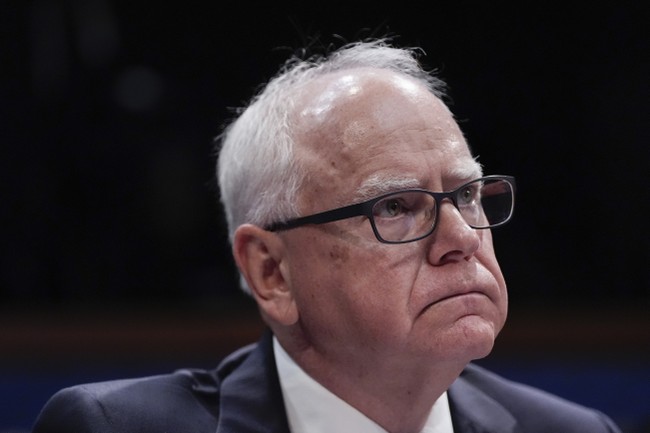
Rep. Brandon Gill tore into a Democrat witness during a House Oversight hearing about an alleged $9 billion fraud scheme that hit Minnesota’s Somali community, pressing uncomfortable questions about welfare dependency, political incentives, and why state leaders failed to stop the abuse.
The hearing focused on a sprawling fraud scheme tied to sham businesses that reportedly siphoned roughly $9 billion from taxpayers, and Republicans demanded answers about how it went unchecked. Rep. Brandon Gill, a freshman congressman who has already built a reputation for blunt, rapid questioning, drove the line of inquiry and pushed witnesses to reckon with hard data. Gill’s exchanges highlighted a broader GOP concern: that some political leaders prioritized votes over accountability.
Gill’s style is direct and relentless, and he used it to frame the fraud as not merely financial theft but a failure of governance and integration. He referenced prior moments where his questioning exposed inconsistencies from public figures, underlining that sharp questioning can reveal inconvenient truths. At the Minnesota hearing, those truths centered on the economic footprint of the Somali community and how state systems handled the flood of fraudulent claims.
One Democrat witness, former Justice Department official Brendan Ballou, found himself on the defensive as Gill produced stark statistics and refused to let ambiguous phrasing obscure the point. Ballou tried to push back on labels and definitions, saying, “The majority of Somali Minnesotans are as Minnesotan as any of us. They were born in the United States,” while Gill pressed for precise comparisons between Somali-headed households and native Minnesotan households. The clash underscored a central tension: the difference between identity-based rebuttals and hard numbers that show policy impact.
Gill cited figures about benefit usage that are difficult for anyone in public life to ignore: “Do you know what percentage of Somali-headed households in Minnesota are on food stamps? 54%,” he asked. He then contrasted that with the rate for native Minnesotan-headed households, saying, “It’s 7%,” to demonstrate the gap. Those numbers were used to question assimilation outcomes and the strain on public resources, a point Gill emphasized as central to taxpayers’ concerns.
He followed by asking even tougher questions about overall welfare dependency: “What percentage of Somali-headed households are on welfare in general? It’s 81,” he said, and, “After ten years of being in the United States, what percentage of Somali immigrant households continue to be on welfare? The number is 78.” Gill framed those statistics as evidence that integration is not occurring at expected rates and argued that this has consequences for state budgets and social cohesion. For Republicans, the data translated into a policy problem demanding immediate scrutiny.
The questioning then shifted to motive as much as mechanics, which is where the political angle came into sharp relief. When Gill asked Republican witness Walter Hudson whether the Somali population was an important demographic for Democrats, Hudson answered plainly: “Unquestionably.” Gill used that admission to connect dots between political calculation and the willingness of certain officials to overlook or downplay the fraud. That line of questioning suggested that protecting a voting bloc may have become more important than pursuing accountability.
Gill pressed Hudson further: “Do you think it would have hurt Democrats’ political standing with the Somali population to investigate this fraud? You’re saying that there was a political incentive to cover up widespread Somali fraud. Is that right?” Hudson’s affirmative response gave Gill the leverage he needed to argue that politics, not enforcement, shaped the response. For Republicans watching, the exchange read as confirmation that partisan interests can trump lawful oversight and fiscal responsibility.
The hearing illuminated broader failures by state leaders, including questions about why prosecutions were delayed and why Governor Tim Walz did not intervene. Republicans at the hearing repeatedly suggested that inaction enabled the fraud to grow and that accountability measures were slow or nonexistent. Gill’s relentless questioning aimed to push investigators and officials toward concrete answers rather than rhetorical defenses.
Throughout, Gill’s approach was not subtle: he presented figures, demanded exact comparisons, and refused to allow evasions about identity or intent to muddy the facts. That approach resonated with conservatives who view unchecked fraud and expansive welfare dependence as threats to taxpayers and the rule of law. The hearing left no shortage of pointed lines for Republicans to follow up on as they seek audits, prosecutions, and policy changes.
In short, the Minnesota fraud hearing morphed into a political and policy confrontation, with Gill forcing witnesses to explain both the mechanics of the alleged $9 billion scam and the political dynamics that may have enabled it. His interrogation made clear that Republicans intend to turn oversight into action, using sharp questions and public hearings to push for answers and consequences.


Add comment