
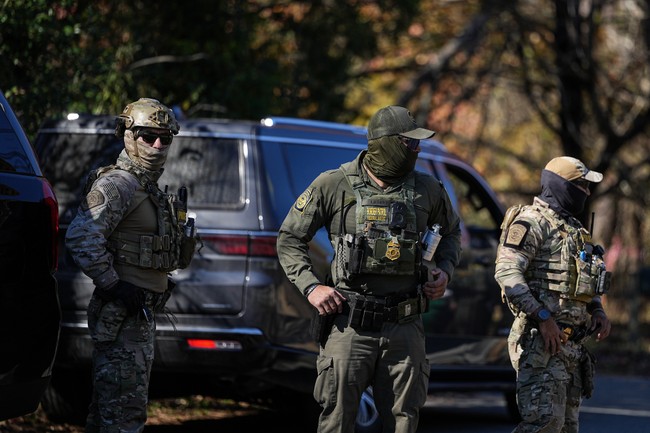
The piece reports on a recent immigration enforcement operation in the Charlotte area and a protest in nearby Kannapolis that turned physical when a student allegedly threw a drink at an officer, leading to an arrest and charges; it examines the incident, crowd reaction, and the message it sends about consequences for illegal behavior during protests while noting law enforcement activity and arrest totals from the operation.
The Trump administration has been running an immigration enforcement effort in the Charlotte, North Carolina region called Operation Charlotte’s Web, and Border Patrol officials say the campaign has resulted in almost 400 arrests so far. That level of activity is being presented as a significant enforcement success by those involved. Local law enforcement has been deployed to support the operation and to keep the streets safe during related protests.
In nearby Kannapolis about 75 protesters — many students from a local high school — walked out and gathered to express opposition to the immigration action. Police were assigned to the downtown area to monitor the crowd and maintain public order. What began as a demonstration escalated when at least one participant allegedly assaulted an officer by throwing a drink at him.
Video clips from the scene circulated on social platforms and captured a tense exchange between the crowd and law enforcement. Protesters can be heard yelling insults at the officer, with one calling him “no-life a** b****” and claiming he was “not even an officer.” The voice of the crowd got louder as the situation unfolded, and tensions rose quickly after the alleged assault.
After the drink reportedly struck or missed the officer, the woman in question ran, and the officer pursued her through the crowd. The footage shows the officer tackling the suspect and placing handcuffs on her while fellow officers moved in to secure the scene and restore order. Those actions prompted immediate and loud outrage from some in the crowd who disputed what they had seen or insisted she had done nothing wrong.
Warning for graphic language:
The arrest did not end the argument. Members of the protest insisted the young woman had been mistreated, while police maintained that illegal conduct could not be tolerated simply because the incident occurred at a demonstration. That clash of narratives is a reminder that protests can quickly turn into criminal matters when participants cross the line into assault or interference with officers carrying out their duties.
A student, Emily Cervantes Ramos, 18, of Kannapolis was charged with assault on a government official and resisting police officers. [… ]
“We believe in every individual’s First Amendment rights, but if any person’s actions become illegal in situations such as these, we have no choice but to take appropriate action in order to protect the people and property of our city,” said Police Chief Terry Spry.
The charges levied against an 18-year-old student underscore that crossing a line at a demonstration can carry immediate legal consequences. Local leaders have emphasized that while free speech is protected, unlawful conduct like assault on a public official will be addressed. That position reflects a broader view that maintaining public safety and respect for the rule of law matters regardless of the cause being protested.
From the law enforcement perspective, incidents like this are a test of discipline and procedure under pressure, and officers involved had to make split-second decisions to neutralize what they saw as a threat. For the broader public, the encounter serves as a warning: actions at protests have outcomes, and assaulting officials can lead to detention and criminal charges. The incident also made clear how quickly crowd dynamics can shift from shouting and protest to confrontation and arrest.
Officials continue to carry out the Charlotte-area operation while keeping an eye on the community response and ensuring officers can do their work without being endangered. The episode in Kannapolis is likely to be used as an example by both law enforcement and politicians when discussing protest conduct and border enforcement. In the end, the episode reinforces a straightforward point: legal demonstrations are protected, but illegal behavior during those events is not.

No one is above the law even woman. let her sit iout in jail fro while see if she likes that.