
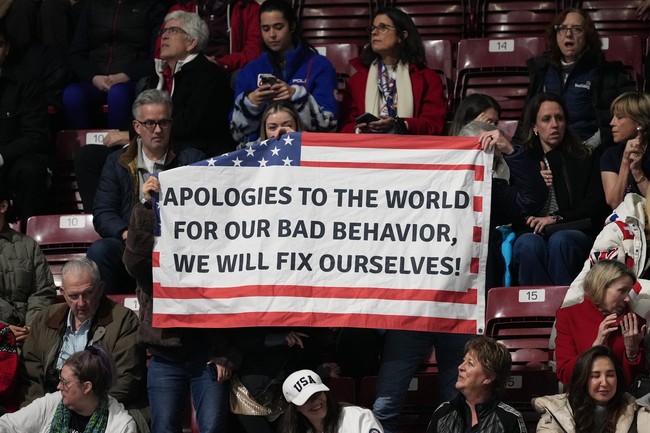
The piece examines how the mainstream media turned the Winter Olympics into a political soapbox, accused the press of selective outrage, and questioned why coverage treats an American-born athlete competing for China with kid gloves while pressuring U.S. competitors to deliver partisan critiques.
The press loves a scandal, and the Milan games provided plenty of manufactured ones. Reporters pushed young athletes into political corners, acting as if a 20-year-old snowboarder holds authoritative policy positions, then celebrated the soundbites as if they were foreign-policy expertise.
Sports journalists often try to act like general assignment reporters and fail spectacularly. Their attempts at political analysis come off clumsy and performative, more interested in headlines than in genuine inquiry into the deeper questions surrounding an athlete’s national ties and sponsors.
The first week of competition saw media outlets coaxing athletes into condemning the administration while refusing to apply the same pressure to those representing rival regimes. The result was a one-way street where American competitors were prodded for political reactions, and others were feted for quietude or selective comments.
One glaring example is Eileen Gu, the California-raised skier competing under China’s flag, who has been treated by much of the press as a flawless mix of athletic icon and cultural bridge. That favorable framing ignored a host of awkward facts about sponsorship, funding, and the political context of her allegiance switch, topics the media largely sidestepped.
Gu’s decision to compete for China was explained publicly as an effort to inspire young girls in that nation and stemmed from family ties and summers spent there. That background raises legitimate questions about the depth of her connections to Chinese institutions, and it invites scrutiny over lines of support from state or quasi-state sources.
China does not recognize dual citizenship, which makes Gu’s situation inherently complex and worthy of probing. Reports later surfaced that Chinese authorities allocated substantial funding toward certain athletes’ training, and then sought to scrub references to that support from public records, a detail the press treated more like a shrug than a scandal.
Rather than pressing for clarity, many outlets opted for glowing profiles and human-interest framing, treating Gu’s choices as apolitical or even admirable without exploring the implications. That selective curiosity stands in stark contrast to the aggressive line-them-up-and-shame approach taken toward American athletes and officials.
The double standard became glaring when commentators praised Gu for criticizing the U.S. administration while staying silent about the regime she represents. Nicolle Wallace went so far as to call her “more brave than most” for speaking out against American leadership, an odd inversion given the lack of critical questions about Xi and Beijing.
Contrast that with the treatment of U.S. competitors, who were repeatedly prodded to weigh in on political controversies, often on questions far beyond their expertise or experience. The press demanded commentary, weaponized the responses, and then complained when political talk overshadowed the sporting spectacle they themselves engineered.
This is not a plea to shut politics out of public life; athletes and citizens alike should speak freely. The complaint is about inconsistent curiosity and cowardly coverage that lionizes those aligned with foreign authoritarian power while punishing Americans for expressing opinions the media dislikes.
The behavior of corporate outlets here is telling: they amplify critique aimed at American governance but treat connections to hostile states with conspicuous gentleness. That is not investigative journalism; it is selective storytelling tailored to preferred narratives, and it erodes trust in the institutions that are supposed to hold power to account.
When an athlete’s ties to a foreign government involve funding, schooling, or political influence, reporters should pursue those leads with rigor instead of offering profile pieces and magazine covers. The public deserves questions asked evenly and pursued relentlessly, no matter whose national flag is being worn on a podium.


Add comment