
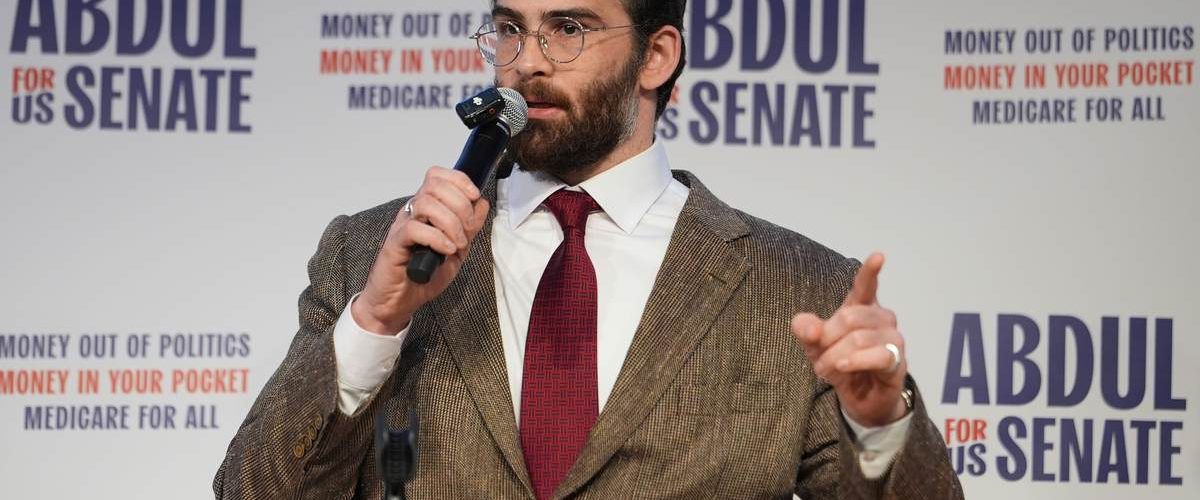
This piece argues that Democrats’ attempt to shift blame for the Hasan Piker controversy onto him and away from their own nominee is transparently weak, politically risky, and unlikely to restore confidence among swing voters in Michigan or nationally.
The Michigan Senate primary produced a close result, with over 1.5 million ballots cast and a DSA-backed nominee narrowly defeating a mainstream Democrat by under 16,000 votes. That split shows a party struggling to reconcile radical activists with more traditional voters, and it sets the stage for trouble in the general election where suburban and moderate voices matter. Republicans see a clear opening: emphasize the contrast between mainstream values and the nominee’s extreme associations. Voters remember who they backed and which voices helped lift El-Sayed into contention.
Democratic operatives and some lawmakers now insist the problem originated not with the nominee but with Hasan Piker, labeling him an interloper who “inserted himself” into the race. That line of defense is politically convenient, but it dodges responsibility for the choices the candidate himself made. When a candidate regularly appears on a controversial platform and refuses to disavow objectionable statements, the responsibility lies with the candidate and their campaign strategy, not with the media personality who amplified them.
The core facts are straightforward and damning for Democrats trying to pivot. El-Sayed repeatedly appeared on Piker’s show, accepted his support, and benefited from the exposure. To pretend that those actions had no impact on his rise or that Piker single-handedly created the friction is disingenuous. Voters weigh associations, and a pattern of aligning with fringe commentators signals where a candidate stands on big issues like national security and cultural values.
Some in the party have tried to sanitize Piker by calling him a “Twitch streamer,” as if that label absolves him of past remarks and influence. But words matter, and so do the audiences those words reach. Quoted declarations like “deserved 9/11.” or “it doesn’t matter if rape happened on October 7th. It doesn’t change the dynamic for me,” are not minor gaffes that can be shrugged off as online bluster. Those lines cut to character and judgment, and voters will judge a candidate who courts or tolerates such rhetoric accordingly.
Blaming Piker also ignores the ideological overlap that made the relationship possible in the first place. The candidate’s positions on foreign policy and cultural questions mirror the views Piker promoted, creating a natural alliance rather than an awkward endorsement. Effective campaigning requires accountability, and when a nominee aligns with voices who embrace extreme or divisive rhetoric, opponents will—and should—point it out. Republican strategists will use that reality to frame a clear contrast in November.
Practically speaking, the Democrats’ pivot invites skepticism from the very voters they need to win. Suburban independents and moderate Democrats care about judgment and stability, not online subcultural loyalty. Pointing fingers at a media personality won’t undo the record of public appearances, statements, and endorsements. The safer play would have been a swift, unequivocal disavowal and a return to mainstream policy messaging, but political theater has already replaced coherent damage control.
https://x.com/RNCResearch/status/2094072090441716161
On the ground in Michigan, this dynamic matters for turnout and persuasion. Republicans can tie the nominee to unpopular positions and a parade of controversial media moments, while reminding voters that the general election is a choice about competence and priorities. A candidate who cultivated such associations hands opponents a roadmap for debate and ad campaigns that draw contrasts on national security, support for allies, and respect for victims of terrorism. That’s a decisive advantage when the electorate is split.
Ultimately, trying to outsource blame to a single online figure is a weak political gambit. It underestimates voters’ ability to connect the dots and overestimates the protective power of spin. Democrats would do better to reconcile their internal divisions honestly; until they do, Republican messaging that highlights judgment, accountability, and mainstream values will resonate with the persuadable voters who decide close races.



Add comment