
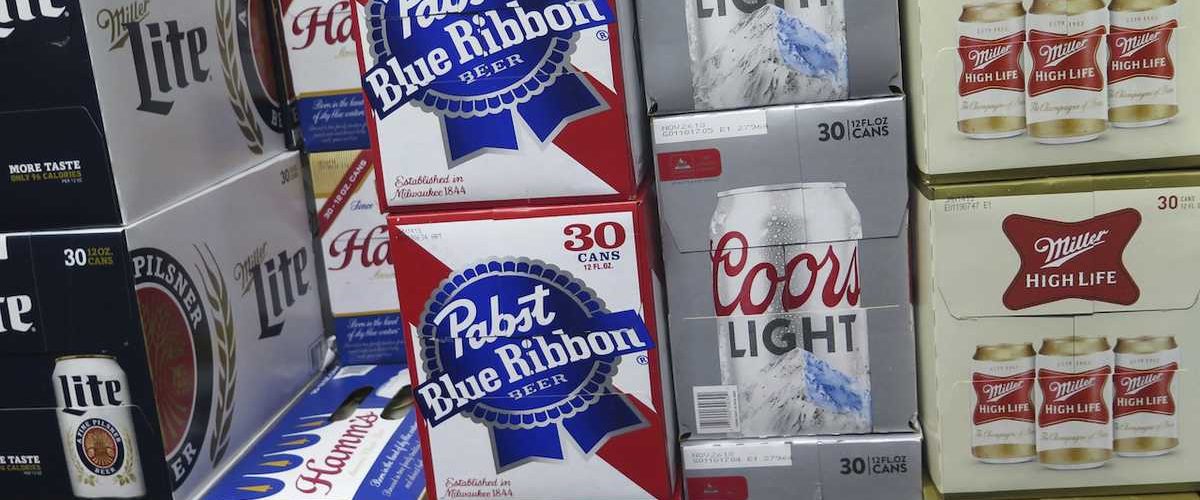
This piece breaks down a brazen string of cargo thefts in Southern California that emptied multiple beer trucks, walks through how the thefts likely unfolded, and highlights the wider public safety and market consequences. It keeps the focus on the scale of the losses, the likely criminal market dynamics, and what the police and companies have said about the incidents. The report also touches on how such thefts ripple into communities and local businesses during a high-demand holiday weekend. Finally, it includes direct, unchanged quotes from company and police descriptions of the thefts to preserve the original voice and detail.
Summer thefts of large commercial shipments have a simple, ugly logic: hot demand and high resale value make beverages an attractive target. In this case, thieves didn’t go after an electronic gadget or luxury car parts—they took beer, and lots of it, in ways that point to organized cargo theft. The scale here matters: whole trucks of product, not just a few cases, taken quickly and with planning. That turns a local loss into an organized criminal operation with supply chain and public-safety consequences.
The initial report centers on a missing Pabst Blue Ribbon shipment and references a specific figure for the haul. The stolen consignment was described in company and police statements as a truck packed with 40,000 pounds of Pabst Blue Ribbon beer, which investigators estimate could be part of a brazen cargo theft operation that made off with roughly $70,000 in booze in a single morning. That terse language signals both the monetary and logistical seriousness: removing thousands of pounds requires coordination, equipment, and either inside knowledge or effective deception.
A truck packed with 40,000 pounds of Pabst Blue Ribbon beer vanished in California, and police claim the missing haul could be part of a brazen cargo theft operation that made off with roughly $70,000 in booze in a single morning.
Pabst Blue Ribbon said its truck and beer shipment were stolen, telling the person behind the disappearance it understood the temptation to brag about having that much PBR, but wishing they had gotten it “the honorable way.”
The company put the thief on the clock, offering exactly 18 days and 44 minutes to return the truck with no questions asked.
That company message, quirky for its precision, reads like a public challenge and a publicity gambit rolled into one. The timeline—18 days and 44 minutes—may be a rhetorical flourish, but the core admission is clear: large shipments went missing and a major brewer is publicly acknowledging that loss. For law-abiding consumers and retailers, the practical fallout is straightforward: fewer legitimate cases available, possible price impacts for certain brands, and the risk of counterfeit or repackaged product entering secondary markets.
Investigators in the region tied this theft to at least two other incidents at distribution centers, suggesting a pattern rather than a one-off. Montclair police reported two cargo thefts on the same day: one shipment valued at roughly $45,000 bound for Tucson failed to arrive, and about an hour later a subcontractor posing with fraudulent paperwork arranged pickup of roughly $25,000 in Anheuser-Busch and Pabst products. That sequence points to a modus operandi: staged pickups, forged documents, and rapid pickup schedules designed to exploit busy distribution hubs.
Montclair police are investigating two cargo thefts reported Aug. 17 at an Anheuser-Busch distribution center that investigators believe could be linked.
In the first incident, a shipment worth about $45,000 and bound for Tucson, Arizona, was picked up for delivery around 10 a.m. local time but never arrived, police said.
About an hour later, police said, a company claiming to be a subcontractor used fraudulent paperwork to arrange the pickup of roughly $25,000 in Anheuser-Busch and Pabst Blue Ribbon products.
Those tactics are classic supply-chain exploitation. Fraudulent pickups let criminals extract intact pallets without the time-consuming effort of breaking into sealed trailers. Once in their hands, stolen cargo can be quickly repackaged, repainted, or redistributed through informal networks, often winding up in small retail outlets or sold at steep discounts to move product fast. That’s the public-safety and economic harm: legitimate sellers and manufacturers lose inventory and revenue, while consumers risk buying goods of unknown provenance.
Beyond the immediate theft, there’s a geographic ease to this crime. The articles note that Tijuana sits within a couple-hour drive of the distribution points in Southern California, underscoring how cross-border transit corridors can be exploited for quick movement. The practical result is a high probability that trucks were emptied and resold soon after the theft, and that local bars or informal vendors could be offering discounted cases that trace back to these stolen loads.
For local businesses and law enforcement, this kind of crime demands tougher coordination with shippers and stricter verification for pickups. It also emphasizes the need for clear penalties and swift investigative follow-up so that these thefts don’t become a repeatable profit center for organized groups. When entire trucks disappear overnight, the problem isn’t petty theft—it’s a criminal business model that needs to be dismantled.
Editor’s Note: The American people overwhelmingly support President Trump’s law and order agenda.



Add comment