
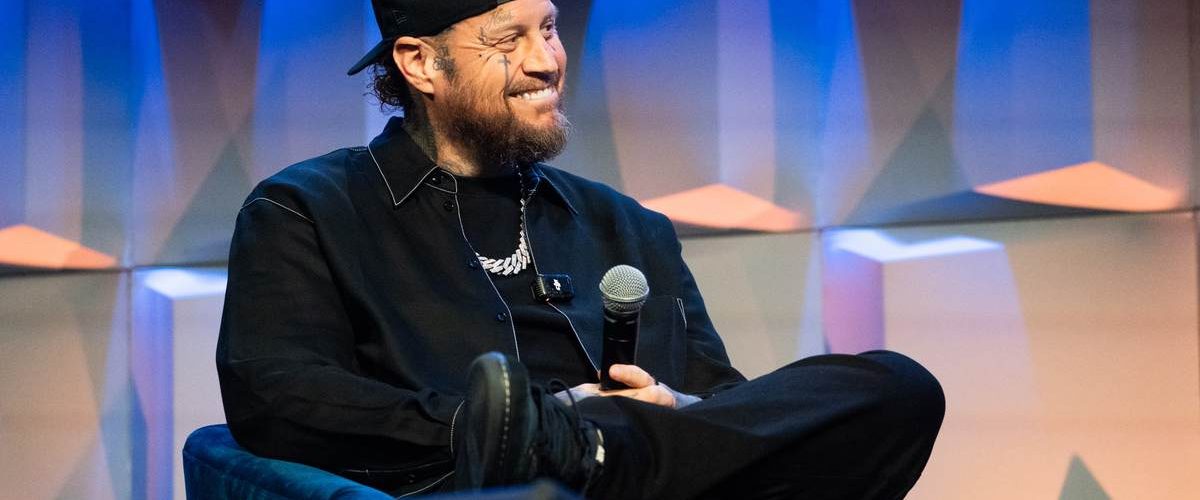
I’ll explain why Jason “Jelly Roll” DeFord’s tearful monologue won’t win back his core fans, outline the non-political forces that are more likely to sink his career, examine the missteps that made his Kimmel appearance toxic, and show how his artistic and branding problems compound the damage.
Jason “Jelly Roll” DeFord aired an 18-minute, tearful monologue that tried to bridge divides, but the reaction suggests his audience won’t forgive easily. “I’m going to try to do the right thing right now, because human dignity isn’t Republican or Democrat,” he said. “Compassion isn’t left-wing, and mercy isn’t right-wing. Pain and healing know no partisanship.” Those lines aimed for unity but landed as a confused mix of self-defense and sermonizing.
The speech read less like sincere contrition and more like damage control after a string of provocative choices. He leaned on his “man of second chances” persona while asking fans to accept him despite a history that includes felony convictions and controversial stunts. That background, plus a pardon from a Republican governor, complicates any straightforward redemption arc.
What pushed many fans over the edge was not policy but tone. During a guest-host stint on Jimmy Kimmel’s show, DeFord mocked President Trump’s weight and even made an off-color joke about the president’s anatomy. The moment became emblematic of a deeper problem: alienating a fanbase who expect a certain respect for shared cultural touchstones, especially in country music.
He followed those remarks by daring fans to walk away. “So, for those who threatened to stop listening to my music based on my comments last night, I just wanna say with conviction, Go Right Ahead!” he declared. That challenge was the cultural equivalent of lighting a fuse: some fans accepted.
There are several non-political factors here that matter more than a single late-night flap. First, the country-music audience prizes a particular ethos—classy restraint on big stages and an emphasis on shared values. When artists flout that code, they risk a swift and often unforgiving backlash, as others in the genre have learned the hard way.
Second, the music itself doesn’t demand blind loyalty. DeFord’s songs lean heavily on a moody, quasi-gospel vibe that connects with some listeners but lacks the broad, singalong twang that keeps country radio spinning. Fans who feel betrayed are less likely to keep pushing for an artist whose work doesn’t stand out on its own merits.
Third, his public posture now reads as a pivot away from the audience that built him. Much of his monologue explained why he felt pressured into earlier statements and performances, revealing that his actions on glittering stages were often the result of being “handed” moments rather than choosing them. That admission makes him look less like a reluctant celebrity and more like someone aligning with a different tribe.
Fourth, the choice to play ball with mainstream late-night TV was strategically poor. Jimmy Kimmel’s show is notorious for partisan jabs and viral controversy, and appearing in that arena signals a tolerance for theatricality over substance. To many conservative and traditional country listeners, that association is toxic, regardless of what’s said on camera.
These dynamics are worsened by a modern media cycle that rewards spectacle and punishes nuance. Social platforms quickly turned DeFord’s missteps into memes and mashups, and the resulting mockery amplified the damage in ways a single apology can’t reverse. The public doesn’t always separate the act from the artist when the act plays to a hostile crowd.
The roots of his problem are simple: a mismatch between persona and platform, music that doesn’t anchor a loyal base on its own, and a public defense that felt performative. He may have intended to reclaim respectability, but instead he emphasized the distance between who he is on stage and who his core listeners expect him to be.
What remains is a familiar pattern. Performers who alienate a loyal, values-oriented audience and then seek acceptance from the cultural elites rarely get both back. Jelly Roll’s fate will be decided not by one speech but by whether he can consistently produce music that outweighs the perception of betrayal and by whether he stops playing to crowds that don’t share his roots.
-
He violated the country-music ethos. Country fans expect a level of respect for cultural symbols and institutions, and crossing those unwritten lines invites severe backlash. DeFord’s remarks on high-profile stages signaled a disregard for that compact.
-
His music isn’t that great. The songs that made him famous lean toward a repetitive, moody style that doesn’t command lifelong loyalty from a mass audience. Without stronger material, reputational hits are harder to bounce back from.
-
He doesn’t actually want us. Much of his public explanation framed his career moves as acts of accommodation to Hollywood or industry pressure, suggesting he’s drifting away from the fans who supported him early on. That impression is fatal in a fandom built on authenticity.
-
The Kimmel move was a strategic error. Appearing on a late-night show known for partisan barbs guaranteed uncomfortable optics and tethered him to a crowd many country fans distrust. It was a choice that magnified, rather than mended, the divide.
Social media reactions and satirical mashups have already cemented the narrative for many listeners, turning a momentary mistake into a longer-term credibility problem. Whether DeFord can rebuild depends on consistent choices that align his public persona with the values and musical expectations of the community that made him famous.
https://x.com/JonJBurrows/status/2093807323152011524



Add comment