
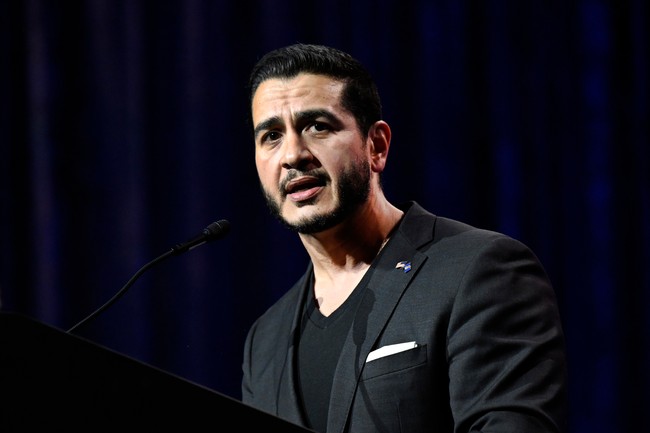
The Michigan Democratic Senate primary debate exposed two candidates who each appeal to different wings of the party, but both showed weaknesses that Republicans will use against them in November. This article walks through the debate highlights, the controversial remarks that surfaced, financial questions raised about one candidate, and how positions on energy, healthcare, and immigration played out on stage.
Watch: Michigan Senate Debate Reveals Just How Bad Both Democrat Candidates Are
Sen. Gary Peters is stepping down, and the Democratic primary to replace him has turned into a choice between Rep. Haley Stevens and former Detroit health director Abdul El-Sayed. Both faced off in a final debate with the August 4 primary looming, and the night left a lot for GOP strategists to work with. Michigan voters will soon decide whether they want a candidate focused on state issues or a progressive who talks big about national change.
El-Sayed stumbled before the debate when private comments resurfaced about using aggressive tactics inside the party, language that sounded more threatening than pragmatic. He tried to explain the line away during the event, but the remark did not play well for those worried about factional politics. The phrase, delivered in a private setting, read badly in public and handed his opponent a clear talking point.
“And then what happens is, ideally, you put one ogre on a pike, and then everyone else gets the message, and all of a sudden starts to sound a lot different.”
Stevens seized on El-Sayed’s quote to argue he’s focused on national battles rather than Michigan’s needs, framing herself as the local, practical choice. That contrast matters in a state where jobs and manufacturing are front and center, and voters notice when candidates promise sweeping national fights instead of grounded policy. Her message aimed to paint El-Sayed as someone with ambitions beyond serving the state.
El-Sayed spent part of the debate distancing himself from labels that could hurt him with Michigan moderates, insisting he is not a traditional socialist in the way New York progressives are often portrayed. He said he understands markets and offered a critique of monopolies as the real threat to capitalism. That line sounded like a bid to reassure voters uneasy about radical rhetoric, but real concerns remained about where he stands on bread-and-butter issues.
“I’m just a capitalist who understands how capitalism works,” El-Sayed said Monday night. “The biggest threat to capitalism was never the idea of government regulation. It was always monopol[ies].”
Financial transparency became a focal point when Stevens raised questions about El-Sayed’s disclosures and podcast income, pushing the narrative that he hadn’t been fully upfront. The exchange brought up details from his financial report showing rental properties listed under his spouse in Bangalore and Dubai, which drew immediate scrutiny. In a retail politics state like Michigan, voters ask where candidates’ money comes from and whether they represent everyday families.
El-Sayed released his latest personal financial disclosure report Monday, which showed two rental properties, one in Bangalore, India, and the other in Dubai, United Arab Emirates — each valued at between $100,001 and $250,000. The properties are listed as being owned by El-Sayed’s spouse, board-certified psychiatrist Sarah Jukaku.
https://x.com/RNCResearch/status/2081891907001598355
Stevens pressed hard on taxes and outside income, accusing him of opaque finances and of profiting in ways that don’t square with his populist rhetoric. Her critique included specific charges about podcast income and other reported earnings that she said voters deserve to see fully disclosed. That line of attack is classic politics: tie your opponent to elite money and you rally skeptical, working-class voters.
“You have not released your full tax returns, $300,000 in other income, while you sat in the podcast chair and you hawked junk healthcare cures that RFK Jr. would thumbs up,” Stevens said of El-Sayed, who hosted a health-focused podcast for years. “You talk about getting money out of politics and putting money in people’s pockets, but still no one knows who’s putting the money in your pocket.”
On energy policy El-Sayed pushed ambitious goals, saying the state should move to 100 percent renewable energy, a stance that sounded politically risky in Michigan where auto manufacturing and reliable power matter. Voters who work in manufacturing will question how a rapid shift to renewables would affect jobs and supply chains. Stevens avoided locking herself into those extremes and emphasized a more measured approach to Michigan’s economy.
Health care proposals also drew applause and skepticism when El-Sayed endorsed sweeping measures, including eliminating medical debt, an idea that sounds popular but raises serious questions about cost and implementation. Stevens used that opportunity to highlight practical concerns and to differentiate herself from proposals that sound idealistic but may not be workable. Those contrasts make the primary a referendum on realism versus big promises.
Immigration and enforcement revealed broader ideological splits, with El-Sayed calling for abolishing ICE and labeling it a paramilitary force, a claim Republicans hammered as reckless and out of touch with public safety concerns. Stevens said she would pull funding from the agency, which still positions her left of center on enforcement. Both positions leave space for a Republican message that stresses law and order and the federal government’s role in protecting communities.
Critics pointed out historical continuity in immigration enforcement, and argued that abolishing agencies or defunding them ignores how immigration policy has been managed across administrations and agencies. Those critiques played into a broader Republican framing that Democrats are out of step with mainstream voters on safety and security. The debate made clear both Democratic candidates are vulnerable to those lines of attack.
Ultimately the night reinforced a fundamental electoral choice: a candidate promising broad progressive change or one positioning herself as a pragmatic defender of Michigan interests. Mike Rogers and other GOP figures were quick to cast the Democratic field as extreme and aligned with the national left, using debate moments to underline that case. For Republicans, the tape from this debate will be a central part of the fall campaign narrative.

Add comment