
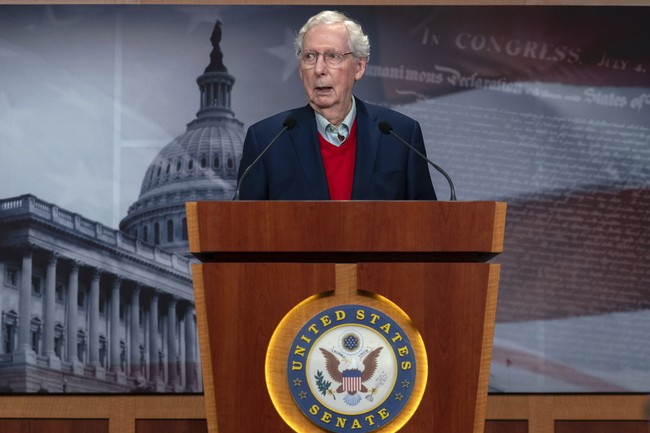
This piece examines Sen. Mitch McConnell’s recent hospitalization and the broader problem of congressional absences, argues for clearer accountability rules, discusses the optics around Elaine Chao’s trip to China, and connects these issues to the institutional failures revealed by Senator Lindsey Graham’s death.
Sen. Mitch McConnell’s health scare has been a test of modern expectations about transparency from public officials. The Kentucky Republican, age 84, was hospitalized after a fall at home and his office initially offered only minimal detail, creating a vacuum for speculation. What eventually emerged described minor injuries, a brief loss of consciousness, and a mild pneumonia treated with antibiotics, and McConnell indicated he expects to finish his term and move into rehabilitation. Still, the delay in straightforward information left many wondering why simple facts were not shared sooner.
Leaders owe the public clarity, not just reassurances that “everything is under control.” In a time when voters demand openness from elected officials, extended silence on a senator’s condition feels out of step and fuels unnecessary rumors. Prompt, factual updates would protect both the officeholder and the institution by preventing misinformation from gaining traction. This isn’t about prying into every detail; it’s about basic operational transparency for those wielding constitutional power.
The timing of McConnell’s hospitalization became worse because of appearances around his wife, Elaine Chao. She departed for a long-planned trip to China focused on family philanthropic work just days before the hospitalization, and she was later reported to have met with a high-level Chinese official. Chao’s team said she did not need to return immediately and she did come back to the United States, but the optics were awkward. When high-profile overseas meetings happen while a senator’s status is unclear, it invites avoidable scrutiny and political attacks.
Public officials do not operate in a vacuum; personal and professional timelines blur when national trust is at stake. At a time when U.S.-China relations are tense, leaders must appreciate that their movements and communications are scrutinized. The situation showed how private family decisions can become public controversies when the public lacks basic facts. That avoidable scrutiny undercuts confidence in government and hands political opponents easy talking points.
What unfolded points to a wider problem in Congress: there is no consistent standard for reporting health-related absences. Lawmakers hold immense responsibilities and are paid by taxpayers to represent constituents and shape policy, yet prolonged unexplained absences leave people voiceless. A simple norm—such as a 10-day rule requiring formal medical certification or an official leadership briefing for non-family medical leave—would be a modest, practical fix. This would not be an invasion of privacy but a reasonable operational expectation for those who make decisions affecting the whole country.
https://x.com/cspan/status/2076420701662110073
Reliance on ad hoc disclosures creates a patchwork of responses that vary by office and by political calculation. The institution suffers when personal discretion becomes the default for matters that have public consequences. Consistent standards would reduce speculation and preserve dignity while ensuring voters and colleagues know whether a senator can perform duties. Clear rules would also protect the office from opportunistic narratives that score short-term political points at the cost of long-term credibility.
The sudden death of Senator Lindsey Graham exposed the same opacity in real time. In the hours after his passing on July 11, 2026, initial communications described his condition only as a “brief and sudden illness,” a phrase that underscored how sparse early information often is. While families deserve space in moments of private grief, the pattern of minimal, delayed explanations places the institution at risk and leaves critical questions unanswered. In high-stakes moments that affect national security and the legislative balance, treating “transparency” as optional is a dangerous habit.
Long-serving figures like McConnell have shaped important conservative victories and provided institutional knowledge that matters. Still, acknowledging the reality of aging and health challenges among public servants is not a sign of weakness; it is realism. The conservative case here is for practical norms that reinforce responsibility without descending into bureaucratic intrusion. We should demand accountability in ways that respect personal dignity and preserve operational integrity, because failing to do so hands the narrative to political opponents and erodes public trust.
Reforming these norms is not about policing every medical detail; it’s about establishing predictable standards so constituents are not left in the dark. The office’s dignity and the individual’s privacy can coexist when the rules are clear and uniformly applied. Congress has an opportunity to adopt straightforward expectations for health-related absences that protect voters, staff, and the institution itself. We can’t Biden ourselves like the Democrats and expect to keep the high ground.



This guy isn’t fit for eating an ice-cream cone let alone be an active Senator for the People of America! The problem is and we saw it with that other loony-tune Pelosi for years; that in Congress we have people like these “where it’s all about themselves” and not about 100% “Serving the People of the Land!” It’s called Dead Wood or Waste Material!
“CONGRESS NEEDS TO BE FLUSHED” of all this Garbage!